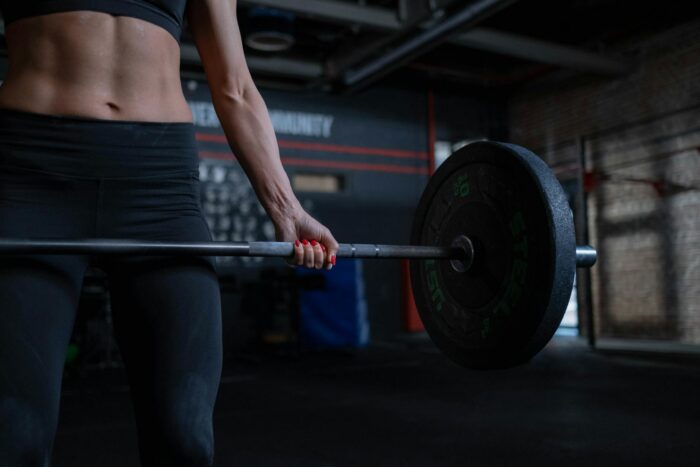
Workout plan for building muscle mass in the gym
This workout plan gives your mass cycle a clear rhythm: one muscle a day, shorter workouts and more attention to every exercise. It suits you when your old split has gone stale or your progress has stalled. The point isn’t to hang around the gym, but to get a short, sharp job done.
Why this workout plan works for a mass cycle
The strength of this plan is its simplicity: on any given day you train one muscle group and give it your full attention. Where a typical workout combines chest, shoulders and triceps, or back and biceps, here your focus doesn’t get spread thin.
You don’t have to set the length of the cycle in stone. In the original, the idea was to run it for 6, 8 or 10 weeks. Honestly, that is a sensible range. If it works, there’s no need to switch in a panic. If the weights stop moving, recovery drags on or the workouts become mentally tedious, it’s time to change the split.
In summer this approach is especially practical. People move more, ride bikes, play ball games and make the most of the nice weather. The gym workout stays shorter, but it still has to be intense. Mass doesn’t come from dropping by the gym for a moment. Mass comes from controlled reps, heavy weights and consistency.
How the workout plan works across the week
The split looks like this: Monday – TRICEPS, Tuesday – BICEPS, Wednesday – LEGS, Thursday – REST, Friday – CHEST, Saturday – BACK and Sunday – SHOULDERS. Reps should mostly stay at 10 and below. Your technique has to be clean and every rep controlled.
TRICEPS
For arm mass, triceps were especially important here. On the close-grip bench press, the reps were usually 10, 8, 6, 4, with the weight increased by 2.5 kg with each set. The same logic applied from week to week: try to raise your training weight by 2.5 kg if your technique allows.
Lying triceps extensions went with 10, 8, 6, 4 reps. Every other week you can do weighted dips instead, but your body shouldn’t slump forward. The palms-up cable pushdown suits the end of the session with 10, 8, 6 reps. The translator’s note remains relevant here too: some people prefer 12, 10, 8, especially if the feel in the muscle tends to disappear as the weights get heavier.
BICEPS AND LEGS
The standing barbell curl starts heavier: reps of 4, 6, 8, with less weight on each set. On the preacher bench with a barbell, do 10, 8, 6 and keep the full range of motion. The one-arm dumbbell curl on the preacher bench suits 10, 6, and the EZ-bar with a palms-down grip 8, 4.
Leg day starts with the squat: 10, 8, 6, 4. Feet parallel, shoulder-width apart or narrower. The hack squat goes with 8, 6, 4 reps, with your feet almost together and toes turned slightly outward. Go deep, but don’t let your technique fall apart. Do leg curls for 10, 8, 6, 4.
CHEST, BACK AND SHOULDERS
Chest day emphasizes the upper part. Incline barbell press: 10, 8, 6, 4. Regular bench press: 8, 6, 4. Dumbbell flyes on a decline bench: 8, 6. If you like, you can finish with the pec deck (butterfly) machine or machine/cable crossovers, if your inner chest needs some extra help.
On back day you don’t have to limit yourself to a single pulling variation. Wide-grip pull-ups to the front: 4 sets to failure. Cable pulldowns behind the neck: 10, 8, 6. Bent-over barbell row: 1 set to failure, usually 10 reps and below. Add an underhand-grip row, T-bar row, seated row and the deadlift for 8, 6, 4 reps.
For shoulders, do the “Military” press with a barbell, preferably seated: 8, 6, 4. The “Arnold” press with dumbbells goes with 10, 8, 6 reps. Barbell upright row: 8, 6. Dumbbell lateral raises: 10, 8. Barbell shrugs: 12, 10, 8, 6.
Practical notes on the workout plan
A mass plan doesn’t mean sloppy flailing. When the rep range is lower, every rep has to count for more. Keep the movement controlled, feel the stretch and the peak contraction, and don’t add weight just for your ego.
As for supplements, while following this plan the author used a mass gainer, protein powder (Optimum Nutrition), 15 g of creatine a day, liver tablets, 2 multivitamin tablets a day and 800 IU of vitamin E a day. This is information from the original, not a recommendation for everyone to do the same. Today it makes sense to choose supplements based on your needs, your nutrition and your health status.
If on some days you have more strength, you can also combine biceps and triceps on one day. This split also leaves room for smaller muscles such as abs, calves and forearms. A simple truth: they are much easier to train when you haven’t just finished a hard back or chest day.
You don’t have to follow the plan like a manual. If your goal is mass, keep your reps on the lower side, but plan the cycle ahead. For example, you can use a rep range of 4–10 and run it for 6–8 weeks. Then take an honest look at whether your weights, how you feel and your mind-muscle connection are moving in the right direction.
Training program FAQ
Is this training program suitable for beginners?
For a true beginner, this split is too fragmented. It’s worth learning the basic exercises first and training the whole body more often. Once your technique is solid, you can try a split like this.
Is training one muscle once a week enough?
It can be, as long as the workout is hard and your recovery is in order. This split works better for someone who knows how to push a muscle hard and doesn’t do sets just to get them done.
When should you change the program?
If progress slows, your joints start to complain or your motivation fades, take a break or choose a new split. 6, 8 or 10 weeks is a good guideline, but your body’s feedback counts for more than the calendar.
“Mass Building Workouts!” Nathan Underhill
Translated by: Janar Rückenberg
Source: Massilisaja
Come and train! ArtGym