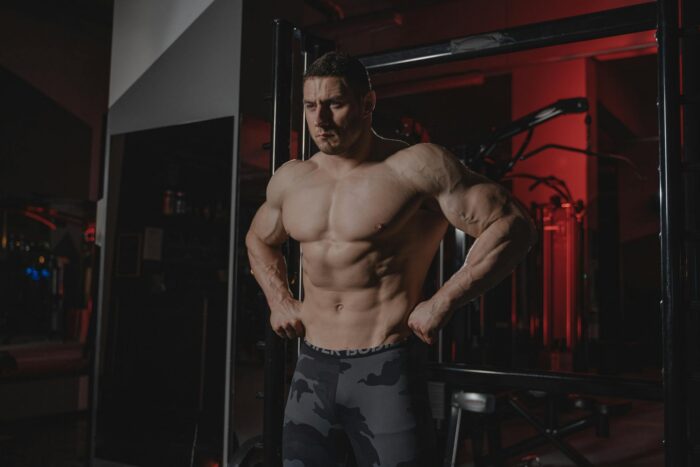
Muscle growth: nutrition and weight gain
Muscle growth starts with a simple but often uncomfortable truth: muscle does not grow out of nothing. If you want to make real changes to your body weight and gym performance, your training, eating, sleep and weight tracking all need to work together.
Why does muscle growth depend on energy?
Changing your body composition is both interesting and tedious work. Anyone who has walked through the doors of a gym soon realizes that their body is not set in stone. You can gain mass, lose fat and transform your physique considerably over the years.
The principle, however, comes down to straightforward math. An energy surplus of 500 kcal per day increases your weight by about 500 g per week. The same logic works in reverse: an energy deficit of 500 kcal per day reduces your weight by about 500 g per week. Instead of 500 kcal/500 g, the figure could be 1000, but that makes things riskier. When gaining mass, a larger share of the gain is more likely to be fat, and losing 1000 g per week can mean losing too much muscle mass.
These principles do not apply in the same way when using steroids, as they change the situation and allow greater changes in less time. For the average gym-goer, though, the most important thing to understand is this: progress requires energy.
It is often said that you can gain only a kilo or two of lean muscle in a year. That may be true, but the math shows just how small a step that really is. Gaining 2 kg per year means 38.5 g per week, because that is what 2000 g/52 weeks works out to. Growth this slow can come from just about 60 surplus kilocalories per day.
If you increase those 60 kcal to 500 kcal, your weight will rise by 500 g per week. With proper strength training and sufficient protein intake, 250-300 g of that could be lean muscle mass. Multiply that by 52 weeks and you get about 13-16 kg of pure muscle. Honestly, that sounds good, but you will usually gain fat as well if your physical activity stays the same.
Muscle growth and 500 extra kcal per day
An extra 500 kcal per day is a simple example because it immediately shows the price. Your weight increases by about 500 g per week. With good strength training, that could break down into roughly 250 g of muscle and 250 g of fat. Over a year, that adds up to about 26 extra kilos.
At this point, many people have the same thought: “I don’t want to gain a single gram of fat.” That is understandable. But you then have to accept slower progress, too. Muscle building usually requires some overeating. Not just any eating, but a controlled period of energy surplus.
The old example of sumo wrestlers is harsh but instructive. A person may weigh around 250 kg and have 135 kg of lean body mass. The catch is not that you should get that big. The catch is that eating a lot can build both muscle and fat. Later, you need to lose the fat while retaining as much muscle mass as possible.
Losing fat is a separate skill. If a year’s work has increased your weight by 25 kg, of which 13 kg is lean body mass, that leaves about 12 kilos of fat. How do you lose it without sacrificing muscle? You cannot avoid muscle loss entirely. Weight loss almost always involves losing some muscle mass.
The faster your weight drops and the poorer your food choices, the more muscle you lose. A 25 kg weight gain followed by poorly managed weight loss can ultimately leave you with mostly excess body fat. A competitive bodybuilder may be satisfied with retaining a couple of kilos of new muscle after a year. The usual approach is to gain 10-30 kg by overeating, then lose, for example, 8-26 kg while dieting. A successful cycle may leave you with 1.5-4 kg of solid muscle mass. Repeat this successfully several times in a row over 10 years, and the results become very noticeable.
How can you put muscle growth into practice?
- Know your daily energy expenditure. Calculate it using formulas or use a device that helps estimate how much energy you burn.
- Account for all your daily activities. Work, workouts and leisure activities all use energy. Stress can also increase energy expenditure and raise cortisol levels.
- Choose a meal plan that works for you. Your eating needs to be sufficient, but not random. High protein intakes reduce hunger, but when dieting, you need to learn to manage hunger.
- Maintain a sufficient energy surplus when gaining weight. Plan how much weight you want to gain and over what period. Gorging on excess calories mainly increases fat mass.
- Reduce any extra heavy training load if necessary. If your goal is muscle mass, your body must have the strength left to recover and grow.
- Get plenty of sleep. The more quality sleep you get, the better the conditions for recovery.
- Use cardio wisely. Low-intensity aerobic training helps burn fat, but you need to do it for a long time: at least an hour a day. Training at too high a heart rate uses more glycogen and muscle protein. Keep strength training intense and brief.
- Give your muscles enough stimulus in a short time. Training must provide a growth signal, but it should not drag on endlessly.
- Track your energy expenditure and food intake accurately. Weighing yourself and recording your weight gives you an honest picture. If your weight is not rising by 500 g a week, or by more than two kilos a month, you need to reduce physical activity and/or increase your food intake.
- Monitor the ratio of fat mass to lean body mass. Body fat analyzers may not give accurate readings for lifters, but they can help you track changes if you always measure under the same conditions.
Beginner gains can briefly overshadow all of this. During the first half-year, muscles often grow well even if you know little about nutrition. Almost every workout seems to work. Then your body adapts, progress slows, and eventually you may hit a plateau. For some, that plateau has lasted the past ten years: they have gained strength, but very little muscle mass.
Nutrition, protein, carbohydrates and fats
Protein is important for building muscle, but you cannot build your entire plan around protein alone. Getting enough energy is still the most important factor. When you are in a calorie deficit, protein serves a different purpose: it helps preserve your hard-earned muscle mass by protecting it from being used for energy.
Protein requirements have been discussed for years. The usual range is 1.5-2 g per kilogram of body weight per day. The next step is to spread that amount throughout the day. Aim for 5-7 meals, including snacks and a recovery drink. For an 80-kilogram man, 7*23 g adds up to around 160 g a day, which is 2 g per kilogram of body weight. That is achievable, but a banana alone as a snack will not get you there.
There is no need to overcomplicate protein quality if you eat a normal diet that includes meat, fish, poultry, dairy products or soy. If you cannot get protein from food when you need it, powders, bars, quark or other simple, protein-rich foods can help. Lactose-free options include soy protein, whey protein, whey isolates and egg white powder. One advantage of protein powders is that they are low in both fat and carbohydrates.
Carbohydrates play a key role in managing energy balance. Daily protein requirements for someone who does strength training are considered to be 1.5-2 g/kg, while fats should provide 20-30% of daily energy intake. That leaves carbohydrates as the way to raise or lower calorie intake. If you are not gaining weight, you often need to increase the amount of carbohydrates in your diet.
Carbohydrate quality matters too. Whole grains, fruit, berries and vegetables help keep your diet practical and rich in dietary fiber. Dietary fiber supports blood sugar control and bowel function. Berries, fruit and vegetables also provide antioxidants.
There is no need to fear fats. They should provide 20-30% of your total energy intake. Saturated and trans fatty acids should still be limited. Plant oils and fish oils are better choices. Milk, meat, baked goods, deep-fried foods and margarines can provide plenty of solid fats, so keep an eye on quantities. You can get omega-3 fatty acids from oily fish and, if needed, supplements.
A bodybuilder’s fat intake should not fall below 20%, as this can slow steroid hormone production. You still need enough fat when dieting. Fat is not the enemy; a poor plan is more likely to be the problem.
A practical meal plan and muscle growth
Barry Sears created the Zone diet. A nutrition plan designed for someone who does strength training may resemble a Zone-style split: 30% protein, 30% fat and 40% carbohydrates. In practice, a well-designed diet for gym training often contains more carbohydrates, for example 45-50%, with 25-30% fat and 20-25% protein.
Vitamins and minerals have their place in a balanced diet. During a bulking phase, you eat large amounts of food, so ordinary foods can provide much of what you need. You need to be more careful when dieting, because eating less food also means getting fewer beneficial nutrients.
There are many sports supplements available. Some help with performance or recovery; others do not. Protein-carbohydrate powders, drinks and bars are essentially practical additions to your diet rather than miracle products. The simple truth is that you need to get your basic nutrition right before thinking about supplements.
FAQ
Does muscle growth always require fat gain?
Usually yes, if we are talking about noticeable, faster gains in muscle mass. The greater the energy surplus, the greater the risk of gaining fat mass as well. Very slow growth can be cleaner, with less fat gained, but it takes patience.
How much protein should you eat if you do strength training?
The initial recommendation is 1.5-2 g per kilogram of body weight per day. How you spread it throughout the day matters too, not just the daily total.
Why am I not gaining weight even though I train well?
The most common reason is insufficient energy intake. If your weight is not moving in the desired direction by 500 g a week or more than two kilograms a month, you need to take an honest look at your eating habits and activity levels.
Translated from Body magazine, author: Timo Kosonen
Author: Greta
Source: WHO – physical activity.
Come and train! ArtGym