In short:
- Gym shyness is social physique anxiety — the fear that others are judging your appearance or movements.
- Preparing and getting familiar with the environment is the most effective first step to reduce anxiety.
- A personal trainer or training partner helps you build confidence faster in the first weeks.
- Most beginners get used to the gym within a few weeks, and the anxiety fades gradually.
Gym shyness is one of the most common reasons people put off training or give it up altogether. That feeling — that others are watching and judging your movements or appearance — is a well-documented phenomenon in the scientific literature. The good news: you can overcome it with deliberate steps.
What is gym shyness and why does it occur?
Gym shyness is social physique anxiety (social physique anxiety), which Hart, Leary and Rejeski (1989) first described as anxiety that arises in situations where other people may evaluate our body or physical capability. It is especially common among beginners: an unfamiliar environment, new equipment and experienced lifters all around create the feeling that you’re on stage.
In reality, the spotlight effect is a psychological illusion — we think others notice us far more than they actually do. Most people at the gym are completely absorbed in their own training, not watching their fellow gym-goers.
If you want a clearer picture of what the gym offers for health and well-being, read more in the article on the benefits of the gym.
How do you prepare for your first gym visit?
Preparation is the most effective way to reduce gym shyness. The more familiar the environment, the less anxiety it causes.
Get to know the gym before your first workout. Most gyms offer new members an introductory tour. Use it — it noticeably reduces the fear of the unknown and helps you find your way around the different training zones.
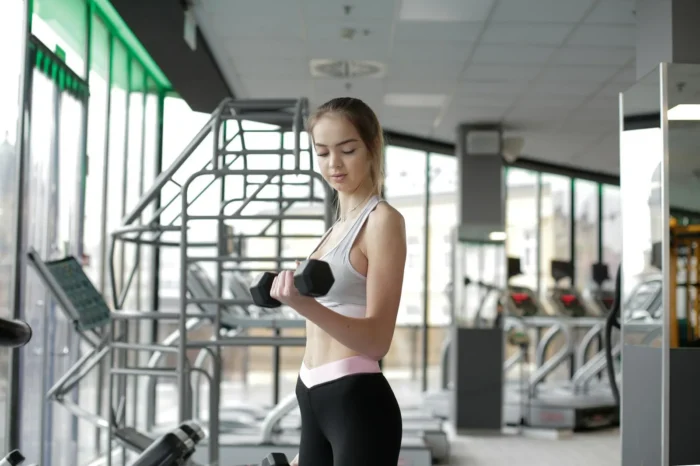
Learn the basic movements at home from videos. The squat, the deadlift, the lunge and dumbbell training are movements you’ll see in every gym. Once you know how to get into the starting position, you’ll feel much more confident.
Consider a personal trainer. A personal trainer gives you a structured plan, explains how to use the equipment and ensures safe technique — an investment that quickly pays off in confidence during the early phase.
Pick a quieter time. Most gyms are busiest at peak hours (7–9 and 17–19). For your first visits, midday on a weekday or early morning on the weekend works better, when there are fewer people.
What strategies can you use to overcome gym shyness?
Since gym shyness is largely an attention-based fear, you can reduce it significantly by actively redirecting your attention.
Focus on the movement, not on how you look. Headphones and a specific training plan give you focus. The more you think about technique, the less room is left for anxiety.
Start in a more familiar zone. The treadmill, the exercise bike and weight machines are equipment most people have come across even outside the gym. Start there and move on to free weights when you feel more at ease.
Learn the gym’s unwritten rules. Knowing how to share equipment, use a towel and avoid disturbing other people’s training will make you feel much more confident. You’ll find a more detailed overview in the article on gym etiquette.
Avoid typical beginner mistakes. Certain behavior in the gym really does stand out and can make things uncomfortable for both sides. See what to avoid in the article on gym faux pas.
Use progressive exposure. Psychology has shown that entering an anxiety-provoking environment gradually is the most effective way to reduce anxiety. Every time you spend time in the gym, it becomes a little less intimidating — it’s a process, not a one-time decision.
How long does it take to get used to the gym?
The WHO recommends that adults do 150–300 minutes of moderate-intensity physical activity per week (WHO physical activity guidelines). Garber et al. (2011) point out in the ACSM guidelines that regular training has a positive effect on both physical fitness and mental health — including a general reduction in anxiety.
In practical terms, gym anxiety drops noticeably after 3–6 visits. The goal isn’t to eliminate anxiety all at once, but to build up a little more comfort with every workout:
- Visits 1–2: the environment feels unfamiliar, but you cope
- Visits 3–5: the equipment becomes more familiar, and anxiety clearly decreases
- Visit 6+: a routine takes shape, and the gym becomes familiar
It’s important to keep going even if the first few visits feel uncomfortable. Consistency is the only way body anxiety truly goes away.
References
- Hart EA, Leary MR, Rejeski WJ. (1989). The measurement of social physique anxiety. Journal of Sport and Exercise Psychology. 11(1):94–104.
- Garber CE, Blissmer B, Deschenes MR, et al. (2011). Quantity and quality of exercise for developing and maintaining cardiorespiratory, musculoskeletal, and neuromotor fitness in apparently healthy adults: guidance for prescribing exercise. Medicine & Science in Sports & Exercise. 43(7):1334–1359. PMID: 21694556.
- World Health Organization. (2020). Physical activity. Fact sheet. who.int/news-room/fact-sheets/detail/physical-activity
Frequently asked questions
Is gym shyness a normal feeling?
Yes, completely normal. Social physique anxiety is a scientifically documented phenomenon that affects many people, especially gym beginners. It’s important to know that it fades gradually as you get used to the gym.
How do I get past the fear that others are watching my workout?
Remember that most gym-goers are busy with their own training, not with you. Headphones, a specific plan and a focus on technique help redirect your attention. The more experience you gain, the less anxiety you feel.
Does a personal trainer help with gym shyness?
Yes, a personal trainer is one of the most effective solutions. They explain how to use the equipment, give you a clear plan and ensure safe technique, which removes the uncertainty that feeds anxiety.
What is the best time for a shy beginner to visit the gym?
Midday on weekdays (11–14) and early morning on weekends are generally the quietest times. At busy peak hours (7–9 and 17–19) there are more people, which can increase anxiety.
How long does it take to get used to the gym?
Most beginners notice less anxiety after just 3–6 visits. Fully getting used to it takes a few weeks if you go regularly. Consistency matters: it gets a little easier every time.
Come and train! ArtGym