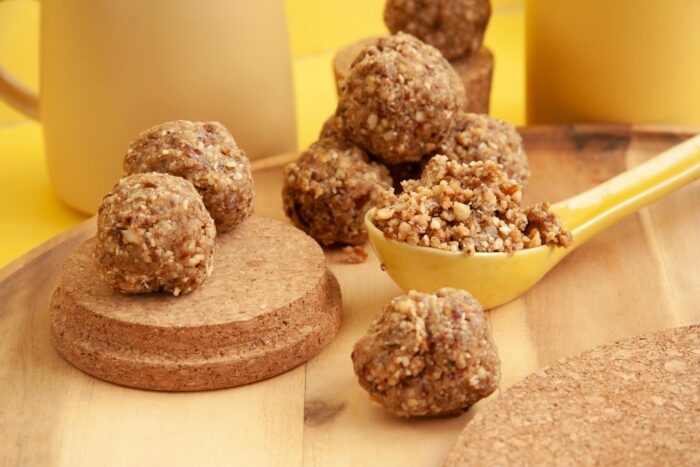
Peanut protein balls for snacking at home
Peanut protein balls are a simple refrigerator recipe for when you want something sweet, but fancy a change from yet another chocolate bar. Here is a clearer version of Paljas Porgand’s original idea: chickpeas, peanut protein powder, coconut oil and cacao nibs come together in little bite-sized snacks.
Why do peanut protein balls work so well?
These little balls are especially handy when your day runs long. Keep one container in the fridge and you have something ready for after your workout, midway through the working day or alongside your evening tea. No baking. No greasing a pan. Just grab one or two balls and get on with your day.
The strength of this recipe is its texture. Chickpeas give the mixture softness, peanut protein powder adds a richer flavor, and cacao nibs bring a little crunch. Honestly, that crunch is often what makes a healthy bite truly appetizing, rather than just a “virtuous choice”.
The original recipe makes 20 balls. That is a good batch to prepare at home: enough to last several days, without leaving a container sitting around for weeks.
Peanut protein balls: ingredients
Makes: 20 balls
You will need:
- 230 g chickpeas
- 35 g melted coconut oil
- 85 g peanut protein powder
- 25 cacao nibs
- 100 ml boiling water
- 4 g Himalayan salt
- 5 g stevia or another sweetener to taste
Chickpeas might seem a little unexpected in a dessert at first. They actually work well: the peanut and sweetener mask their flavor, while they give the mixture a pleasantly dense texture. If you use canned chickpeas, rinse them thoroughly first for a cleaner flavor.
Go easy on the sweetener. 5 g of stevia may be just right for some people and too intense for others. If you use a different sweetener, add it gradually and taste the dough before rolling it into balls.
How do you make the balls?
Preparation is quick, but one thing matters: the mixture needs to firm up in the fridge before you roll it. Skip this step and the dough will stick to your hands, and the balls will not hold their shape as well.
- Blend the chickpeas with the coconut oil, water, salt and sweetener until smooth.
- Mix the remaining dry ingredients together.
- Add the dry ingredients to the blended mixture and knead into a smooth dough.
- Refrigerate for 30 minutes to firm up.
- Roll into 25-gram balls between your palms.
If your blender struggles, pause briefly and scrape the mixture down with a spatula. Avoid adding lots of extra water straight away, as a dough that is too runny will struggle to hold its shape when rolled into balls. 100 ml of boiling water is a good starting point here.
Lightly dampening your hands helps when rolling. They should be damp, not wet. This keeps the dough from sticking so much to your palms and helps you shape more even balls.
How to store peanut protein balls
Keep the balls in a sealed container in the fridge. This preserves their texture, and the coconut oil helps the mixture stay firm. If you take a container along to your workout, put it in a cooler bag if possible, especially in summer, when the weather in Estonia finally gets properly warm.
These are no miracle bites, and they do not replace a proper meal. The simple truth is that a protein ball is a convenient snack. If you are truly hungry, eat a proper meal. If you want something small and sweet, a recipe like this makes that a much more sensible choice.
You can adjust the flavor by experimenting with the cacao nibs and sweetener. If you prefer a more bitter chocolate flavor, keep the sweetness subtle. If you are making these for someone who is not used to the taste of protein powder, mix everything particularly thoroughly to avoid pockets of powder.
FAQ
Can you taste the chickpeas?
If the chickpeas are thoroughly rinsed and the mixture is blended until smooth, peanut should be the predominant flavor. The chickpeas contribute more texture than strong flavor.
Do the balls need baking?
No. This recipe firms up in the fridge. The most important step is to refrigerate the mixture for 30 minutes before rolling it into 25-gram balls.
What can you use instead of stevia?
You can use another sweetener, as the original recipe allows. Add it to taste, as different sweeteners vary in sweetness.
Author: Paljas Porgand
Source:Turg.Fitness.ee
Come and work out! ArtGym