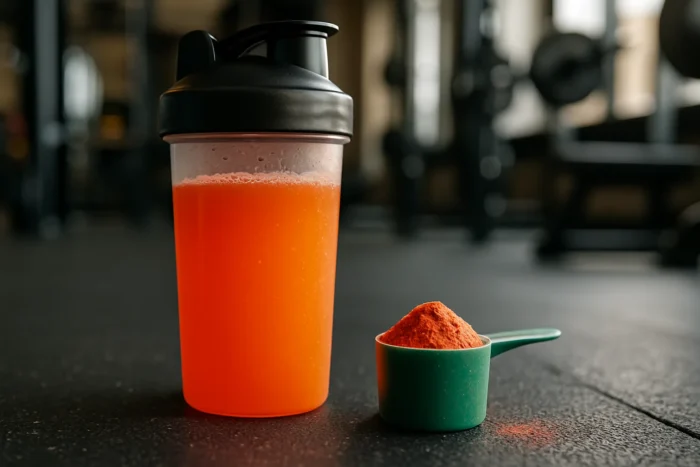
In short:
- A pre-workout complex usually combines caffeine (150–300 mg), beta-alanine (3.2–6.4 g) and citrulline malate (6–8 g).
- A pre-workout can improve performance by about 3–5%, but it isn’t a must-have supplement.
- Caffeine has a half-life of 5–6 hours, so a late-evening dose can disrupt sleep and impair recovery.
A pre-workout complex, or pre-workout, is a popular supplement for people who struggle to pull themselves together for training after a workday. It’s not magic, but a well-formulated pre-workout complex can boost energy and focus. Let’s look at what a typical formula contains and whether you need one at all.
What is a pre-workout complex and what does it contain?
A typical pre-workout complex combines three well-researched active ingredients:
- Caffeine (150–300 mg) — gives you energy and focus, reduces perceived exertion and mobilizes fatty acids.
- Beta-alanine (3.2–6.4 g) — acts as a lactic acid buffer; a mild tingling sensation on the skin is a normal and safe side effect.
- Citrulline malate (6–8 g) — improves blood flow and the so-called pump, the feeling of muscle fullness.
An honest estimate is that a pre-workout can improve performance by about 3–5%. It isn’t a must-have supplement, but when motivation is lacking, it can help. fitness.ee has a separate in-depth article on each ingredient, for example Beta-alanine and ACC.
How does caffeine work in a pre-workout complex?
Caffeine is the main engine of a pre-workout complex. It stimulates the central nervous system, increases energy expenditure by about 3–5% and improves endurance and strength performance. The optimal range is 150–300 mg before a workout. An important nuance: you build up tolerance to caffeine, so to keep its effect at maximum, it’s best not to consume it every day.
Timing matters even more. Caffeine has a half-life of 5–6 hours, which means a dose taken after 16:00 may disrupt your sleep. Poor sleep means poor recovery and poor results. If you train late in the evening, consider a caffeine-free pre-workout. The article Caffeine gives more background.
What do beta-alanine and citrulline do?
Caffeine isn’t the only active ingredient. Beta-alanine (3.2–6.4 g) acts as a buffer for muscle acidity: it raises muscle carnosine levels, which helps delay fatigue during high-intensity sets. The characteristic mild tingling or prickling sensation on the skin is completely normal and harmless. Unlike caffeine, beta-alanine doesn’t work from a single dose — its effect builds up over several weeks of continuous use, as muscle carnosine stores fill up gradually.
Citrulline malate (6–8 g) improves blood flow by raising nitric oxide levels and gives the muscles a feeling of fullness, or pump. Many people notice that the last reps feel slightly easier. These two substances complement caffeine and together form the core of a classic pre-workout complex.
Do you need a pre-workout complex?
A pre-workout complex belongs more among advanced-level supplements — the foundation is good nutrition, enough protein, creatine and vitamin D. A pre-workout is a convenient extra, not a foundation. Think of it this way:
- Useful if you train early in the morning or straight after a long workday and need focus.
- Less necessary if you train during the day, sleep well and are already energetic.
- Avoid late in the evening, so that caffeine doesn’t interfere with sleep.
If you want to feel the effect of a pre-workout for yourself, start with a smaller caffeine dose and watch how your body reacts. The full effect of beta-alanine in buffering muscle acidity builds up over several weeks of continuous use, as explained in the article A supplement that really works — Beta-alanine.
If you buy a ready-made pre-workout complex, check the amounts of active ingredients on the label, because many cheap products contain “fancy” ingredients only in token doses. An effective product provides about 150–300 mg of caffeine, 3.2–6.4 g of beta-alanine and 6–8 g of citrulline malate per serving. If you like, you can also put the same combination together from separate ingredients, which is often cheaper and gives you precise control over the doses. The simplest option, though, is just a cup of coffee before your workout — it delivers a large part of the benefit of a pre-workout at little cost. Keep in mind that no stimulant replaces good sleep and nutrition, which are the foundation of real performance. EFSA has assessed that caffeine is safe for healthy adults up to about 400 mg per day, and up to 200 mg as a single dose — this is confirmed by EFSA’s scientific opinion on the safety of caffeine. A sensible way to use a pre-workout complex is a targeted one: take it before harder workouts, not every time, to keep caffeine tolerance low and the effect strong. If you’re sensitive to stimulants, pregnant or taking medication, consult a doctor before use.
References
- EFSA (2015). Scientific Opinion on the safety of caffeine.
- Workbook “Getting ready for summer”, Chapter 5: fat burners and pre-workout complexes (Fitness.ee).
Frequently asked questions
What’s in a pre-workout complex?
A typical pre-workout complex contains caffeine (150–300 mg), beta-alanine (3.2–6.4 g) and citrulline malate (6–8 g) — for energy, acid buffering and blood flow.
Do you need a pre-workout?
It’s not mandatory. A pre-workout complex may improve performance by about 3–5%, but the foundation is good nutrition, protein, creatine and vitamin D.
Why does my skin tingle after a pre-workout?
It’s a common and safe side effect of beta-alanine. It isn’t an allergy or a sign of danger.
Can you take a pre-workout complex in the evening?
Better not to. Caffeine has a half-life of 5–6 hours, so a dose taken after 16:00 may disrupt sleep. For an evening workout, a caffeine-free option is suitable.
How much caffeine is safe?
According to EFSA, up to about 400 mg of caffeine per day is safe for healthy adults, and up to 200 mg as a single dose. If you’re sensitive, consult a doctor.
Let’s get training! ArtGym