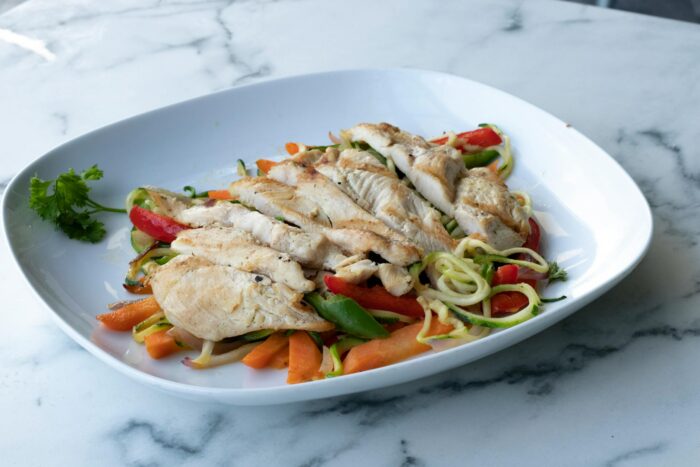
Protein, carbohydrates and fat – everything that matters
Protein, carbohydrates and fat together form the foundation of nutrition that everyone who trains should understand. No complicated formulas needed – this article breaks the three macronutrients down simply: how much, when and what to eat.
Protein: how much and what to eat
Builders need bricks. Muscles need protein. The analogy is simple but gets to the heart of it: in the body, protein breaks down into amino acids, from which muscles grow, develop and recover after a workout.
How much? A simple rule of thumb: 2 grams of protein per kilogram of body weight per day. Someone who weighs 80 kg therefore needs 160 g of protein a day.
But protein doesn’t work alone. If there are too few carbohydrates and fat, the body can’t deliver amino acids to the muscles – they get used for energy instead. Nutrition is teamwork, and balance is the key word.
Frequency: Forget 3–4 big meals a day. Split your food into 5–6 meals and eat every 3–4 hours. Smaller portions are easier to digest and support lean muscle development better. With a fast-paced lifestyle, protein shakes and planning ahead work well.
What to eat? Chicken and turkey breast, lean red meat (both inside and outside cuts), eggs, low-fat dairy, fish and protein powders. Animal protein contains all eight essential amino acids – these are the best choices for supporting muscle growth.
For people with a leaner build, protein sources with a moderate fat content also work well. If you want to gain mass but keep fat under control, choose lean chicken, turkey, fish and low-fat dairy.
Carbohydrates give you the strength to train
Carbohydrates are fuel for your muscles. Too few of them directly hurts training intensity: muscle fatigue sets in and progress stalls. On the other hand, a high carbohydrate intake kicks off protein synthesis and helps amino acids reach the muscles. Eating only a small amount of carbohydrates can lead to muscle tissue wasting.
How much? It’s a complete misconception that muscles develop on a low carbohydrate intake. The minimum is 4 grams per 1 kilogram of body weight per day. Depending on body fat percentage, metabolism and training intensity, the requirement can reach 6–8 grams per kilogram.
Larger muscle groups – legs, back, chest – demand more fuel. On the days you train them, you can raise the amount to 6–8 grams per kilogram. On days for smaller muscle groups (abs, calves, shoulders, arms), 4–6 grams is enough.
For beginners and for women who are starting to build mass: a slight rise in body fat is normal. On days when you train large muscle groups, limit yourself to up to 6 grams per kilogram, and on smaller-muscle-group days to up to 4 grams.
What to eat? It’s worth favoring natural carbohydrates: yams, potatoes, oat flakes, brown rice, fruit. Refined options – bread, buns, low-fat ice cream – are rarely a good fit. Honey, raisins and grapes work as quick sources of carbohydrates.
People with a slower metabolism should eat natural carbohydrates in moderation – this keeps fat under control. As with protein, split your food into 5–6 meals: this creates good conditions for transporting amino acids into the muscles and prevents muscle wasting.
Fat and protein – why you need both
Fat is closely tied to calories and supports muscle growth. Too low a daily calorie intake means muscle development isn’t possible – full stop. A moderate fat intake maintains hormonal balance, especially in men (testosterone).
A common misconception: a zero-fat diet combined with very high carbohydrates is better than a moderate fat intake. They are wrong.
How much? Good fat should make up 20–25% of your daily calories. In practice: by choosing low-fat protein sources, you already get an adequate share from them. Add a handful of nuts and low-fat salad dressings – the balance of calories and fatty acids is in place.
What to eat? Good fat is found in salmon – omega-3 fatty acids help store carbohydrates in the muscles and liver and reduce inflammation. Olive oil and other cold-pressed oils, as well as salad dressing oils, provide fats the body uses to produce hormones, which directly affects muscle development.
Saturated fat – fried foods, fatty cuts of meat, burgers, fatty dairy – isn’t off limits, but not every day. It’s worth favoring protein sources with a moderate fat content.
FAQ – common questions about protein and macros
How much protein a day do you need to build muscle?
2 grams of protein per kilogram of body weight per day is a good starting point. Divide this amount across 5–6 meals and eat every 3–4 hours.
Should you avoid carbohydrates if you want a lean physique?
No – that’s a complete misconception. The minimum is 4 grams per kilogram per day. What matters is choosing natural carbohydrates (potatoes, oat flakes, brown rice) and adjusting the amounts to your training volume.
Does fat make you fat?
A moderate fat intake (20–25% of calories) doesn’t make you fat – it supports your hormones and muscle development. The problem is excess, not fat itself.
Find more protein here: https://turg.fitness.ee/et
Author: Translated by Liis Kutsar from M&F magazine
Source: WHO – healthy eating.
Come and train! ArtGym