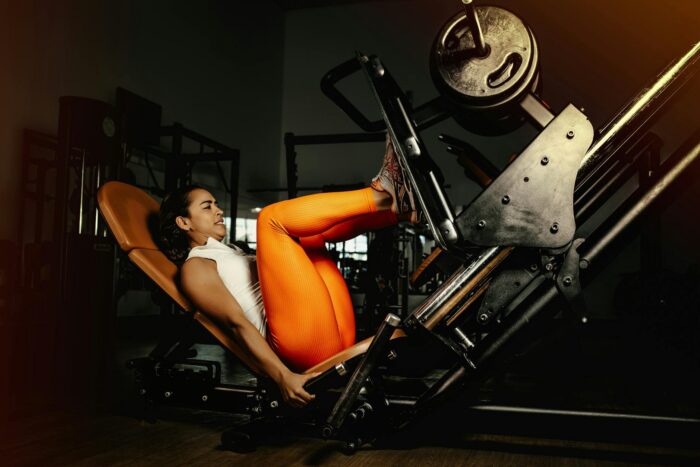
Slow down your reps and build strength smartly
Slow down your reps when you want to truly put the muscle to work, rather than just move weight from point A to point B. That doesn’t mean every workout has to drag on as endless torture. The idea is simple: pick a couple of exercises, keep the movement under control and let the muscle do the work it would otherwise dodge by using momentum.
Flex. once wrote about a small but interesting observation: rep speed can change strength gains more than many lifters think. A typical repetition takes roughly two to four seconds in the positive phase and another two to four seconds in the negative phase, and a slower tempo turns the same weight into a completely different experience.
Why does a slower tempo matter for the muscle?
It’s easy to cheat in the gym. Not always on purpose. On the leg press, in the squat, the press or the row, a little momentum sometimes helps get the weight moving, especially when the end of a set gets hard. On paper the repetition looks the same, but for the muscle it isn’t the same work.
A slow rep takes away that comfortable shortcut. If you have to control the weight for 8 seconds, you can’t simply heave it up or drop it down. You feel right away whether the tension stays in the muscle or your technique falls apart. Honestly, it’s sometimes uncomfortably honest feedback.
The study described in the original compared the effects of slow and fast reps on a leg press machine. Experienced powerlifters did the leg press for 8 weeks at about 70% of their 1x maximum weight. The training volume was two sets of eight repetitions per set. This matters because the point isn’t endless volume but controlled effort.
Slow down at the right moment, not in every set
The study had three groups. One group did reps lasting 2 seconds in both the positive and the negative phase. The second group did 8 seconds in the positive phase and 2 seconds in the negative phase. The third group did 8 seconds in the negative phase and 2 seconds in the positive phase.
The result was clear: the lifters who used an 8-second speed in either the negative or the positive phase increased their strength by around 20 pounds. The normal-speed group didn’t see the same change in leg press strength. This doesn’t prove that a slow tempo is the only right way. But it does show that tempo is a real training tool, not just a detail you can forget about.
So what actually happens? A slow movement extends the time the muscle is under tension. You have to control the weight the whole way. This works especially well when you want to improve feel, muscle work and technique. If the goal is explosive strength, faster reps have their place. If the goal is building muscle and control, it’s worth slowing the tempo down now and then.
How do you do slow-rep training?
Start gently. Slow reps are more fatiguing than they first seem. The same 70% resistance can feel much harder when the movement lasts 8 seconds, because the muscle doesn’t get to rest for a moment.
- Use only one or two exercises per muscle group when you’re following a slow-rep training program.
- Do only one or two sets of an eight-rep exercise, using 70% resistance of your 1x maximum.
- Use both variations: an 8-second speed in the positive phase and an 8-second speed in the negative phase.
- Continue each set for as long as you can, but don’t let your technique fall apart.
- Breathe properly during each repetition. Don’t hold your breath just because the tempo is slow.
- Don’t train the same muscle group more than 2x per week.
- Use slow-rep workouts for no more than eight weeks, then return to your usual training.
A good rule of thumb is to choose an exercise where the range of motion is safe and easy to control. The leg press suits this well. Machines, controlled dumbbell movements or exercises where you won’t get trapped under the weight when your strength runs out can also work.
Slow down, but don’t turn your workout into a punishment
The biggest mistake with a slow tempo is overdoing it. If every exercise, every set and every repetition turns into a long drawn-out stretch, the weight eventually drops too low and the workout becomes more of a project in suffering than in progress. Simple truth: a slow rep is a seasoning, not the whole dish.
Use it where it adds something. For example, at the end of the leg press, on a chest machine, in the controlled phase of a back row or in a biceps exercise where you tend to swing your body along. If you notice that the tempo helps you feel the muscle better, that’s a good sign. If your joints start to protest or your technique gets stiff, pick another exercise or a shorter duration.
Don’t forget recovery either. A slow negative phase can make the muscle sorer the next day, especially if you haven’t used it in a long time. That’s no reason to panic, but it is a reason to plan your training load sensibly.
FAQ: slowing down your reps in strength training
Do slow reps build muscle faster?
They can help if you’ve been rushing your reps with too much momentum. A slow tempo increases control and tension in the muscle, but muscle growth still depends on training load, volume, nutrition and recovery.
Is 8 seconds right for every exercise?
Not necessarily. 8 seconds works best for exercises where you can control the weight safely. In highly technical or explosive exercises, such a slow tempo can actually spoil the movement.
How long should you use this method?
The original recommendation was to use slow-rep workouts for no more than eight weeks and then go back to regular training. That’s a sensible limit, because your body needs variety.
Author: joker
Source: WHO – physical activity.
Come and train with slow reps! ArtGym