
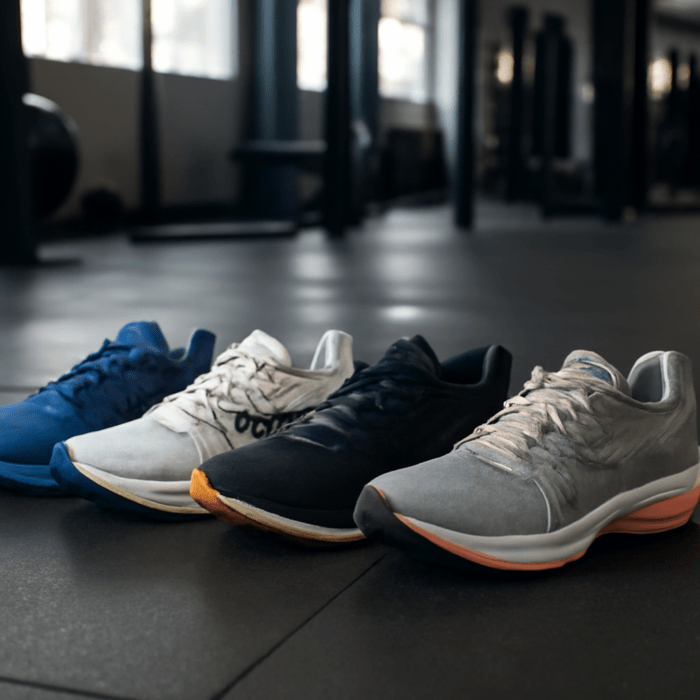
Sports shoes: why choosing the right footwear matters
Last fall I tried running in old soccer cleats and ended up with heel pain within two weeks that didn’t go away for a month. Sports shoes are no small detail — the wrong pair stresses your joints more than any hard workout. In this article I look at why the right footwear matters and how to find the pair that suits your sport.
Why the right sports shoes reduce injuries
Every sport places a different training load on the foot. Running slams the heel against a hard surface tens of thousands of times an hour. In tennis, the foot has to stop suddenly and change direction. In basketball you jump and land on one leg with your entire body weight. Each of these calls for a differently built shoe — a softer or firmer sole, a higher ankle collar, a stronger forefoot.
The wrong shoes often mean a rolled ankle or microfractures in the bones. The longer you train in the wrong shoe, the greater the risk of lasting damage. Chronic heel inflammation or knee pain often lasts for years — a cheap shoe can end up costing dozens of times more than a decent pair.
How the right sports shoes improve performance
You may remember the recent debate about Nike’s new running shoes? Some claimed they are so light and springy that they give the wearer an unfair advantage. Shoes alone don’t make a runner, of course, but there is some truth to the story. The right shoe allows faster reactions, improves balance and lets the foot apply more strength.
A simple truth: when your foot feels secure, you dare to push harder in training. If you keep worrying about whether your ankle will give out, your performance stays hesitant. A good shoe takes that worry away.
Different sports shoes for different sports
Running shoes
Running shoes have strong cushioning that absorbs the impact of landing. They are light, the heel support keeps the foot in place, and the breathable fabric keeps your foot from sweating. A good running shoe reduces joint pain and, in the long run, prevents several typical runners’ complaints.
Aerobics shoes
In aerobics, the forefoot takes the greatest training load — that is where most jumps and landings happen. An aerobics shoe therefore has a reinforced forefoot area and a flexible sole that lets the foot roll smoothly. A running shoe is not a good choice for aerobics: a sole that is too stiff hinders quick changes of direction.
Tennis shoes
In tennis, your body weight constantly shifts from side to side. A tennis shoe has stable inner and outer edges that hold the foot in place during sharp changes of direction. Under the forefoot the shoe is more flexible, so you can dash quickly after the ball. The sole pattern also differs between sandy outdoor courts and indoor hall parquet — choose according to the specific surface.
Basketball shoes
Basketball shoes have a thick heel and often a higher shaft. The reason is simple: when landing from a jump you want maximum cushioning, and the high collar holds the ankle in place. A higher shaft is especially important if you play intensively — it reduces the risk of classic ankle injuries.
Practical tips for choosing sports shoes
Don’t buy shoes purely for their looks. First think about what you will actually do in them. If you go to the gym and also run, you may need two different pairs — an all-round shoe doesn’t work well for either. Always try shoes on in the afternoon, when your foot has swollen a little during the day — morning measurements are misleading.
Sports shoes with a good price-to-quality ratio are easy to find in online shops — for example, this page offers dozens of models for different sports. The advantage of an online shop is clear: you can calmly compare the features of different brands, which you can’t manage in one evening in a physical store.
FAQ about sports shoes
How long does a pair of sports shoes last?
For an active runner, running shoes usually wear out after 600–800 km. Someone who trains three times a week should replace their pair about every 9–12 months. When the cushioning is flat and the sole is out of shape, it’s time for a new pair.
Can you use one pair for several sports?
An all-round shoe will do for the occasional workout, but you shouldn’t do this for regular training. Each sport loads the foot in a different way, and the wrong shoe can lead to injury.
Is a more expensive shoe always better?
Not necessarily. Price doesn’t guarantee a good fit for your particular foot shape and sport. What matters most is that the shoe fits comfortably and is made for your activity.
Author:Turg.Fitness.ee
Come and train! ArtGym




