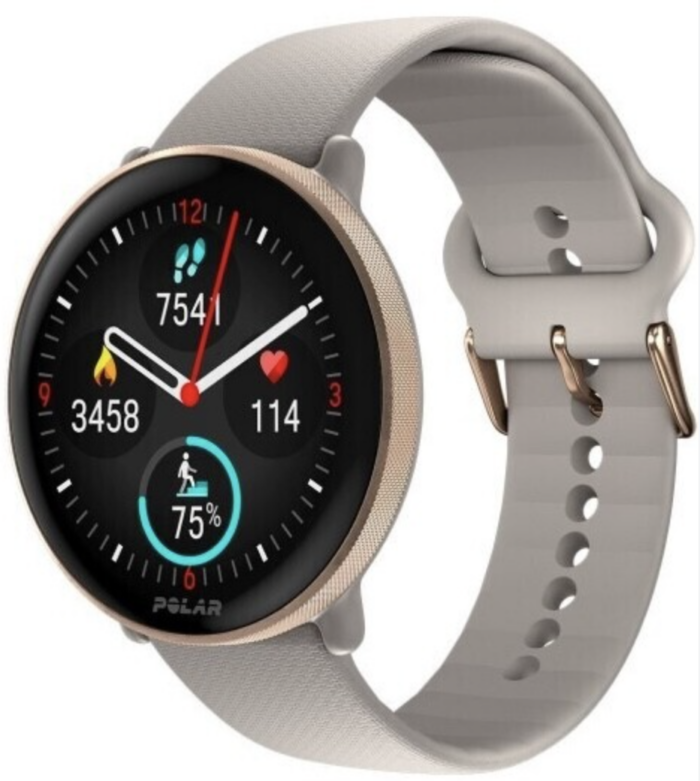
At a glance:
- A sports watch is suitable for anyone who wants to monitor their training load objectively.
- A wrist-based sensor is convenient, but a chest strap heart rate monitor is more accurate during high-intensity training.
- Wearable devices’ estimates of energy expenditure can differ significantly from actual expenditure – use them as a guide.
- Base your purchase on the demands of your sport, the features you need, and your budget.
The sports watch has become an indispensable tool in modern training culture, providing real-time information on heart rate, physical activity, and training load. Many people who train wonder whether a sports watch is really a necessary purchase and when to add a separate chest strap. This evidence-based buying guide gives you a clear answer.
How does a sports watch measure heart rate?
A modern sports watch uses photoplethysmography (PPG) to measure heart rate – an LED shines green light into your wrist, where it is reflected as the blood vessels pulse, and changes in light absorption are interpreted as heartbeats. The technology is simple and suitable for everyday use.
A systematic review of consumer wearable devices found that heart rate measurement accuracy depends significantly on the intensity and type of physical activity (Evenson et al., 2015). It is also WORTH KNOWING that GPS drains the battery considerably faster – for longer outdoor workouts, plan ahead to make sure the battery will last.
Wrist sensor vs. chest strap: which is more accurate?
A chest strap heart rate monitor uses electrode-based ECG measurement, which is more clinically accurate than a wrist-based PPG sensor. Research has shown that sports watches’ wrist-based sensors can produce significantly less accurate results than a chest strap during high-intensity interval training (HIIT) (Gillinov et al., 2017). Heart rate measurement accuracy also varies between sports watch models and with training intensity (Wallen et al., 2016).
Treat energy expenditure calculations with caution. Systematic reviews have found significant differences between wearable devices’ estimates of energy expenditure and actual measurements – so treat the calorie reading as a guide rather than an absolute truth (Evenson et al., 2015).
Just as How to choose which electric scooter to buy comes down to how you intend to use it, your choice of sports watch depends on the demands of your sport: wrist-based measurement is sufficiently accurate for moderate-intensity training (walking, Nordic walking, light jogging); for intense HIIT workouts or strength sports, a chest strap is recommended.
What should you look for when buying a sports watch?
When choosing a watch, we recommend assessing the following factors:
The demands of your sport
– Endurance sports (running, cycling, swimming): GPS accuracy, water resistance, and long battery life are priorities.
– Strength training and HIIT: chest strap compatibility (ANT+ or Bluetooth) ensures greater accuracy when needed.
– Varied training: multisport modes and general health metrics.
Sensor quality
Look for devices that support an external chest strap connection – this gives you the flexibility to improve accuracy during intense workouts.
App ecosystem
Garmin Connect, Polar Flow, and Suunto App offer different analysis tools. See which ecosystem suits the way you log your training.
Battery life
A battery that lasts 5–7 days is usually sufficient for daily training; for ultrarunners and triathletes, 20+ hours of battery life with GPS is important.
Price vs. needs
For most beginners, a device costing 100–200 euros is sufficient. If you compete and need precise control over your training zones and recovery analysis, consider higher-priced devices.
When is it worth buying a separate chest strap?
Buying a separate chest strap makes sense if:
– you regularly do high-intensity training (HIIT, competitive sport, running intervals) and need precise zone analysis;
– you already have a sports watch but are dissatisfied with its wrist sensor during intense efforts;
– you are a triathlete, cyclist, or marathon runner whose training plan demands more than everyday activity tracking.
According to the Estonian Health Board’s physical activity recommendations, adults should get at least 150 minutes of moderate-intensity physical activity per week. A chest strap helps you check accurately whether your training falls within the recommended intensity zone (50–70% of maximum heart rate), especially during workouts where wrist-based measurement is inaccurate.
How can you use a sports watch to train in heart rate zones?
Training zones are based on a percentage of your maximum heart rate (MHR). According to the ACSM position stand, aerobic training intensity is divided into five main zones (Garber et al., 2011):
- Zone 1 (50–60% MHR): warm-up and active recovery
- Zone 2 (60–70% MHR): aerobic endurance base
- Zone 3 (70–80% MHR): aerobic efficiency
- Zone 4 (80–90% MHR): anaerobic threshold
- Zone 5 (90–100% MHR): maximum effort
The formula 220 − age is used to estimate maximum heart rate, although individual differences can be considerable. A structured maximal exercise test provides a more accurate MHR.
Hormonal factors also affect recovery – if you are interested in how training affects hormonal balance, read What you should know about growth hormone. Also, remember that post-workout nutrition is an integral part of recovery – Now is the time to buy Dietmix protein drinks and Mass2 recovery drinks at Kalev Sp provides an overview of the products currently available.
References
- Evenson KR, Goto MM, Furberg RD. (2015). Systematic review of the validity and reliability of consumer-wearable activity trackers. Int J Behav Nutr Phys Act. PMID: 26673115
- Garber CE, Blissmer B, Deschenes MR, et al. (2011). American College of Sports Medicine position stand. Quantity and quality of exercise for developing and maintaining cardiorespiratory, musculoskeletal, and neuromotor fitness in apparently healthy adults. Med Sci Sports Exerc. PMID: 21694556
- Gillinov S, Etiwy M, Wang R, et al. (2017). Variable Accuracy of Wearable Heart Rate Monitors during Aerobic Exercise. Med Sci Sports Exerc. PMID: 28709155
- Wallen MP, Gomersall SR, Keating SE, Wisløff U, Coombes JS. (2016). Accuracy of Heart Rate Watches: Implications for Weight Management. PLoS One. PMID: 26818438
Frequently asked questions
Can a sports watch fully replace a chest strap?
A wrist-based sensor is usually sufficient for moderate-intensity training, but a chest strap is more accurate during intense HIIT workouts and in competitive sport. The two devices complement each other well.
Are the calorie estimates on a sports watch accurate?
Not completely accurate – research shows that wearable devices’ estimates of energy expenditure can differ considerably from actual expenditure. Use them as a relative guide rather than an exact figure.
Which sports watch is suitable for a beginner?
For most beginners, a device costing 100–200 euros that tracks heart rate and movement and has GPS is sufficient. Whether you need additional features (sleep tracking, stress analysis, blood oxygen saturation) depends on your personal preferences.
What are training zones, and why should you monitor them?
Training zones are intensity levels (1–5) based on your maximum heart rate that help you plan your training around your goals – in zone 2, you build aerobic endurance; in zone 4, you exceed your anaerobic threshold.
Do beginners need a chest strap?
Usually not – a sports watch’s wrist sensor is sufficient for beginners. A separate chest strap becomes useful when you start doing regular intense interval training and need precise zone analysis.
Find Polar watches HERE
Come and train! ArtGym