
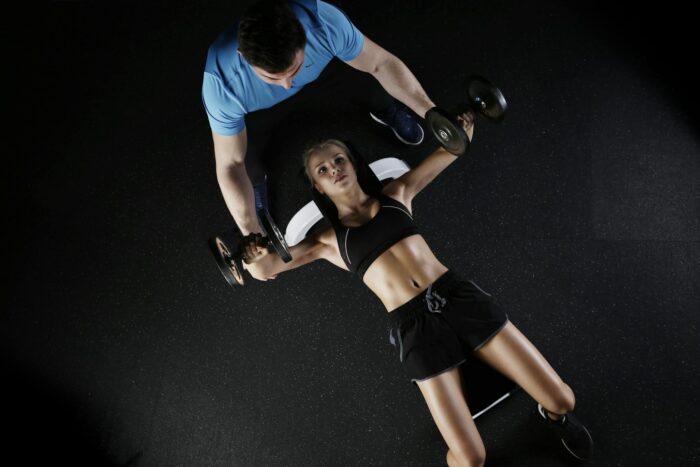
Strength exercises: sacred cows under the microscope
In the gym, strength exercises are often like old rules: everyone repeats them, but few people ask whether they suit your body in particular. Here we take an honest look at the classic exercises whose reputation is bigger than their benefit, and what to do instead.
Why strength exercises aren’t always sacred
You don’t have to do something just because the “gym regulars” say so. The claim that a real bodybuilder has to train with the taste of blood in their mouth, grinding away at the bench press, squats and other classic exercises, sounds tough, but it isn’t a particularly smart training plan.
The simple truth: an exercise has to suit your body, your goal and your experience. Some basic exercises build muscle well. For some people. At the same time, they can be ineffective or even dangerous for others, especially when body structure, mobility or past injuries work against you.
The voice of the original is fairly blunt here. The author says they have been training for 25 years and have learned over that time that “old school” isn’t always better. At first, dumbbells and barbells were the natural choice. Later came the realization that machines, different grips and a smarter range of motion can deliver the same muscle work with less risk.
So what actually matters? Not whether an exercise is famous. What matters is whether you can get the target muscle working, keep your joints under control and perform the same movement pattern for years without your lower back, shoulders or elbows constantly sending warning signals.
Strength exercises worth reassessing
Below are 7 classic exercises where it’s worth setting your ego aside for a moment. The point isn’t to say they’re off-limits for everyone. The point is to see when the risk grows bigger than the benefit.
- Squats. The squat is often called the king of all exercises. From a bodybuilder’s point of view, though, it can also be the king of back injuries and excess glute size. The problem isn’t only the exercise itself, but the fact that very few people actually squat with good technique. Low repetitions with heavy weight quickly tempt you to overdo it.
- Behind-the-neck barbell press. The criticism of this exercise is harsh: pressing from behind the neck puts the shoulder in an unnatural position. If a beginner says their shoulders don’t hurt yet, that doesn’t mean the joint will love this movement in the long run. “Come talk to me in five years” is a fairly apt warning here.
- Bent-over barbell rows. A straight barbell locks your hands and wrists in place, and the bent-over position leaves your lower back defenseless. As the weight increases, the exercise often turns from training the back muscles into a survival test for the lower back.
- Deadlift. The deadlift can be a good exercise, but it doesn’t suit everyone. If your build doesn’t help, for example if you aren’t short with long arms, the work can go more to the legs, hips and lower legs than to the back. The risk remains all the same.
- Barbell bench press. Many people take it personally when someone says the bench press isn’t mandatory. Yet most bodybuilders haven’t used it as their main chest exercise for years. Jay Cutler and Tom Prince didn’t become weak because of that. Shoulder position, a long torso and heavy weight can make it an awkward choice for the chest muscle.
- Standing barbell curl. A straight barbell forces your hands into a position that isn’t natural for many people. If the inside of your elbow hurts, it’s worth looking at how much you use a straight barbell in biceps exercises.
- Lying barbell triceps extension. The nickname “skull crusher” already says a lot. If every repetition starts and ends above your skull, there’s reason to wonder whether the same muscle work can be done at a calmer angle with safer equipment.
How to choose better substitutes
Instead of the squat, a hack squat machine or a leg press may suit some people. These give the thighs a strong workout but reduce the need to balance a heavy barbell on your shoulders. If you sometimes have over 200 kg on your shoulders and are bending your body at the same time, the training load lands on your spine, knees and shoulders. The taller you are, the harder it is to hold your body position. If you’re under 170cm, squatting can be considerably easier than it is for a taller lifter.
The author also offers a personal warning: heavy squatting was one of the reasons they had to have lower back surgery in 1998. That doesn’t mean every squat ends badly. But it does mean that the training load that builds up over the years counts.
For the shoulders, instead of the behind-the-neck press it makes more sense to do a seated barbell press from the chest or a dumbbell press from the chest. You don’t need to lower the weight below chin level. If the movement sinks between your chin and chest, the work often shifts more to the upper chest and the shoulder can end up under unnecessary strain. A Smith machine helps some lifters keep a more stable bar path, while dumbbells give you more freedom of movement. The partial Arnold press is another option, where your palms face each other at the start and face forward at the end.
For back rows, instead of a straight bent-over barbell, it’s better to choose a T-bar, a one-arm dumbbell row or a chest-supported row machine. The chest pad can be especially good for people who have had back problems, because it takes much of the stabilization load off the lower back.
With deadlifts, the barbell doesn’t always have to go down to the floor. A variation where the barbell isn’t lowered below the knees shifts the work more to the back and less to the legs, hips and lower legs. The risk of injury doesn’t disappear, but it can be reduced.
In chest training, the flat barbell bench press isn’t the only way. The incline barbell press, dumbbell flyes and the incline machine chest press can give you a better feel in the chest. The author says outright that there are about ten exercises that may be better for building the chest muscle than the classic bench press. You don’t have to chase the very bottom position either, if your shoulders behave awkwardly there.
For arms, it’s worth using an EZ-bar, dumbbells or machines instead of a straight barbell. The EZ-bar mimics a more natural movement, where the thumbs come up before the little fingers. On triceps pushdowns, a rope is often better than a straight bar, because the wrists and elbows can move more freely.
A practical check: is the exercise right for you?
A good exercise doesn’t have to be as comfortable as a couch, but it shouldn’t cause sharp pain in a joint. The burning sensation in a muscle is one thing. A stabbing pain at the front of the shoulder, pressure in the lower back or pain on the inside of the elbow is another.
Look for three signs. First: do you feel the work in the target muscle, or only in the joints and supporting muscles? Second: can you hold your technique at the end of a set, not just on the first repetition? Third: does the same exercise leave you with normal fatigue over the following days, or with a gnawing pain?
Gym culture loves big weights. The question “So how much do you press?” is a familiar one. But building muscle doesn’t always require the hardest-core approach. There’s no rule that the louder you shout or the faster you train, the faster your muscle grows.
The classic exercises were invented a hundred years ago, when less was known about training and there were fewer machines. That doesn’t make them pointless. It simply means you don’t have to worship them. If a better tool exists, use it.
Sig Klein may have done good things in the day, but today’s trainee doesn’t have to limit themselves to the same choices. A new century brings new understanding too: in bodybuilding, there are no sacred exercises. There are exercises that work for you, and exercises that work better for someone else.
FAQ: strength exercises and safer training
Do you have to drop squats completely?
No. If the squat suits your body, your technique is good and no pain appears, it can be a useful exercise. If your lower back, knees or shoulders send a warning, try the hack squat machine or the leg press.
Do machines build muscle as well as free weights?
Yes, as long as the target muscle gets a sufficient training load and the movement is controlled. A machine isn’t the “easy way out”. Often it actually helps you keep tension in the right muscle better.
What should you do if a classic exercise causes pain?
Stop pushing through pain in that variation. Change the grip, the range of motion or the exercise. If the pain keeps coming back, ask a qualified coach or healthcare professional for advice.
Author: Translated by R. Hunt, from Flex, Bob Cicherillo
Source: WHO – physical activity.
PS Come and work out! ArtGym




