
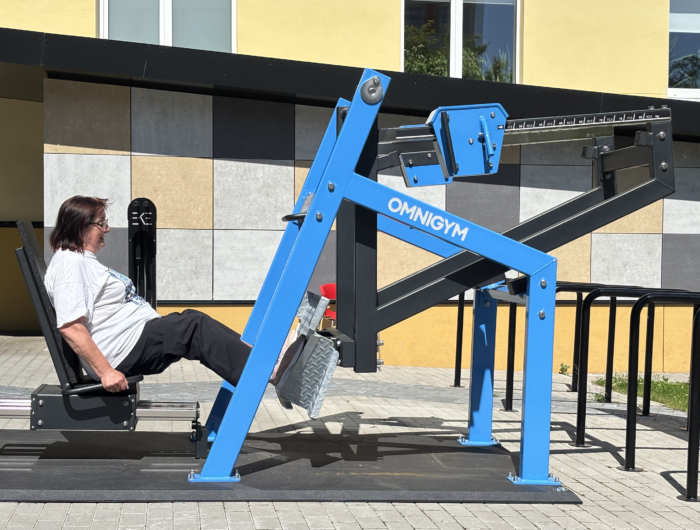
But how are they actually connected?
Leg muscle strength is not just a sporting metric or an aesthetic goal. A growing body of research and practical experience confirms that the condition of your leg muscles is one of the strongest predictors of longevity and independent living.
Why the legs in particular? And how does this affect our quality of life over the decades?
Leg muscles as the body’s “functional engine”
The leg muscles (thighs, glutes, calves) make up the largest share of the body’s muscle mass. They are responsible for:
- your ability to move and walk
- balance and fall prevention
- everyday activities (standing up, sitting down, climbing stairs)
When your leg muscles weaken, it isn’t your “shape” that goes first, but your function.
Muscle mass, metabolism and biological aging
Aging brings a natural loss of muscle tissue (sarcopenia), but it is not inevitable.
Strong leg muscles:
- improve insulin sensitivity
- stabilize blood sugar levels
- reduce chronic inflammation
- support hormonal balance
All of these factors are directly linked to cardiovascular health, type 2 diabetes and overall lifespan.
👉 The more functional muscle mass you have, the “younger” your body behaves.
Leg strength and fall risk – the tipping point for quality of life
The statistics are harsh:
in older age, falls are one of the main causes of lost independence.
Strong legs mean:
- faster reaction time
- stronger bone-and-muscle loading (bone density)
- better nerve–muscle coordination
A person who can:
- get up from a chair without help
- keep their balance
- move around without walking aids
…lives longer and better.
Leg muscles = independence
The biggest fear about old age isn’t age itself, but depending on other people.
Strong legs let you:
- go shopping on your own
- manage around the house
- travel
- keep up your social life
This, in turn:
- reduces the risk of depression
- improves mental health
- sustains your zest for life and motivation
What kind of training really counts?
Walking or “staying active” alone isn’t enough.
Leg muscles need mechanical load.
Effective basics:
- squats (bodyweight or weighted)
- lunges
- leg press
- hip thrusts
- controlled rising and lowering movements
👉 What matters is not the maximum weight, but consistent, progressive training load.
Summary: leg muscles as an investment in later life
Training your leg muscles is not a luxury of youth – it is the foundation of a body that works for as long as you live.
- stronger legs = better metabolism
- stronger legs = lower risk of falling
- stronger legs = independence
- stronger legs = a longer, better-quality life
💡 If you had to choose just one muscle group to look after for life – choose your legs.
📚 Scientific references
Newman AB, et al. Strength, but not muscle mass, is associated with mortality in the Health, Aging and Body Composition Study cohort. J Gerontol A Biol Sci Med Sci. 2006;61(1):72–77. It showed that muscle strength (including thigh and arm strength) is more strongly associated with mortality risk than muscle mass itself.
García-Hermoso A, et al. Muscular strength as a predictor of all-cause mortality in adults: meta-analysis of prospective cohort studies. J Am Med Dir Assoc. 2018;19(5):372–378. Meta-analysis: both upper-body and lower-body muscle strength are inversely associated with mortality risk.
Li R, et al. Associations of low muscle strength with all-cause mortality among adults aged ≥50 years in the US. J Nutr Health Aging. 2018;22(5):612–619. The study emphasizes that low muscle strength, regardless of muscle mass, is associated with a higher risk of all-cause death in older adults.
Idea: Tervis Pluss “The stronger your leg muscles, the longer your life and the more independent your later years. But how are the two connected?”
Come and work out! ArtGym




