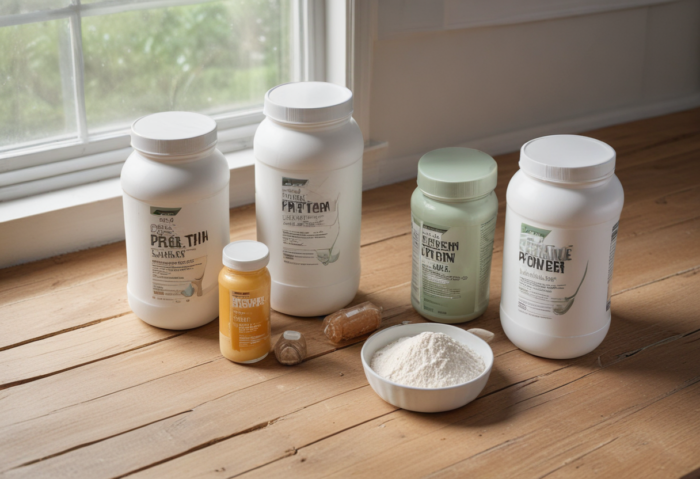
Supplements for beginners: don’t rush ahead
Supplements can look like a shortcut to bigger muscles for a beginner, especially when Muscle and Fitness, Flex and Musclemag stare back at you from the magazine rack, and huge bodybuilders advertise products on their pages. The real work, though, happens around the barbell, your food and your sleep. If you’re just starting out in the gym, don’t get ahead of yourself.
(James Sadek/bodybuilding.com) A beginner first needs a rhythm: proper training, simple nutrition and patience. Supplements may help later, but they don’t replace the work your muscles need in order to grow.
Why supplements are so tempting for beginners
Young beginner bodybuilders often flip through bodybuilding magazines with their mouths watering. The pages promise fat loss, more strength and faster muscle growth. The picture is powerful: a big guy, a strong body, a shiny tub next to him. Honestly, it’s easy to believe, especially if you’re a teenager and want to change fast.
That motivation isn’t bad in itself. The bad part is the conclusion that supplements make a person big. Professional bodybuilders put an enormous amount of effort into their training. Most of them use only a few supplements, and often these aren’t the same products they hold up in the ads.
The simple truth: big muscles and a great physique take hard work. You have to train consistently, eat enough, recover and learn to know your body. Only then do supplements even have a place in the picture.
Supplements and your first training period
If you’re younger than 19 and haven’t seriously focused on gym training before, train for at least 2–3 months before you start thinking about supplements. That may sound like boring advice, but results come at the start anyway. Your body responds quickly to a new training load.
In the first months you may notice bigger muscles, a lower body fat percentage and a better look even without a single tub. You’ll notice it. The people around you will notice it too. So what is actually happening? You’re learning the movements, getting stronger and your body is adapting to the new training load.
After 2–3 months, progress usually slows down. That’s normal. The first rapid jump doesn’t last forever. If you’ve now spent three months training, learned to train properly, built muscle mass and lost fat, you can start thinking about simple supplements.
How to bring supplements in sensibly
You may feel the urge to buy several supplements at once, but don’t. If you start taking five new things at the same time, you won’t be able to tell what really helps and what is just wasted money. Start with one simple choice.
Protein powder before complicated blends
Your first choice could be protein powder. Buy a protein powder and start using it when regular food leaves you short on protein. Take it 2–3 times a day if that fits your daily plan and nutrition. Protein powder helps cover your daily protein needs, supports recovery and makes eating easier.
That doesn’t mean every meal should come from a shaker. At school, at home and on training days, ordinary foods still count: meat, fish, eggs, dairy, legumes, grains and vegetables. Powder is a helper, not a foundation.
Creatine after you’ve found your routine
After 2 weeks to a month, you could also consider creatine. Your body also produces creatine itself, but only in minimal amounts. Taking creatine may give you more training energy and support muscle growth. Creatine has been studied extensively and has shown good results. Today it is one of the most popular supplements.
Creatine also has a practical side: it draws more water into the muscles. That’s why you should drink 2–4 liters of water a day. Don’t treat it as a competition where you have to chase liters at all costs. The point is to avoid dehydration.
It’s also recommended to “load” creatine. There are 2 options for this. No. 1: use creatine according to the instructions on the package. No. 2: Take 20g (2 x 10g; 4 x 5g) every day in week 1, 5g a day in week 2, 10g a day in week 3, 5g a day in week 4. After 4 weeks, take a break of at least a week, but start again no later than after 2 weeks.
Multivitamins won’t do the training for you
Multivitamins also have an important place. They can be useful for bodybuilders, especially teenagers, because the body is still growing and recovery needs support. You can also find a good multivitamin in the fitness.ee online store. At the same time, a tub of vitamins shouldn’t be treated as the solution to a poor diet.
What to check before you buy
Before you spend any money, ask yourself a couple of simple questions. Am I training consistently? Am I sleeping enough? Am I eating properly every day? If the answer is no, no supplement will fix the underlying problem.
For a beginner, there are three main supplements: protein powder, creatine and multivitamins. They are simple enough to understand, and you don’t need to mix them with ten other products. Keep in mind that supplements help your training, not the other way around. Supplements don’t make muscles grow. That comes from time and intense training, combined with the right food, both at home and at school.
Translator’s note: in addition to the recommendations above, it is definitely worth considering a training and nutrition plan put together by a specialist. It may be the best investment of your life.
FAQ: supplements for young trainees
Does a beginner need supplements right away?
Mostly, no. If you have only just started, your body will deliver good results in the first months even without supplements. Get your training, food and sleep sorted first.
Where should I start if I still want to try something?
Start with protein powder if you find it hard to get enough protein from food. Don’t buy several products at once, because then you won’t be able to tell what works for you.
Is creatine suitable for a young trainee?
You should consider creatine only once you have been training consistently for a while. Follow the instructions on the package, drink enough water and don’t use it as an excuse for poor training.
Author: Fitness.ee Market
Come and train! ArtGym