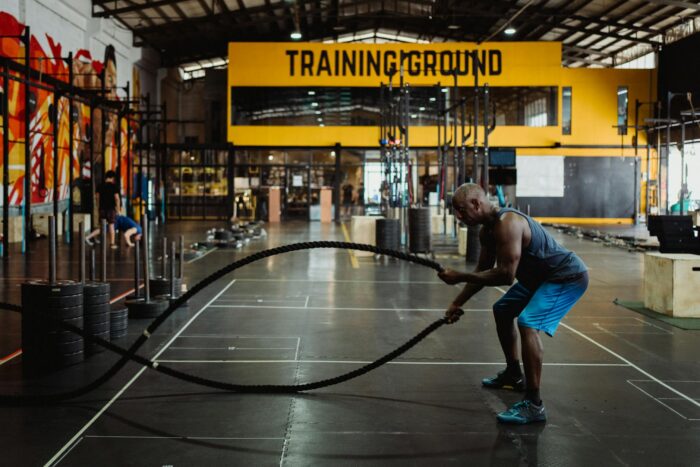
Goal: intensity and new progress in training
The goal is simple: when your training stops driving progress, you have to put your body back to work. Not necessarily by grinding away for more hours, but by changing training load, rest and intensity more intelligently.
Nga Trinh was a good example. A 31-year-old trainee living in Canada and New York, Nga wanted to get stronger, fitter and reach a six-pack, but the old program had done its job.
Why does your goal need a new intensity?
At the start of training, almost any consistent program delivers results. Your body learns the movements, your muscles get a fresh stimulus and your weight can move in the direction you want. At some point, though, your body adapts. The same weight, the same tempo and the same number of sets no longer force it to change.
Nga started out very light. Three years ago, Nga weighed 90 pounds and had 13% body fat, as they described it themselves. A trainer helped put together a training program with a heavier load and a higher-protein, lower-fat diet. The result was clear: Nga gained 10 pounds in two months and raised their body fat to a healthy 16%.
That changed how Nga felt. They no longer felt bony and weak, but stronger. For a while, a typical bodybuilding approach worked well: one or two body parts a day, three sets per exercise and 12 reps per set. Add a little cardio training and they stayed in shape.
But progress has its ceiling. Recently, Nga had the chance to climb 1.769 steps up the CN Tower in Toronto. It showed good endurance, but Nga’s own ambition was still bigger: to be even stronger, faster and fitter.
Training goal: less volume, more work
Ariel Estrada, a fitness trainer, judge and black belt holder, saw the problem quite plainly. Nga’s training was stalling. The solution was not simply to spend even more time in the gym, but to change how the work gets done.
If you keep doing the same exercises at the same rhythm, your body feels comfortable. Comfort, however, doesn’t build a new physique. Estrada recommended cutting training volume and adding intensity. That means every workout needs a clearer focus, and the rests, exercise order and training load must support the goal.
The new plan brought in three to four strength training sessions a week. In a single workout, three or four muscle groups got worked per day, not just one narrow body part. Instead of always lifting the heaviest weight possible and resting for a long time, the program moved toward supersets.
In supersets, you do two exercises back to back. The weights are moderate, and reps stay in the range of six to ten per set. The exercises can hit the same muscle group or complementary muscles. For example, after barbell squats, Estrada added single-leg lunges so the glutes and thighs got a different kind of work.
How to add intensity without overdoing it?
A simple truth: intensity doesn’t mean collapsing at the end of every workout. It means your training has a purpose. You know why you’re doing this particular exercise, why the rest is shorter or why you’re choosing a moderate weight today.
Balance mattered for Nga too. Nga was doing too much lower-body work, and Estrada took steps to help avoid overtraining and the injuries that come with it. When your hips and thighs are under load all the time, mobility and recovery have to be part of the same plan.
To maintain flexibility in Nga’s hips and thighs, Estrada recommended doing dynamic stretches daily, such as leg swings as far as they go. This kind of movement prepares your body, keeps your joints working and reduces the chance that a tired muscle starts guiding the movement incorrectly.
Cardio stayed too, but got a clearer structure. Trinh should cycle three or four times a week. Estrada also recommended rowing one day to strengthen the lower back, and running two days. Rowing works the lower back, glutes, hamstrings and upper body. Treadmill training should use intervals to lower and raise the intensity.
A practical comparison: before and after
From the outside, it may seem like nothing big changed. In both cases it was 9-10 hours a week in the gym. The real difference was in how those hours were used.
BEFORE:
- 9-10 hours a week in the gym
- 6 days of cardio, 45-60 min
- 4 days of cycling
- 3 days of running
- 3 days of upper-body strength exercises
- 3 days of lower-body strength exercises
- strength training = 3 sets of 10-12 reps, resting between sets
AFTER:
- 9-10 hours a week in the gym
- 6 days of cardio, 45-60 min
- 3 days of cycling
- 2 days of running
- 1 day of rowing
- 3-4 days of full-body training within 60 min
- strength training = 3 sets of 6-10 reps as supersets
So what actually changed? Less monotonous grinding and more thoughtful effort. Full-body training, supersets and intervals give the body a new signal, while still leaving enough room for recovery.
After starting Estrada’s program, Trinh said it was different and brutal: I was completely wrecked after my first workout, I couldn’t laugh for three whole days. Trinh’s attitude stayed the same, though. Some people make themselves a coffee in the morning, but I serve myself a workout.
A goal and a patient mind
If you want to build strength, speed and balance, willpower alone isn’t enough. You need a patient mind and a readiness to change your program before your body completely seizes up.
Nga’s story is a reminder that intensity is not random pain. It is the skill of giving your body a new challenge at the right moment. Sometimes that means shorter rest breaks. Sometimes it means more muscle groups in a single workout. And sometimes it means skipping one excessive lower-body session and choosing rowing or mobility work instead.
If your progress has stalled, ask yourself honestly: am I training hard, or just repeating an old habit?
FAQ
Does your goal have to be very precise before you change your program?
Yes, at least the direction has to be clear. Whether you want strength, shape or endurance affects your choice of exercises, your repetitions and how your cardio is split.
Are supersets suitable for beginners?
They are, as long as your technique is solid and the weight is moderate. A beginner doesn’t need to rush. Learn the movement first, then add intensity.
What should you do if the new program leaves your body too sore?
Reduce the volume, keep an eye on your sleep and keep mobility work in. Muscle soreness may come, but sharp pain or constant fatigue is not the goal.
Author: joker
Source: WHO – physical activity.
Come and train! ArtGym