
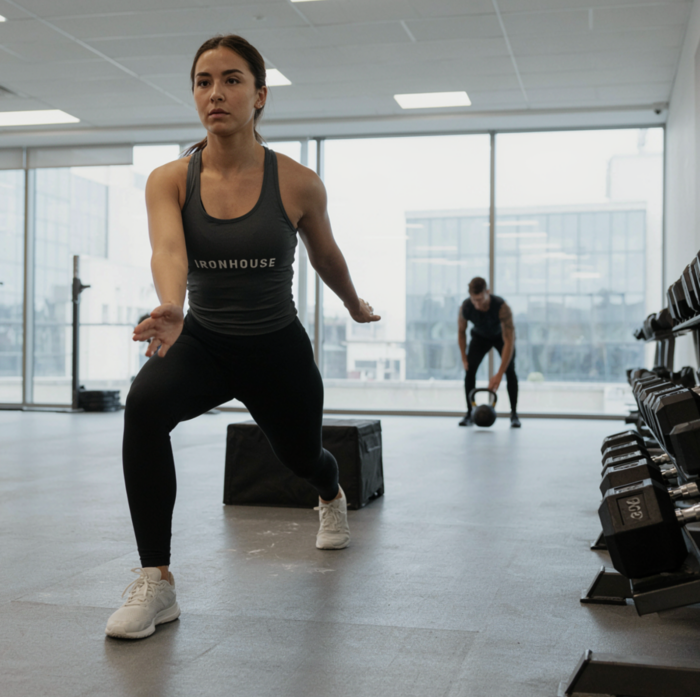
The Bulgarian method: 5 days of squats
To many people, Bulgarian methods sound like something reserved for weightlifters whose lives revolve around the barbell. In reality, the core idea is simple: if you want to improve your squat, you need to practice squatting more often. That means managing your training load intelligently, without going overboard.
2011 was an interesting year for strength training. Olympic weightlifting was gaining momentum, CrossFit signed a deal with Reebok, and the so-called hardcore “Bulgarian” methods were spreading beyond serious gyms to a wider audience. That raised a question: can the average lifter train heavy every day and still hold up physically?
Why is Bulgarian-style squatting such a talking point?
“Bulgarian” methods do not automatically mean that everyone has to attempt maximum weights from morning to night. They are more of a philosophy: practice a key lift frequently, let the technique become more natural, and teach your body to tolerate heavy work. Still, daily heavy workouts and “Bulgarian” methods are not synonymous.
The other big fear is always the same: is it possible to lift maximum weights every day without “dying”? Yes, it is. But there is a big difference between an experienced weightlifter following a well-designed plan and someone simply adding one more leg day to their usual routine.
Some of the people I coach and I have gone through periods of squatting the Bulgarian way every single day, sometimes even several times a day. My highest squat frequency was 14 squat workouts a week: three times a day on Mondays and Wednesdays, twice a day on Tuesdays and Thursdays, and once a day on Saturdays and Sundays. The progress I made during that period was unreal in the best possible sense.
To be clear, that does not mean you should try the same thing. When I talk about squatting every day here, a practical starting point is 5 days a week. Yes, that is not quite every day, but it is close enough and works better for someone with a job, a family, and a life outside training.
How does Bulgarian-style squatting teach your body to get stronger?
The main reason frequent squatting works is simple: something difficult becomes familiar. Squatting is no longer one big weekly event you have to prepare for mentally. It becomes a movement your body knows. The more you practice a lift sensibly, the better you learn to control your position, depth, breathing, and bracing.
One thing good lifters have in common is the ability to devote themselves fully to one thing. They repeat it, refine it, and avoid turning every workout into a circus. Eventually, the exercise becomes almost a reflex. This applies to the squat, bench press, row, and even a simpler bodyweight exercise.
More does not always mean better. But more practice often means greater skill. If you find a little time each day for one important lift, you will often progress faster than if you practice that same lift only once a week.
Another interesting reason is reduced stiffness. It sounds contradictory, but frequent training using Bulgarian methods may help your body stay more mobile after heavy work. Tendons, ligaments, and muscles tend to stiffen up in the days following a heavy workout. When the next warm-up and squat workout follow straight away, your body does not have the same chance to “lock up.”
We have joked about this in the gym: a good remedy for stiffness from squatting is squatting. That does not mean ignoring pain. Sharp pain, limping, or a breakdown in technique is a sign to back off. Ordinary training stiffness is a different matter.
5 days of squatting: a simple training plan
I am not asking anyone to start with 14 workouts a week. A more sensible approach is to train for 5 consecutive days and leave the rest of the week for recovery. That provides enough frequency without requiring you to build your entire life around your training plan.
One option is to use the front squat. The front squat forces you to keep your torso more upright and gives you immediate feedback when your position breaks down. You can apply the same logic to the back squat if that is your main lift.
Heavy days: Monday/Wednesday/Friday
Front squat: work up in weight to a maximum single. When you reach a weight you can no longer complete a single with, take 80-90% of that weight and perform an additional 3 x 2, or three sets of two reps.
These three sets are called back-off sets. They play a very important role in squat programs using the “Bulgarian” method because this is where much of the productive work gets done. Still, there is no need to be stubborn at the start. If 80-90% feels like too much, you can start with 70%. There is no shame in that.
Light days: Tuesday and Thursday
Front squat: work up in weight to a maximum single, but do not add the same volume of back-off sets. The aim of the day is to keep the movement fresh, not to run yourself into the ground again. This also helps you learn to judge what you are actually capable of on a given day.
The final back-off set on a heavy day should take serious effort. You should be able to complete it, but it should not be easy. That is the appeal of this approach: every day, you work close to your limits without turning every workout into a competition.
The Bulgarian method in practice: what to watch for
The simple truth: don’t overcomplicate something simple. If your goal is to get stronger with the Bulgarian method, train the squat movement. Don’t add a separate heavy leg day, endless lunges and maximum-effort jumps in the same week. Frequency itself is already a training load.
The translator added one more very practical idea to the original article. If percentages leave you confused, you can try a simple volume plan over 5 days, where the reps change but the lift stays the same.
- Monday: squats 10 x 5
- Tuesday: squats 10 x 4
- Wednesday: squats 10 x 3
- Thursday: squats 10 x 4
- Friday: squats 10 x 5
- Saturday: rest
- Sunday: rest
You don’t need to fix the weight at a specific percentage here. Choose a weight that leaves plenty in reserve and takes your ability into account. You can increase the weight from Monday to Wednesday, but only to a point where you can push through 10 x 4 on Thursday and 10 x 5 on Friday with the weight you used for Wednesday’s 10 x 3. You can train your upper body 2-3 times that week, but don’t squeeze in any extra leg work.
Here’s an example:
- Monday: squats 10 x 5 – 100 kg
- Tuesday: squats 10 x 4 – 105 kg
- Wednesday: squats 10 x 3 – 110 kg
- Thursday: squats 10 x 4 – 110 kg
- Friday: squats 10 x 5 – 110 kg
- Saturday: rest
- Sunday: rest
Again, be conservative when choosing your weights: this is high frequency, high volume and a substantial amount of work. If your technique starts to break down, the bar is too heavy. If you feel sharp pain in your knees, hip or lower back, stubbornness won’t solve it.
Original article: Everyday Squatting for the Everyday Athlete
Bulgarian method FAQs
Do I really have to squat every day?
No. The practical recommendation in this article is 5 days a week. That gives you the benefit of frequent training while leaving the weekend for recovery.
Is 80-90% suitable for a beginner?
As a beginner, you should be cautious. If your technique isn’t solid, start lighter. Even back-off sets at 70% can deliver plenty of benefits if you perform them well.
When should I stop this plan?
Stop or reduce your training load if you experience sharp pain, your sleep and appetite get noticeably worse, or every warm-up set already feels like a maximum effort. Stiffness is normal. Technique breaking down is not.
Author: Janar Rückenberg (translation)
Come and train! ArtGym




