Visible abs: a practical guide
Everyone actually has abs — the question is whether you can see them through the layer of fat. The short truth: behind a visible midsection stand roughly 70% nutrition, 20% training and 10% sleep. In this guide we look at how to put these three together without having to live on rice and broccoli.
Why don’t abs usually show?
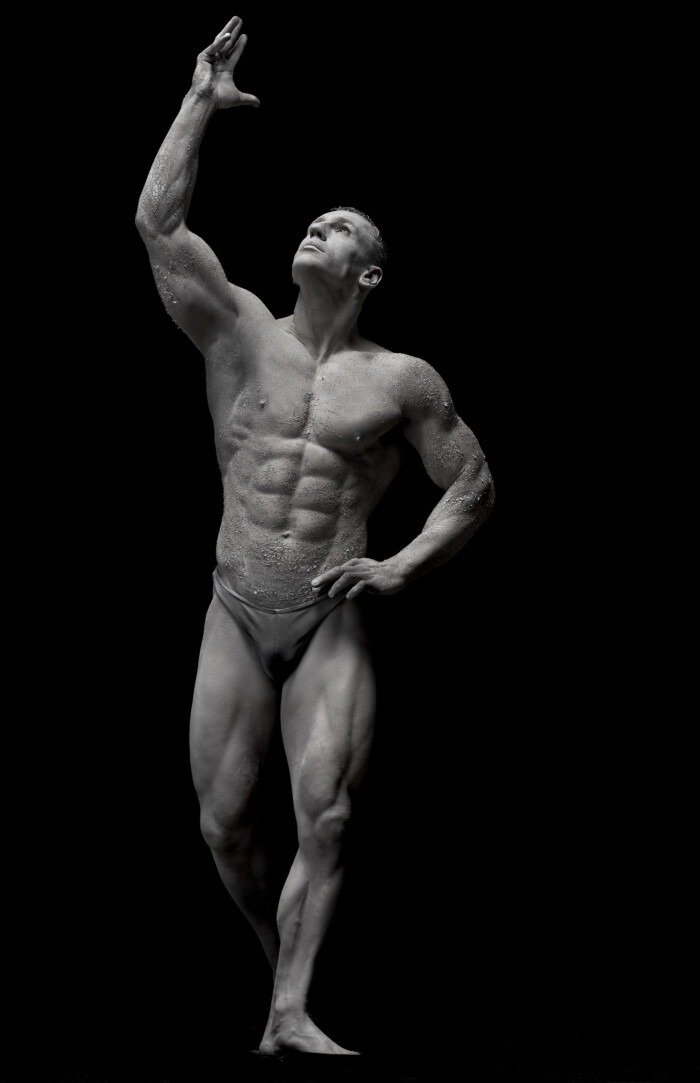
The most common reason is simple — there is too much subcutaneous fat on top of the abs. In men, the upper abs start to show faintly at around 15% body fat, and a clear “six pack” appears at 10–12%. For women these numbers are about 5% higher, because hormonally the body holds on to fat more stubbornly around the abdomen and hips.
Another thing that is often underestimated is the size of the abdominal muscles themselves. If you sit at a desk all day, the muscle is thin and has little definition. Even if you lose the fat, the result may not look like the Instagram picture. The solution is to work in both directions at once: fat down, muscle up.
Abs and nutrition: body fat percentage counts
Honestly, no plank or crunch burns fat locally from the belly. There is no such thing as “targeted fat burning from the belly”. What works is a consistent, mild calorie deficit. Around 300–500 kcal a day below your maintenance intake is a place where most people could start. Faster diets usually backfire — along with the fat, the body loses too much muscle.
You need more protein than many people think. During a deficit, protein preserves muscle mass and prolongs the feeling of fullness. A practical target is 1.6–2.2 grams per kg of body weight. For a 75 kg person that comes to 120–165 g of protein a day — roughly 500 g of chicken, two eggs and a pack of quark spread across the day. No magic, just arithmetic.
You don’t need to avoid carbohydrates. Rather, time them around your training: whole grains, potatoes and oat flakes before and after a workout keep your energy level steady. Healthy fats — olive oil, avocado, nuts — fill in the rest. In Estonia in winter this often means a fish oil capsule, because nobody eats fresh oily fish every day.
Abs and training: what actually works
Abs respond to the same principles as any other muscle — training load, variety and recovery. Doing 300 crunches a day achieves nothing if the tension is too low. It’s better to do 3–4 sets of 8–15 repetitions and add weight as soon as the exercise becomes easy.
Essential exercises worth putting on the menu
- Plank and side plank — static load that trains the entire deep abdominal musculature. Start at 30 seconds and build up to 90.
- Hanging from a bar and leg raises — one of the most effective exercises for the lower abs.
- Weighted crunches — with a kettlebell or plate held on your chest. Indispensable for advanced lifters.
- Pallof press and anti-rotation exercises — teach your body to hold tension, which carries over to the squat and presses as well.
Do aerobic training to raise your daily calorie expenditure, not to “burn belly fat”. 2–3 times a week of 30–45 minutes of walking, running or cycling is enough for most people. HIIT works well, but only if you recover — intervals every day plus the gym will sooner or later lead to overtraining.
Abs and lifestyle: sleep, stress, water
A night of poor sleep raises cortisol and the hunger hormone ghrelin. In practice, this means you are more likely to crave sweets the next day and to go for an extra portion in the evening. 7–8 hours of sleep is not a luxury but part of the training plan.
Water — 30–35 ml per kg of body weight a day is a good benchmark. In the Estonian winter, dry indoor air masks thirst, so you often need to remind yourself. Chronic mild dehydration makes the belly look bloated and hides already subtle definition.
And one last thing: patience. At a healthy pace you lose 0.5–1% of your body weight per week. For an 80 kg person that is 0.4–0.8 kg, which sounds like little, but over half a year it adds up to 10–20 kg. Abs won’t appear in two weeks, and every “6-day six-pack” training program is a sales pitch, not science.
FAQ
Does training abs every day get you results faster?
No. Abs recover like other muscles — 48 hours of rest between sets is the minimum. 3 times a week of 10–15 minutes of focused work gives better results than a superficial round of crunches every day.
Can training make women’s abs too “thick”?
In practice, no. A woman’s hormonal background doesn’t let muscle mass grow fast enough to look “manly”. A strong abdominal corset actually keeps the waist slimmer, because the deep muscles pull the belly in.
How long does it take for abs to show?
It depends on your starting point. Getting from 20% body fat down to 12% takes 4–6 months at a realistic pace. A faster pace is possible, but maintaining the result afterwards is hard. The goal should be a shape you can keep year-round, not one for a single summer holiday.
Edited by: Arnold Tokko
Illustrative photo: Kaupo Kikkas
Come and train! ArtGym