
Pilates: a strong core and better posture
Pilates is a calm but surprisingly demanding form of training that works your core muscles, your breathing and your posture. If your back tires quickly in an office chair or your technique tends to fall apart in the gym, this may be exactly the missing link.
Why Pilates is good for your body
The first thing many people notice in a Pilates class isn’t sweat. It’s control. The movements are slow, precise and often smaller than you expect at first. But the simple truth is this: when an exercise is done properly, it doesn’t have to be big or loud.
Pilates focuses especially on the center of the body. That includes the abdominal muscles, the lower back, the pelvic floor and the deeper muscles that help support the spine. These muscles don’t always show in the mirror, but they give your body support. That’s exactly why Pilates suits anyone who wants better posture, steadier balance and smoother movement.
The method was developed in the early 20th century by the German-born trainer Joseph Pilates. The idea was to combine strength, flexibility, breathing and concentration into a single whole.
Honestly, Pilates isn’t only for people who want a “gentle workout.” It can be calm, but it isn’t easy. Hold your legs in the air, keep your pelvis still and breathe in a controlled way at the same time, and your deep muscles quickly realize the work has begun.
How Pilates works in training
A Pilates workout often begins with breathing and noticing your body position. Are your ribs moving? Is your lower back tense? Are your shoulders rising toward your ears? These small observations help you perform the exercises better later on.
Mat exercises mainly use your own body weight. Typical movements include spinal rolls, leg lifts, torso rotations and various support positions. Sounds familiar? Maybe. The difference is that in Pilates, quality counts for more than rep count.
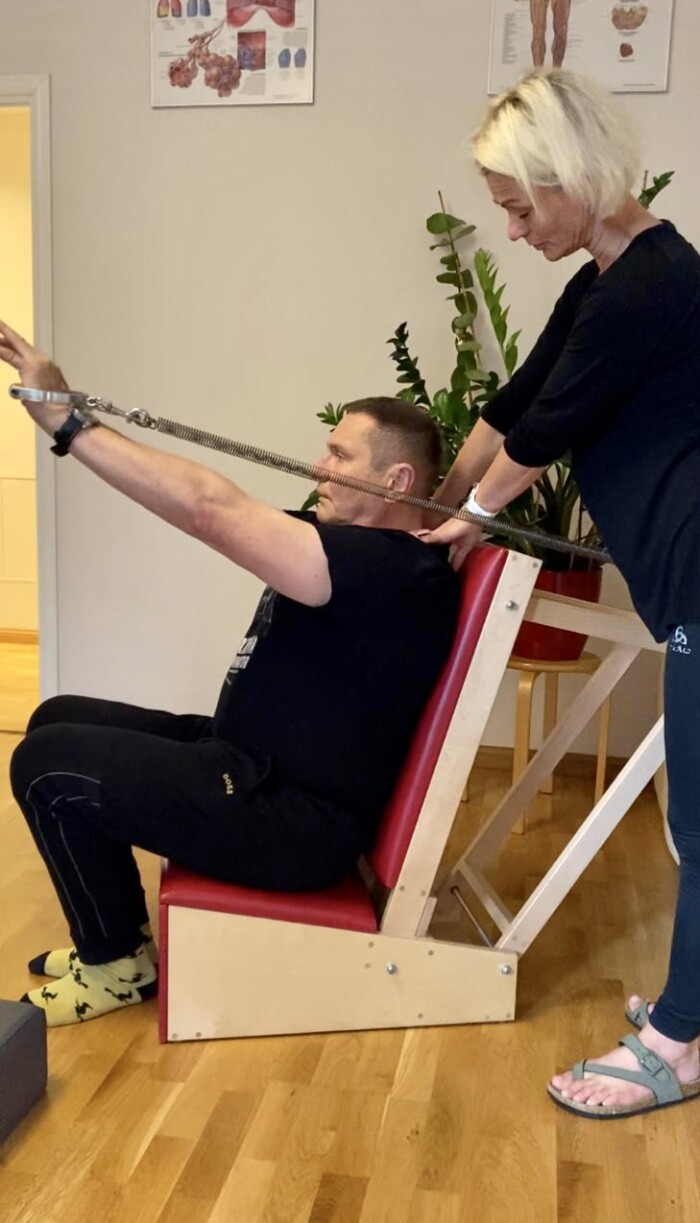
Studios may also use equipment such as the reformer, cadillac and barrel. These aren’t just fancy machines. Springs, straps and moving platforms give your body resistance and help some people feel the movement better. For a beginner, the equipment can even make an exercise easier, because it guides the movement more firmly.
So what actually happens? You learn to control your body. Your abdomen isn’t just “pulled in” but active. Your back isn’t stiff but long. Breathing isn’t in the background but part of the exercise. This kind of work carries over elsewhere: your running stride becomes more stable, the squat feels more solid and everyday sitting doesn’t tire you as quickly.
Practical tips for beginners
If you’re just starting out, it’s better to choose a beginner class or personal training. Pilates sometimes looks simple from the outside, but the technique needs guidance. This is especially true if you’ve had back, hip or shoulder problems. A trainer can correct your position before a bad habit sets in.
Your clothing should be comfortable and close-fitting. Not so that anyone can judge you, but so the trainer can see the position of your back, pelvis and knees. In a mat class, socks or bare feet are usually enough. In an equipment class, non-slip grip socks are often used.
Don’t rush to a harder level. If your base is weak, the exercise simply turns into compensation. The shoulders take over, the lower back tenses up and the abs are left as bystanders. The idea of Pilates is the opposite: less momentum, more feel.
In Estonia’s climate, Pilates is a good choice in winter too, when time spent moving outdoors is shorter and the body tends to stiffen. In spring, it can help you build a base for the running or cycling season. In summer, Pilates works as a more restorative workout between days when your gym or outdoor training has been tougher.
If your goal is better posture, give yourself time. One class can make you feel good, but lasting change comes from repetition. Two to three calm, properly done workouts a week are more realistic for many people than a big promise that lasts only until the end of January.
Illustrative image: Kaisa Marran Pilates Studio
FAQ: Pilates
Is Pilates suitable for beginners?
Yes, if you choose the right level. A beginner class gives you time to learn breathing, body position and the technical side of the exercises. There’s no need to fear complicated equipment, because the instructor explains the movement step by step.
Does Pilates help with back pain?
Pilates can help strengthen the muscles that support the back and improve posture, but if you have pain, it’s worth telling the trainer about your situation first. If the pain is severe or new, ask a doctor or physiotherapist for advice.
Does Pilates replace strength training?
It depends on your goal. Pilates develops control, mobility and deep muscle work. If your goal is a lot of muscle mass or maximum strength, it’s a good idea to keep classic strength training alongside it.
Edited by: Arnold Tokko
Come and train! ArtGym




