Energy density shows how many calories are packed into one gram of food. If you build your plate mainly from vegetables, you can fit a lot of food with few calories — your stomach gets full, but your weight doesn’t go up. A simple principle worth knowing.
What is the energy density of food?
The energy density of food is a simple ratio — calories divided by weight. Oil provides nearly 900 kcal per 100 grams, chicken thigh about 144 kcal, a root vegetable mix only 32 kcal. Portions of the same weight can therefore deliver very different amounts of energy.
Foods with low energy density contain a lot of water and dietary fiber and little fat. Foods with high energy density are usually fatty or sugar-rich and physically light. Adding oil and butter quickly raises a dish’s energy density. That doesn’t mean you should fear fat — it’s a question of amount and frequency.
Why low energy density helps you maintain your weight
The feeling of fullness comes from two things: the number of calories you’ve eaten and how much volume the food takes up in your stomach. Mechanoreceptors in the stomach wall respond to pressure. When the stomach is physically full, a signal goes to the brain that it’s time to stop eating.
A plate of steamed vegetables fills the stomach far better than a chocolate bar of the same weight. The first might provide 150 kcal, the second 500 — but only the first leaves you feeling that you’ve eaten.
Hence a classic observation: a nutrition plan put together by a specialist often lets you eat more than you used to on your own. The portions are bigger, but the total calories are lower. Your weight starts to come down gradually, without anyone having to go hungry.
Processing raises energy density
Any kind of processing — drying, boiling, frying, mechanical crushing — reduces the water and dietary fiber content and raises the energy density of food. The same ingredient can change dramatically.
A fresh apple (100 g) provides about 45 kcal. A dried apple (100 g) already provides 250 kcal — the same product, only the water has been dried out. That’s why fresh, natural food is talked about as the weight-friendly choice.
A 170-gram apple provides about 75 kcal, because nearly 85% of its weight is water and dietary fiber. A slice of cake of the same weight can provide 300–400 kcal. Which one fills the stomach better? 4–5 apples would equal one slice of cake by weight — and it would feel completely different in your stomach.
Practical kitchen tips
A few ideas that help you make lower-energy-density choices:
- Start lunch and dinner with the vegetable or salad half of your plate. The initial hunger fades before you reach the higher-calorie part.
- Choose fresh or lightly steamed vegetables. Drying and frying raise energy density many times over.
- Choose whole grain foods — porridges, wholemeal bread, rye bread. They are more nutrient-rich than vegetables, but still rich in dietary fiber and filling.
- Add fillet meat or fish to a stew or soup. Protein keeps you full for a long time and raises the nutritional value of a dish without sending the calorie count through the roof.
- Keep in mind that cookies and cakes belong to the group with the highest energy density. They’re not forbidden — just eat them consciously.
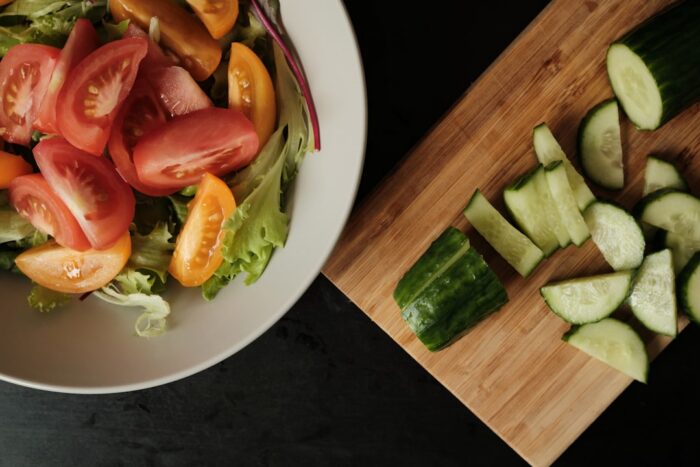
By edible part, vegetables fall into five groups: root vegetables (beet, carrot), fruiting vegetables (tomato, bell pepper), legumes (peas, beans), leafy vegetables (white cabbage, lettuce, herbs) and flower-head vegetables (cauliflower). A good plate has room for several groups at once.
Frequently asked questions about energy density
Does energy density mean the same as the glycemic index?
No. Energy density measures calories per gram. The glycemic index shows how quickly carbohydrates are absorbed into the blood. Both are useful for weight control, but they are separate measures.
Do you have to avoid fat?
No. Fats are necessary in food and bring flavor. It’s just that 1 gram of fat contains 9 kcal, so a small amount provides a lot of energy. Use them consciously, not out of reflex.
Do you have to count calories for weight loss?
Not necessarily. If the base of your plate is vegetables and unprocessed food, your calorie intake often drops on its own, without you having to track anything in Excel.
Author: Janar Rückenberg
Come eat at Armudu!
Come train at ArtGym!