Women and the gym: weights don’t bite
Women hear the same fear about the gym over and over: weights will make your body too big right away. In reality, sensible strength training gives you a stronger back, better posture, toned legs and a better sense of well-being.
Why are women afraid of the gym?
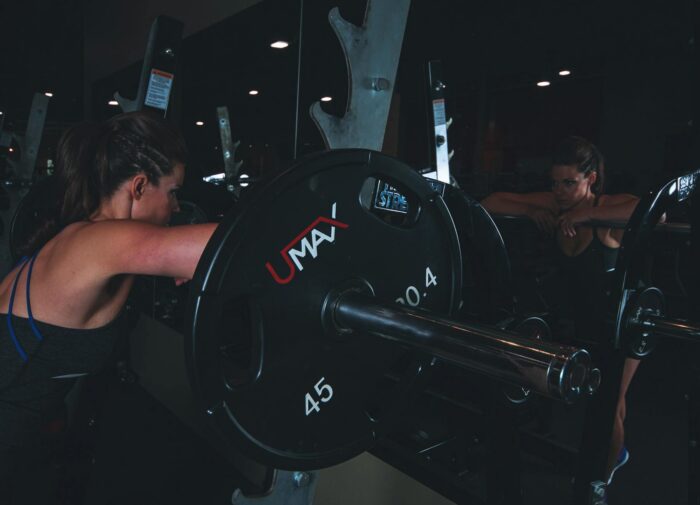
You’ve bought a monthly pass and your first workout is waiting, but the barbell corner can feel foreign. There are big plates, people counting repetitions and someone making noise. That’s enough to make you pick the safe treadmill or a familiar machine instead.
The biggest myth is the old familiar Arnold Schwarzenegger syndrome. Many women worry that training with a barbell and dumbbells will build them the same kind of muscles Schwarzenegger once had. That doesn’t happen just like that. Ordinary strength training, without banned substances and a very special lifestyle, won’t turn a woman into a bodybuilder overnight.
The simple truth: weights don’t steal your femininity. They help your body work better. Your shoulders get firmer, your glutes gain tone, your legs get stronger, and everyday things, like carrying shopping bags or climbing stairs, become easier.
Translator’s note: that’s true, “the worst you can end up with is a nice, toned body, a firm butt, thighs, arms… your whole body!!!”
How do women get started with weights?
It’s worth starting calmly, but not so cautiously that the workout leaves no mark on your body. 50 kg may look frighteningly heavy on paper. If your technique is in order and your body allows it, 50 kg is not in itself a reason to avoid an exercise.
This is exactly where many people put on the brakes. The strength might be there, but a thought keeps ticking in your head that a woman shouldn’t squat or deadlift heavier weights. Honestly, this is more a matter of gym culture and confidence than of what the body is capable of.
If an exercise feels uncertain, ask a coach for help, or someone who performs the same movement calmly and with clean technique. The goal isn’t to impress anyone in the first week. The goal is to learn to move so that the training load goes to the right place.
Translator’s note: true again. I’ve noticed the tendency myself: a woman could squat wonderfully well even with the same weight that some teenage boy next to her is squatting, yet as a woman, she “dismisses” the heavier weight, as if it weren’t “suitable” for a woman to train with “the same weight.”
Machines are a start, not a ceiling
Machines are good, especially if you’ve had a long break or are only just learning to feel your body. They give you a fixed path and help take the fear away. But if you really want to get stronger, sooner or later you should move on to free weights: the barbell, dumbbells and bodyweight exercises.
Free weights teach the body to work as a whole. You’re not training just one small muscle, but have to keep your balance, brace your core muscles and control the movement from start to finish.
Women and the squat: why does this exercise matter?
If your goal is better posture, stronger legs, toned glutes and better overall shape, the squat deserves a place in your program. The squat works the hips, quadriceps, hamstrings, glutes and core. For a single exercise, that’s a very good haul.
The original recommendation was to do 3 6 sets of heavy squats per week. The translator rightly added that this doesn’t have to suit everyone. A more practical way to think about it: squat 2 x a week and do 3 6 sets per workout if your recovery and technique allow it. Other leg and core exercises fit alongside.
Translator’s note: right again, but the number of sets and the number of times per week that the article gives don’t necessarily have to be exactly that. Personally, I’d recommend squatting 2 x a week, and those 3 6 sets could be the number of squat sets in one workout, plus other exercises.
What should women keep an eye on in training?
During the first 3 4 months, progress can come quickly. Your body gets a new stimulus and almost everything seems to work. Then the picture usually slows down. That’s normal, not a sign that strength training has stopped working.
Moving forward requires a small increase in training load. If you keep doing the same sets with the same weight all the time, your body gets used to it. If your working sets are 3 x 10, try adding even just 1 kg next time, or do a more controlled, longer set with the same weight. Either way, your body gets a new task.
Keep technique in first place. The weight isn’t worth it if your squat collapses, your back gets out of control or the movement turns into flailing. A good workout is one where you really push yourself, but understand what you’re doing.
So what actually happens when women aren’t afraid of weights? Usually nothing dramatic. The body gets stronger, muscles take shape, confidence grows, and the gym no longer feels like someone else’s territory.
FAQ: women and the gym
Do women get too muscular from strength training?
No, not if the training is ordinary and the goal is shape, strength and a better-toned body. A very large amount of muscle mass takes years of dedicated commitment, special nutrition and often substances that the average gym-goer doesn’t talk about.
Are machines enough?
At first they may well be enough. Later it’s worth adding free weights, because they develop balance, coordination and whole-body strength better than just sitting on machines.
How quickly should you increase the weight?
Increase it when your technique stays good and the current weight no longer gives you enough challenge. A small step, for example 1 kg, is perfectly respectable progress.
Translated by Janar Rückenberg
Source: Turg.Fitness.ee
Come and train! ArtGym