
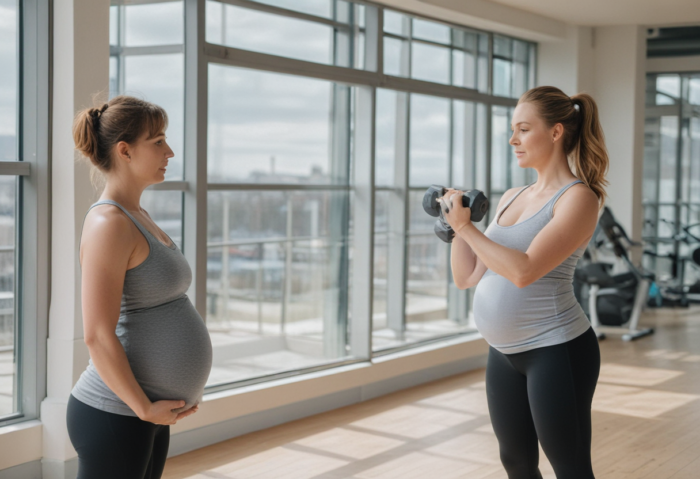
Safe gym training during pregnancy
Gym training during pregnancy is not about chasing personal bests with a baby bump. It means choosing exercises wisely, taking a gentler pace and genuinely listening to your body. If your pregnancy is progressing normally and your doctor has cleared you to exercise, the gym can help keep your back, legs and pelvic floor stronger.
Why is gym training beneficial during pregnancy?
Your body changes every month during pregnancy. Your bump grows, your center of gravity shifts forward and your lower back may start working harder. Some women experience fatigue as early as the first trimester; for others, it comes later. That is why training during pregnancy cannot be the same for everyone.
The aim of going to the gym at this stage is not to “improve” your fitness at all costs. It is to keep your body functioning as well as possible. Stronger glutes and back muscles may help reduce back pain. Moderate physical activity supports your well-being and sleep. Learning to engage and train your pelvic floor muscles properly helps your body cope better with both pregnancy and postpartum recovery.
The simple truth is that if you trained regularly before pregnancy, you usually do not have to stop everything overnight. But you do need to adapt your training. If you did not exercise before, pregnancy is not the best time to start a heavy strength training program. You can, however, start gently with an instructor’s guidance and your doctor’s approval.
How do you approach gym training during pregnancy?
The first step is to talk to your doctor. That may sound dull, but during pregnancy it is the most practical advice. Your doctor or midwife can tell you whether you have any restrictions due to issues such as blood pressure, bleeding, the position of the placenta, severe pain or another health concern.
Once you have the green light, choose a workout that leaves you feeling better, not battered. Choose a weight that allows you to perform the exercise with good form while continuing to breathe. If you have to hold your breath or strain until your face turns red, the training load is too high.
Keep the pace gentle
During pregnancy, there is no need to push through sets until your muscles are “burning.” Keep something in reserve. If you usually did 10 reps with a lot of effort, do 8 reps with a lighter weight now. You can take longer rest breaks. This is not laziness; it is a sensible adjustment.
Choose stable exercises
Machines, cables, light dumbbells or bodyweight exercises are often good choices. Seated rows, light leg presses, hip thrusts, lateral band walks and squat variations performed at a gentle pace, for example, may work well. If your balance becomes less steady, use a support.
Avoid overheating
A gym may feel pleasantly warm during an Estonian winter, but it is worth being cautious about heat during pregnancy. Drink water, dress in layers and avoid the sauna immediately after a workout. If you feel dizzy, your heart is pounding uncomfortably or you feel nauseous, stop your workout and rest.
What should you watch for at the gym during pregnancy?
Honestly, how you feel is the best guide. Pain is not the goal of training. Sharp abdominal pain, bleeding, dizziness, shortness of breath at rest or intense pelvic pressure are signs that you need to stop your workout and seek advice from your doctor.
Many exercises need small adjustments as pregnancy progresses. Exercises performed lying on your back may become uncomfortable later on. Traditional sit-ups are no longer the best choice, as your abdominal wall is already under pressure. Breathing exercises, gentle core stabilization and exercises that do not cause your abdomen to “cone” into a pronounced ridge are better options.
Your pelvic floor deserves particular attention. Training it is not just about contracting the muscles. Knowing how to relax them is equally important. If you are unsure whether you are doing the exercises correctly, ask a physiotherapist who works with pregnant or postpartum women for help.
So what actually happens when you adapt your training sensibly? You may not move as fast as before, but you may feel more stable. Training becomes less of a competition and more about working with your body.
Gym training during pregnancy: a practical plan
Start with 5–10 minutes of gentle warming up. Walking on a treadmill, cycling or using a rowing machine at an easy pace are suitable options, as long as they feel comfortable. Then choose 5–7 exercises for your whole body: one for your legs, one for your glutes, one for your back, one for your chest or shoulders, one for your core and one for your pelvic floor or breathing.
Focus on doing less, but doing it well. Even two strength workouts a week may be quite enough. Add walks and everyday physical activity, and you already have a good routine. Toward the end of pregnancy, workouts may become shorter and gentler. That is normal.
If a trainer gives you a program, ask directly: has this been adapted for pregnancy? Does it take account of my trimester, previous training experience and any symptoms I have? A good trainer will not be offended by the question.
FAQ
Can you lift weights at the gym during pregnancy?
Yes, if your pregnancy is progressing normally and your doctor has not advised against it. Keep the weights moderate and use sound technique. The goal is control, not lifting the maximum weight.
When should you stop exercising immediately?
Stop if you experience severe pain, bleeding, dizziness, feeling faint, shortness of breath, chest pain or unusual pelvic pressure. If this happens, seek medical advice.
Can a beginner go to the gym during pregnancy?
Yes, but you need to start very gently. The best option is supervised training that focuses on technique, breathing and comfort rather than how much weight you lift.
Edited by: Arnold Tokko
Come and work out! ArtGym




