
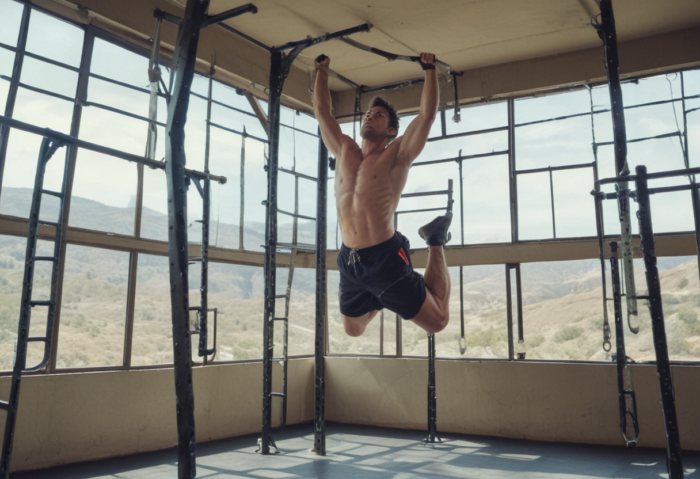
Extreme sports and the gym: a strong base
Extreme sports test the body where regular training often ends: at speed, at height, in the cold, on a wet trail or at the moment of an unexpected fall. The gym won’t automatically make anyone a better skater, climber or snowboarder, but it gives your body a stronger foundation for using those skills more safely.
A simple truth: courage alone isn’t enough in extreme sports. You need strength, mobility, balance and the ability to control your body in a stressful situation.
Why do extreme sports need a strong body?
When someone snowboards, climbs a wall, does tricks on a bike or tries wakeboarding, the body never works in just one direction. One moment you push, the next you brake, then you turn and finally you land. That is exactly what makes extreme sports so exciting, but also so demanding.
In the gym you can develop these qualities in a calmer environment. There’s no slippery slope or sudden gust of wind. There’s a barbell, dumbbells, resistance bands, cable stations and enough space to learn the movement. It’s a place where you can expose your body’s weak spots before they make themselves painfully known on the trail or in the park.
Many enthusiasts only make it to the gym once a knee, shoulder or lower back already hurts. In fact, strength training should be preparation, not a last resort. Especially in the Estonian winter, where the season can mean cold weather, a stiff body and uneven snow, a strong base is very practical.
How do extreme sports benefit from the gym?
The point of gym training isn’t to turn an extreme sports athlete into a bodybuilder. The goal is better control. Your body has to be able to produce strength, brake it and, when needed, change direction quickly.
Legs and hips give you a firm hold
Squats, lunges, hip thrusts and single-leg exercises help build legs that can withstand landings. That doesn’t mean everyone has to do heavy barbell squats. Some people are better suited to goblet squats, sled presses or a slow, controlled single-leg Romanian deadlift.
Symmetry is what matters. If one leg does all the work and the other just comes along for the ride, a problem will show up sooner or later. On a snowboard, on a bike and when climbing, you feel it especially quickly.
The core holds movement together
Abdominal muscles aren’t just about looks. A strong core helps transfer strength from your arms to your legs and back again. Planks, side planks, Pallof presses, farmer’s walks and controlled rotations are simple but very useful exercises.
So what actually happens when the core is weak? The body starts to compensate during the movement. The lower back takes on too much load, the knees cave in or the shoulders move into a poor position. It may not hurt right away, but repeated load builds up.
Shoulders, grip and back need patience
Climbing, skateboarding, BMX, wakeboarding and many other disciplines stress the shoulders more than it first seems. Rows, pull-up variations, face pulls, shoulder external rotations and grip exercises help build a more solid upper body.
This is where it pays to leave your ego at the door. The shoulder is a mobile joint, not a machine you can keep adding weight to endlessly. It’s better to do clean reps and progress gradually.
A practical gym plan before the season
If you train alongside your extreme sport, start with two gym days a week. For most enthusiasts that is enough, especially when your main sessions already take place outdoors, in an indoor hall or on the wall. A third day can be added once your recovery is in order.
One workout could include legs, core and pulling movements. The other can focus on single-leg work, shoulders, mobility and lighter power work. Jumps and explosive exercises are best done when you’re fresh, not at the end of a workout when your technique is already falling apart.
- Start with an 8–10 minute warm-up: a light session on the rowing machine or bike, or mobility exercises.
- Choose 4–6 main exercises, not ten random machines.
- Keep your reps mostly in a controlled range where your technique stays clean.
- Leave at least one or two reps in reserve. The extreme sport itself also takes energy.
- Write down your weights and how you feel. Memory is a poor substitute for a training log.
In spring, when many people start spending more time outdoors, it’s a good time to reduce your gym training load a little and focus on quality. In winter you can build more strength, since there are fewer options outside. In summer it makes sense to keep your body in working order rather than push every workout to the max.
Extreme sports and injury prevention
No gym program makes a fall safe. Frankly, that would be too good a promise. But a trained body copes better with sudden force, fatigue and bad positions.
Three things matter most in preventing injuries: enough strength, good mobility and a sensible increase in training load. If you add a new discipline, more tricks, longer sessions and heavy gym workouts all at once, your body gets overwhelmed. Give it time to adapt.
A coach can be a big help here. Not by standing next to you the whole time, but by making sure your technique and training load start off on the right track.
A good sign is when gym training leaves you fresher out on the course, not slower. If your legs are stiff for three days and your shoulders are constantly sore, your program is too hard or your recovery is too weak.
FAQ: extreme sports and the gym
Do extreme sports always require gym training?
Not always, but the gym helps most participants prepare their bodies better. It is especially useful when your sport involves lots of landings, pulls, rotations or sustained load.
How often should an extreme athlete go to the gym?
A good start is twice a week. If the load from your main sport is high, even one well-executed strength workout is enough to maintain your strength and support your weaker areas.
Does the gym make your movement stiff?
A poorly chosen program can, but proper strength training tends to improve control and mobility. Do your exercises through a full range of motion, add a warm-up and don’t forget about recovery.
Come and train! ArtGym




