
Dietary fat: how it helps you burn body fat
Fat is one of the most confusing topics in nutrition. But the reality is surprising: fat added to a meal at the right time can help stabilize insulin levels and support fat burning — not the other way around.
Why isn’t fat always the enemy?
When you’re on a diet, your first instinct is to cut fat from the menu completely — especially when a meal is rich in carbohydrates. Every experienced bodybuilder knows that when eating out, you order boiled potatoes instead of fried ones. Logical, right?
So what actually happens when you remove fat from your diet completely? Carbohydrates are absorbed faster, blood glucose rises sharply and insulin spikes. A sharp rise in insulin — except right after training — suppresses fat burning and promotes fat storage. Stable insulin levels are therefore the key, not just calorie arithmetic.
Recent research by Australian scientists shows that a small amount of fat before a carbohydrate-rich meal can noticeably blunt this insulin response.
Fat and insulin: what the study actually showed
The study involved men with type 2 diabetes — precisely because changes in blood glucose and insulin levels are easiest to measure in them. Participants ate mashed potatoes in three different situations:
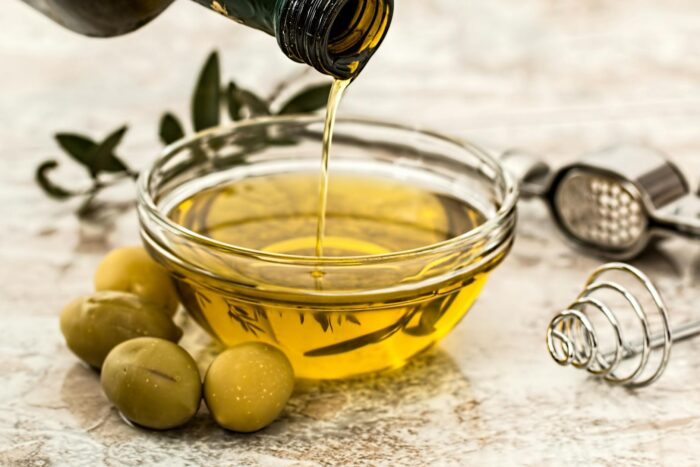
- Test 1: participants took 30 ml of olive oil 30 minutes before eating the potatoes.
- Test 2: participants drank 30 ml of water 30 minutes before eating the potatoes (control group).
- Test 3: participants consumed 30 ml of water mixed with 30 ml of olive oil 30 minutes before eating the potatoes.
The result was clear: when olive oil was consumed before the meal or together with the potatoes, the potatoes were digested noticeably more slowly. Insulin didn’t spike — unlike in the plain-water control test.
The simple truth: fat slows gastric emptying. This means carbohydrates reach the bloodstream more slowly, the insulin rise stays more moderate and the body remains in fat-burning mode for longer.
Dietary fat: practical tips for everyday life
Although the study involved diabetics, the same principles apply to completely healthy people. Insulin works similarly in everyone — the difference is only in the strength of the response. So what does this mean in practice?
- If you’re planning potatoes for dinner, consider adding butter, cream sauce or another fat-rich topping.
- The best option: eat a salad dressed with olive oil before the main meal. It’s a natural, tasty way to bring fat into a meal without overdoing the calories.
- Avoid pairing a fat-free nutrition plan with a carbohydrate-rich meal — a small amount of fat is good for digestion.
- Right after training, a fast insulin rise is desirable — that’s when it feeds the muscles and helps recovery. The trick of adding fat is better suited to other meals.
Honestly, this seems contradictory at first. For decades, fat has been blamed as the main cause of weight gain. The real picture is more nuanced: what matters is when and how much fat you eat, not just whether it’s in your food.
FAQ — dietary fat and weight control
Doesn’t adding fat automatically mean more calories?
It does — dietary fat is calorie-dense. That’s why the study deals with moderate amounts: 30 ml of olive oil is the dose used in the trial, and it noticeably affects the insulin response. The key is to control the amount rather than exclude fat from the menu entirely.
Does this work even if I’m not diabetic?
Yes. The study chose participants with type 2 diabetes because their response to glucose is stronger and can be measured more precisely. Insulin rises after eating fast carbohydrates in everyone — just more intensely in people with diabetes. The slowing effect of fat on digestion applies to everybody.
Which fat works best?
The study used olive oil, which is well researched and available to most people. Butter and cream sauce probably work as well — what matters more is that fat is present in the meal before the carbohydrates are absorbed, not exactly which fat it is.
Tabatha Elliott, Flex
Translated by: Aktivist
Source: Fat
Come and train! ArtGym




