When the autumn winds pick up and riding outdoors becomes uncomfortable, most recreational cyclists move indoors. In Estonia, a spinning workout is a simple solution: you can keep your legs moving, your heart strong and your head free of the worry that you’ll have to start from zero in spring. In this article we look at what indoor riding gives you, what an hour actually looks like and why you shouldn’t be put off by your first class.
Why a spinning workout suits the Estonian winter
November through March is without a doubt the hardest stretch of the year for outdoor athletes. Darkness falls in the afternoon, the asphalt is slippery and the cold air you pull into your lungs slows your pace. In a closed studio none of that matters — the temperature is stable, the lighting is good and you can focus solely on what your legs are doing.
A spinning workout is also straightforward when it comes to time. One hour from start to finish, warm-up and stretching included. There’s no need to factor in the trip to the forest or the seaside.
A simple truth: in winter, fitness slips away from those who don’t move. And it comes back to those who move regularly — wherever they do it.
How a spinning workout is structured
A typical class lasts 45–60 minutes and is split into three parts. The warm-up is easy: your heart rate rises gradually and the resistance on the bike is added slowly. The main part is a mix of intervals and longer steady stretches — this is where the real work gets done. The finish is a short recovery ride plus stretching for the hips, calves and back.
The content of classes varies by instructor and format. Honestly, there’s no need to fear your first time — you get on the bike, ride at your own pace and nobody is chasing you. Everything you need to know is explained at the start of the session.
The most common formats
- Easy spin — a steady pace, suitable for beginners and for a recovery week.
- Interval — alternating hard and easy stretches, improves VO2 max.
- Marathon — a longer ride (75–90 min) across a wider range of effort, imitating a long road ride.
- Tabata or HIIT — short explosive bursts, with the whole class lasting 30–40 minutes.
Practical tips for beginners
Arrive 10 minutes early. You’ll want someone to help you set up the saddle and handlebars — in the first couple of sessions, the wrong saddle height is what makes your knee ache or your back tire.
Bring a water bottle and a towel. You’ll usually sweat more in the studio than you expect — the bike stays in place and there’s minimal airflow. Water is simply a must.
What to wear: short fitted shorts or cycling tights that won’t get caught in the pedal chain, and a breathable shirt. You don’t need special shoes the first few times — most studios have regular pedal straps alongside clip-in pedals. If you stick with it, it’s worth getting your own shoes after a couple of months; the difference in feel is big.
For your first two or three sessions, stay below your maximum. Your legs are learning the circular motion, your backside is getting used to the saddle and your body is adjusting to the new training load. Overdoing it backfires in the form of a week of a sore backside — the most typical reason people don’t come back after the first time.
Spinning workout vs road riding
Does a spinning workout fully replace riding outdoors? No. On the road you learn things you can’t practice in a studio — braking, cornering technique, group riding, keeping your balance on descents. Spinning, on the other hand, trains strength and VO2 max in a very controlled way, because your pace isn’t disrupted by wind, traffic lights or traffic.
A sensible winter plan for many cyclists: two spinning classes a week plus one longer steady ride on the weekend, either on a home trainer or outdoors if the weather allows. In spring you’ll be in far better shape than someone who waits for April and starts from zero.
FAQ about spinning workouts
Is a spinning workout suitable for a complete beginner who has never ridden a bike?
Yes. Unlike on a real bike, you can’t fall anywhere. The instructor shows you how to turn the pedals and what position to sit in on the saddle. The first couple of classes may feel easy, but don’t push past your own pace even when the instructor calls for more.
How many calories does one hour burn?
It depends on your heart rate and body weight, but 400–700 kcal an hour is a typical range for an adult. Interval riding is at the higher end, easy spin at the lower.
What’s the difference between spinning and a home exercise bike?
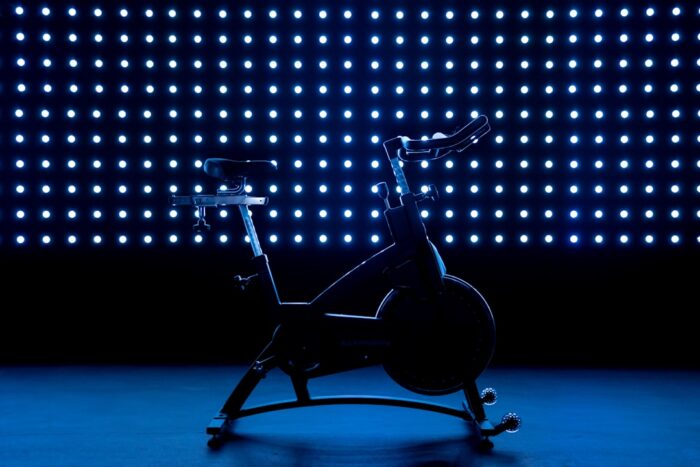
A studio bike is heavier, the flywheel is larger and the resistance is mechanical — the feel is closer to a real bike. The instructor and the music also add structure, which is hard to maintain alone at home.
Come and train! ArtGym