A dedicated gym program for cyclists
A dedicated program for cyclists comes down to something simple: winter is about building both mileage and a body that can handle the demands of cycling in spring. If your goal is to ride in the Elion Estonian Cup, Team Rattapood Cup or another race, the gym is an integral part of preparing for the season.
This article explains the thinking behind BodyZone’s old cycling program in today’s language. What should you do in the gym, how many times a week should you train, and when should you increase your training load to build strong legs without making your riding feel stiff?
Why does a dedicated program matter for cyclists?
Cycling seems simple at first: get in the saddle and pedal. In reality, your whole body is working. Your thighs and glutes provide the strength, your core keeps your position stable, and your back and shoulders help keep you from slumping over the handlebars. If one link is weak, you will pay for it on a climb, into a headwind or towards the end of a longer ride.
That is exactly why the BODYZONE sports club once offered a dedicated preparation program for cyclists. BodyZone’s top coach Gert Koovit and professional cyclist Sigvard Kukk provided guidance. The idea was practical: prepare for the season using sound sports training methods, rather than simply trying machines at random.
Strength training for cyclists does not mean pumping iron like a bodybuilder. The aim is better force transfer to the pedals, a stronger core and a lower risk of injury. Frankly, this is especially important during an Estonian winter, when outdoor riding can be slippery, dark and inconsistent.
How should you structure a dedicated program?
A good gym program for cyclists generally focuses on three areas: strength, endurance and mobility. You need all three. Strong legs alone will not help if your core gives out in the second hour of a ride. Likewise, stretching is not enough if you lack strength on climbs.
Start by assessing your capacity for training
The old BodyZone program included a cardiac stress test, or Cardiotest, at the beginning and end of the program. That still makes sense today. A test will not automatically make you faster, but it gives you a picture of the training load your body can actually handle.
If testing is not an option, start conservatively. Your first weeks should be about learning technique, not proving yourself. Squats, lunges, hip thrusts, core exercises and pulling movements offer cyclists more benefit than a random circuit of machines.
Combine gym work with cycling training
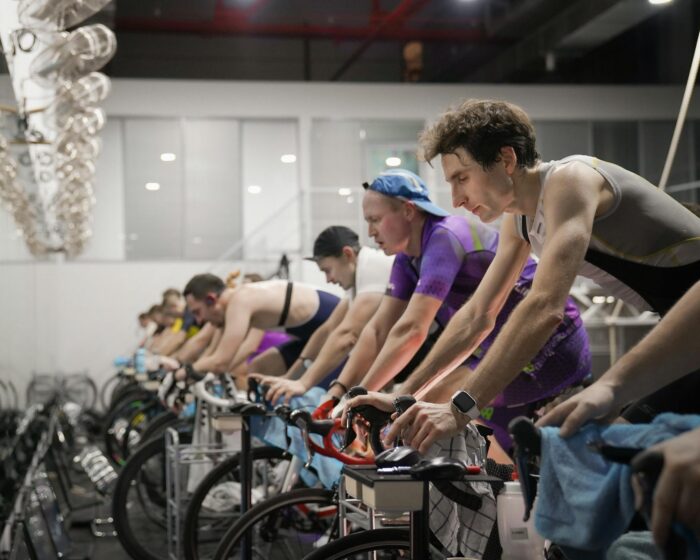
The original program included 6 months of gym access with unlimited visits and 6 months of unlimited access to the spinning studio + spinning classes. This does not mean you have to train every day. It means that preparation takes several months and you can spread your workouts out.
Winter is a good time to build a base in the gym. As spring approaches, gym work should take on a supporting role, with cycling or spinning playing a bigger part. The simple truth is that the closer your race gets, the more your body needs to get used to the rhythm of cycling itself.
The program in practice: what should you watch for?
A cyclist’s program should include a personalized training program designed specifically for cycling, a nutrition plan and professional guidance in the gym. That may sound formal, but the idea is simple: the program needs to match your level, your nutrition needs to support your training load, and someone needs to check your technique.
- Choose exercises that strengthen your legs, hips and core.
- Do not increase your training volume abruptly, especially after a longer break.
- Schedule harder leg workouts for days when you do not have a very intense ride the next day.
- Pay attention to your lower back, knees and hips. Pain is not a sign of a good workout.
- Use spinning when the weather or road conditions make riding outdoors a bad idea.
The old offer also bears the hallmarks of its time: a lecture titled “Strength preparation: content and planning” on 15.11.05 at 19.15 at the BODYZONE sports club, an offer valid until 15.12.2005, a special price of 5500.- and free entry to the season’s first Team Rattapoe Cup mountain bike race in Pirita on 22 April 2006. Those dates are now history, but the principle remains: a cyclist’s preparation starts before the season, not on the morning of the first race.
The bike shop’s 15% discount on equipment purchases was an extra bonus at the time. From a training perspective, though, what matters more is that your equipment, training load and recovery work together. A good bike cannot make up for a weak core, but a strong body helps you ride better even with average equipment.
FAQ: a dedicated program for cyclists
Do cyclists need to go to the gym at all?
You do not have to, but well-planned strength training helps. Especially if you race, ride long distances or feel you lack strength on climbs.
When is the best time to start a cycling gym program?
The best time is the off-season, usually autumn or winter. That gives you time to learn technique and build strength before your cycling volume increases in spring.
Can spinning replace outdoor riding?
Not entirely. Spinning is a good way to maintain your training load, especially in bad weather, but riding on roads or trails teaches you balance, cornering, how to handle different surfaces and how to deal with race situations.
Author: Siserattad
Come and train! ArtGym