
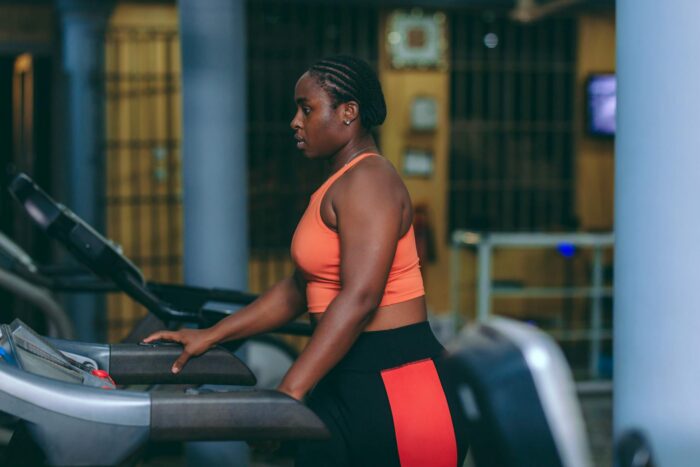
Aerobic training: principles and guidelines
Aerobic training delivers results only when frequency, duration and intensity are dialed in. Below are simple guidelines for building a session — from warm-up to stretching — so that your cardiovascular system improves and injuries stay away.
Why structure matters
An aerobic session is not just “go and run.” A proper workout has three parts: the warm-up, the main part and the closing part (cool-down). Each part has its own role — skip one and either your results or your joints will suffer.
Honestly, you still see people in the gym and on the running track who start cold at full training load and finish just as abruptly. That is where most “unexpected” strains and cases of tendinitis come from.
Warm-up and stretching at the start of aerobic training
A common mistake is stretching muscles before they are warm. Stretching a cold muscle does not prepare the body for training — it is a shortcut to micro-tears. Move first, stretch later.
The initial warm-up should last about 5–10 minutes at low intensity — usually 50–60% of maximum heart rate (HR). A good rule of thumb: the warm-up should use the same movement you will do in the main part, just slower. A light jog before running, a couple of minutes of easy pedaling before cycling.
Once blood is already circulating faster through your muscles, you can do a light stretch for the muscle groups that will carry the main training load. Not a long static stretch — a couple of short holds are enough to get your joints moving.
The main part: how often and how long
The frequency of aerobic sessions simply means how many times a week you train. To raise cardiovascular fitness and gradually lower your body fat percentage, you should train at least 3 times a week. The American Sports Medicine Institute recommends 3–5 aerobic sessions a week in its health programs, with an average of 36–48 hours of rest between sessions.
As for duration: to get a real gain in endurance and a drop in body fat percentage, one aerobic session should last 20–60 minutes — not counting the warm-up and cool-down. Even low-level exercisers should aim for at least 20 minutes. The longer the session, the more calories (and therefore fat) you burn.
For complete beginners
If you are completely out of shape, start slow and smart — at low intensity (50–70% of max HR) and for 10–25 minutes. As your fitness improves, extend the session time first and only then start raising the intensity.
A practical example: if you start with brisk walking, extend your walk from 20 minutes to 40 during the first month. Only then start raising the pace or move on to easy running. Do it the other way around — jumping straight into a 30-minute running session — and it is usually the calf muscles or knees that get hurt.
The closing part and stretching after aerobic training
Like the warm-up, the closing part should last about 5–10 minutes at low intensity (50–60% of maximum). A simple truth: if you stop a sprint abruptly and sit straight down on a bench, blood pools in your legs and dizziness is not long in coming.
After the closing part, stretch the muscles that carried the main training load during the session. After an exercise bike or a bicycle, stretch the quadriceps, hamstrings, calves and lower back. With a rowing machine, you definitely need to stretch your legs, back, biceps and shoulders.
FAQ about aerobic training
Do I always have to stretch before training?
Always do 5–10 minutes of light warm-up before stretching. Stretching a cold muscle does not protect against injury — if anything, it makes injury more likely.
What is the minimum to see results?
At least 3 sessions a week, each with at least 20 minutes of main part. Do less than that and cardiovascular adaptation stays modest.
Which should I increase first — duration or intensity?
Duration. Only when you can comfortably hold out for 40–60 minutes should you start increasing the pace or the incline. The opposite order usually leads to overtraining or injury.
Translated by: Janar Rückenberg
Source: WHO – physical activity.
Come and train! ArtGym




