A bodybuilder’s shoulder and arm workout on video
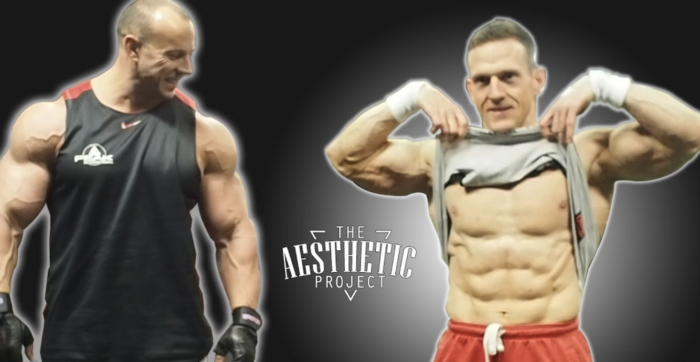
A bodybuilder trains shoulders and arms differently from someone who simply wants to get into slightly better shape. Here, we look at what you can learn from Ott Kiivikas and Alexey Shabunya’s joint workout and why a video like this is useful for the average gym-goer too.
Why do bodybuilders pay particular attention to shoulders and arms?
Belarusian professional bodybuilder Alexey Shabunya visited Estonia in mid-December. This was more than a courtesy visit. Alexey led a seminar at Sparta Sports Club and joined his good friend Ott Kiivikas for a workout.
Alexey is an overall European champion, an Arnold Classic heavyweight runner-up, a 5th-place finisher at the Kevin Levrone classic Pro and a medalist at several other competitions. When watching an athlete with this background train, it pays to focus on the details: body position, when the movement slows down, and how effort and control work together.
Shoulders and arms are prominent muscle groups in bodybuilding. They immediately catch the eye on stage, and the same is true in everyday life. Well-developed shoulders give your frame width, while strong arms support rows, presses and many other exercises.
The simple truth is that heavier weights do not improve poor technique. If your shoulder moves at the wrong angle or your elbow drifts with every repetition, the training load shifts to areas you do not actually want to target.
A bodybuilder in training: what should you look for in the video?
Watch two high-level bodybuilders train together:
A video like this can offer more than entertainment. Pay attention to how each exercise begins. Is the body properly positioned before the lift? Is the muscle driving the movement, or is the body generating momentum? These questions help distinguish a productive workout from simply moving weights around.
Control is especially important in shoulder training. The shoulder joint allows a wide range of motion, but that also means sloppy technique can quickly cause problems. If your shoulder rises toward your ear and your lower back arches at the top of a raise, you should reduce the weight.
The same applies to arm training. A biceps or triceps exercise works best when your elbow stays in roughly the same place and the movement does not turn into a full-body swing. An advanced athlete may, of course, occasionally use cheat reps. Beginners generally do not benefit from them.
Start with your position, not the weight
Before your first repetition, ask yourself: are your feet firmly planted, is your torso stable, and are you breathing rather than holding your breath? If so, the exercise is more likely to target the intended muscle. If not, you will start compensating from the very first repetition.
Keep the tempo steady
A steady tempo does not mean moving sluggishly. It means you control the weight rather than letting the weight control you. Particularly in shoulder and arm exercises, lowering the weight more slowly often helps you feel the muscles working better than jerking it up and down.
Practical tips for shoulder and arm training
If you want to incorporate something from Ott Kiivikas and Alexey Shabunya’s joint workout into your own program, do not blindly copy everything. Their level, recovery and training experience are different from yours. Adopt their approach: precise technique, a good feel for the working muscles and a clear purpose for every exercise.
- Choose a weight that lets you control the movement from start to finish.
- Do not shrug your shoulders toward your ears during lateral raises or presses.
- Keep your elbows as stable as possible during arm exercises.
- Warm up before heavier sets, paying particular attention to your shoulders.
- End the set when your technique breaks down, rather than letting your ego tell you to keep going.
Honestly, this is where many people struggle. They immediately want more weight, more sets and a stronger sense that the workout was tough. But your muscles cannot read your intentions. They respond to the training load you actually place on them.
If your shoulder or elbow hurts, do not push through it. Uncomfortable muscle tension and sharp joint pain are not the same thing. If you feel pain, reduce the weight, change the exercise or ask a trainer for advice.
Bodybuilders and everyday gym-goers: what is the difference?
A competitive bodybuilder trains with a very specific goal. Muscle shape, symmetry and stage conditioning are part of the job. Your goals as an everyday gym-goer may be simpler: a stronger body, a better appearance, less stiffness from sitting and greater confidence.
Still, there is plenty of overlap. In both cases, consistency pays off. Good technique helps in both, too. And in both cases, it makes sense to train in a way your body can sustain over the long term.
So what actually happens when you watch professional athletes train with the right mindset? You stop looking for a miracle trick and learn to spot details you can improve in your own sets. That is the real value of the video.
FAQ
Can a beginner copy a bodybuilder’s workout?
Generally, you shouldn’t copy it exactly. As a beginner, you can learn technique, body positioning and control from the video, but you need to choose a training load and volume that suit your level.
Why is good technique especially important in shoulder training?
The shoulder allows a great deal of freedom of movement, but that is precisely why poor positioning can quickly cause problems. Controlled movement and an appropriate weight matter more than a big number on a dumbbell.
What can you learn from the video featuring Ott Kiivikas and Alexey Shabunya?
Pay particular attention to their form, tempo and how they keep their focus on the working muscle. These skills are useful for anyone who trains.
Author: The Aesthetic Project
Source: Turg.Fitness.ee
Come and train! ArtGym