
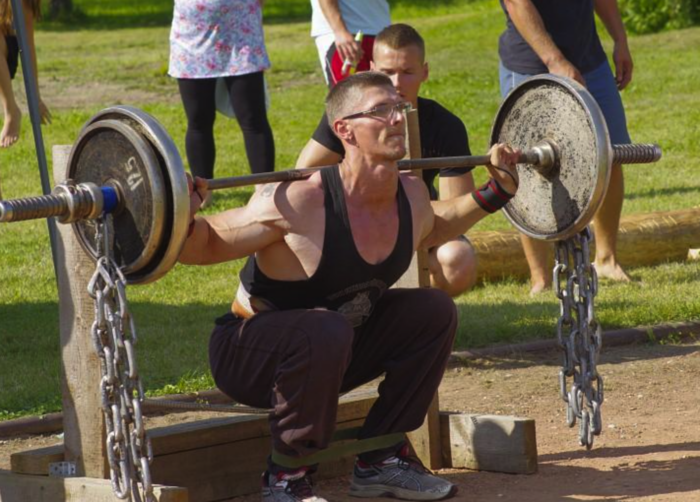
Thoughts on a bodybuilding training plan
Questions about planning your training tend to come thick and fast when you have a calendar in front of you, a competition somewhere on the horizon and too many things on your mind at once. How many sets should you do? When should you add weight? Can you even get stronger while dieting?
This article gives an old set of reflections a clearer structure. The message remains the same: in bodybuilding, impressive terminology alone gets you nowhere unless your weekly split, progression, volume and nutrition work in actual workouts.
Thoughts on volume and planning across the year
I’ll be honest from the start: in bodybuilding, I don’t see much point in keeping meticulous records of training volume across the year. Yes, you can do it for the statistics. I’ve done it myself with squats and pull-ups, for example. But does it help a bodybuilder build more muscle? Not always.
Training volume can mean several things. It can refer to the number of sets in a whole workout, the number of sets per exercise, the total number of reps for an exercise, the total number of reps in a workout or the rep count in a single set. Consider all of these at once, and things quickly become confusing.
In practice, the most useful things for a bodybuilder to track are these three: how many working sets you do in a workout, how many sets and reps you do per exercise and the rep counts you’re currently using in your sets. The simple truth is that around 20-30 working sets per workout, or an average of 25 working sets, is already a pretty good starting point.
For me, that average of 25 working sets has remained fairly consistent over the years, whether I’ve been doing lower-rep or higher-rep sets. In the off-season, 25 sets are often enough. During contest prep, there are more days when the volume reaches 30 sets, and sometimes more.
General preparation phase, specific preparation phase, microcycle and mesocycle are familiar terms. You can’t avoid them when studying physical education. In bodybuilding practice, though, applying them by the book isn’t always easy. Here, the general preparation phase largely means the off-season. The specific preparation phase is the period leading up to a competition.
I’m not saying theory is useless. Some principles fit real life very well. But building an entire training year solely around a classical model, with every month fixed in advance, can leave little room for flexibility in bodybuilding. And you need flexibility, because your body doesn’t develop according to an Excel spreadsheet.
Thoughts on the microcycle and weekly split
Put simply, a microcycle is a training week. In bodybuilding, it’s your weekly split. In my view, getting that split right is one of the most important things you can do. It determines how often a muscle or body part receives a training load, how well you can recover and how sensibly you can sustain progression.
A good weekly split is more than a list of days. It needs to tell you when to do a heavy compound exercise, when to do accessory exercises, where there’s room for rest and when you can return to the same movement with your body ready for it. With a poor split, even a good program is hard to make work.
The mesocycle, or training month, is where sports theory and my bodybuilding practice part ways. I don’t see much point in placing too much emphasis on the month as a separate unit when training is organized into 6-8 week programs or progression schemes anyway.
For example, an annual cycle starting on 1 January might look like this: January-February, 5×5 for the squat, followed by 1-2 weeks of active rest, then 6 weeks of Smolov for pull-ups in March-April, followed by another 1-2 weeks of lighter training. April-May could bring a 6-week cycle with squats following a modified Smolov program, such as 2 workouts instead of 4 squat workouts, alongside undulating periodization for the seated dumbbell press to train the shoulders.
June-July could be 5×5 for the bench press. The idea is to structure the off-season around priorities that last 6-8 weeks. In one block, pull-ups and overhead presses take priority. In the next, you keep those at maintenance level while the squat and bench press become the priorities.
If your chosen progression scheme is working, you don’t need to cut it short just because the calendar says so. Sometimes a productive wave lasts 10-12 weeks. In that case, I keep going until I feel it has run its course.
How does training planning work in practice?
Classical linear periodization can work in bodybuilding, but for me, its weakness is spending too long in a single rep range. If you do 12-15 reps for 4 weeks straight, then 10-12 reps for 4 weeks, then 6-8 reps for 4 weeks and finally 4-6 reps for 4 weeks, things can become too monotonous.
If I were using linear periodization, I’d prefer shorter blocks. For example, 1-3 weeks in a single rep range, without including too many different ranges in the overall cycle. That gives your body a new stimulus before training becomes tedious or progress stalls too much.
Undulating periodization suits me better. For example:
Weeks 1-2: 12-15 reps
Weeks 3-4: 6-8 reps
Weeks 5-6: 8-10 reps
Undulating from workout to workout has worked even better. It adds variety, keeps the nervous system fresher and allows progression to continue for longer. Here is one example with pull-ups that worked well in the summer of 2013:
Close-grip underhand pull-ups: 4 x 8 (4–5 x 8)
Wide-grip overhand pull-ups: 8 x 4 (8 x 3–5)
Close-grip underhand pull-ups: 6 x 6 (5-6 x 6)
Wide-grip overhand pull-ups: 4 x 8 (4–5 x 8)
Close-grip underhand pull-ups: 8 x 4 (8 x 3–5)
Wide-grip overhand pull-ups: 6 x 6 (5–6 x 6)
Here, the rep count per set undulates from workout to workout, while you also alternate between two variations of the same exercise. I have used the same principle during contest prep. This has been one of the reasons why, while getting into contest shape, I have not only maintained my strength but even increased it in some exercises.
An example of undulation in the squat
An example of undulating training load and intensity in the squat while preparing for the 2013 spring season:
Squat – 3 January 2013 (Thursday): Sets of six – 135 kg – 6 x 6;
Squat – 7 January 2013 (Monday): Sets of six – 130 kg – 6x; 145 kg – ;6x; 160 kg – 6x; 175 kg – 6x; 130 kg – 6x;
Squat – 13 January 2013 (Sunday): Sets of ten – 115 kg – 10 x 10;
Squat – 16 January 2013 (Wednesday): Sets of six – 100 kg – 6x; 120 kg – 6x; 140 kg – 6x; 160 kg – 6x; 180 kg – 6x; 135 kg – 12x;
Squat – 21 January 2013 (Monday): Sets of eight – 90 kg – 8x; 110 kg – 8x; 125 kg – 8x; 140 kg – 8x; 155 kg – 8x; 170 kg – 8x;
Squat – 26 January 2013 (Saturday): Sets of six – 100 kg – 6x; 115 kg – 6x; 130 kg – 6x; 145 kg – 6x; 160 kg – 6 x 6;
Squat – 29 January 2013 (Tuesday): Sets of fifteen – 45 kg – 15x; 50 kg – 15x; 55 kg – 15x; 60 kg – 15x;
Squat – 2 February 2013 (Saturday): Sets of thirteen – 75 kg – 13x; 85 kg – 13x; 95 kg – 13x; 105 kg – 13x;
Squat – 6 February 2013 (Wednesday): Sets of seven – 130 kg – 7 x 7;
Squat – 11 February 2013 (Monday): Sets of ten – 100 kg – 10x; 115 kg – 10x;130 kg – 10x; 145 kg – 10x;
Squat – 14 February 2013 (Thursday): Sets of thirteen – 110 kg – 4 x 13;
Squat – 22 February 2013 (Friday): Sets of ten – 115 kg – 5 x 10;
Squat – 1 March 2013 (Friday): Sets of seven – 100 kg – 7x; 115 kg – 7x; 137.5 kg – 7 x 7;
Squat – 5 March 2013 (Tuesday): Sets of ten – 120 kg – 5 x 10;
Squat – 8 March 2013 (Friday): Sets of five – 105 kg – 5x; 120 kg – 5x; 135 kg – 2 x 5 150 kg – 2 x 5 160 kg – 5x; 170 kg – 5x;
Squat – 11 March 2013 (Monday): Sets of thirteen – 90 kg – 13x; 105 kg – 13x; 117.5 kg – 4 x 13;
Squat – 14 March 2013 (Thursday): Sets of six – 90 kg – 6x; 115 kg – 6x; 130 kg – 6x; 145 kg – 6 x 6;
Smith machine squat – 18 March 2013 (Monday): Sets of ten – 50 kg – 10x; 60 kg – 10x; 70 kg – 10x; 80 kg – 10x; 90 kg – 10x; 100 kg – 10x;
Squat – 20 March 2013 (Wednesday): Sets of eight – 130 kg – 8 x 8;
Squat – 25 March 2013 (Monday): Sets of ten – 90 kg – 10x; 112.5 kg – 10x; 125 kg – 10x; 125 kg – 10x; 125 kg – 10x; 125 kg – 10x;
Squat – 29 March 2013 (Friday): Sets of thirteen – 120 kg – 4 x 13;
Squat – 2 April 2013 (Tuesday): Sets of seven – 100 kg – 7x; 115 kg – 7x; 130 kg – 7x; 145 kg – 7 x 7;
Squat – 8 April 2013 (Monday): Sets of ten – 100 kg – 10x; 115 kg – 10x; 130 kg – 10x; 130 kg – 10x; 130 kg – 10x; 130 kg – 10x;
Squat – 15 April (Monday): Sets of five – 115 kg – 5x; 130 kg – 5x; 145 kg – 5x; 155 kg – 5 x; 165 kg – 5x;
Squat – 16 April 2013 (Tuesday): Sets of three – 130 kg – 10 x 3;
Squat – 22 April 2013 (Monday): Sets of ten – 120 kg – 10 x 10;
Squat – 26 April 2013 (Friday): 4/8/12/24 – 150 kg – 4x; 155 kg – 4x; 160 kg – 4x; 165 kg – 4x; 125 kg – 8x; 130 kg – 8x; 135 kg – 8x; 115 kg – 12x; 105 kg – 12x; 75 kg – 24x;
Smith machine squat – 29 April 2013 (Monday): Sets of six – 115 kg – 6 x 6;
Squat – 2 May 2013 (Thursday): Sets of eight – 130 kg – 8 x; 150 kg – 8x, 8x, 8x, 8x; 130 kg – 8x; 120 kg – 12x; 100 kg – 16x;
6/6/10/6/8/6/15/13/7/10/13/10/7/10/5/13/6/10/8/10/13/7/10/5/3/10/4-24/6/8
These rows of numbers are essential if you want to see what this actually looks like in practice. Undulation is not simply a feeling that you will do things differently today. It means deliberately varying training load, repetitions and rep counts per set to leave room for continued progress.
Thoughts on progression during a contest diet
You can use exactly the same undulating approach for all the key compound exercises. For me, these have been pull-ups for the back, seated dumbbell presses for the shoulders and barbell back squats for the legs. If you want to bring something new to the stage compared with your last appearance, you need to preserve muscle mass. Progression is the key.
Progression does not just mean a big jump in weight. Adding even one repetition to each of the first two of your four working sets is progression. This is especially important when dieting, because an energy deficit makes every extra repetition hard.
Progression is only possible if the energy deficit is not too large. There is no escaping feeling rough. When dieting, you often feel sluggish and irritable, and you need to conserve energy for your workouts. But writing everything down helps you make better decisions: what you eat, how much you eat, what weights you train with and what you could realistically aim for next time.
For example, with squats, I cycle through sets of 6, 4 and 8 reps:
Squat: 5 x 6 (all sets at the same weight), for example, 120 kg
Squat: 5 x 4 (increasing intensity by adding weight from set to set), for example, 100 kg, 110 kg, 120 kg, 130 kg, 140 kg
Squat: 4 x 8 (all sets at the same weight), for example, 110 kg
Squat: 4-5 x 6 (increasing intensity by adding weight from set to set), for example, 105 kg, 110 kg, 115 kg, 125 kg
Squat: 5 x 4 (all sets at the same weight), for example, 135 kg
Squat: 4 x 8 (increasing intensity by adding weight from set to set), for example, 90 kg, 100 kg, 110 kg, 115 kg
The longer the diet goes on and the heavier the weights get, the smaller the gains become. Sometimes you need to repeat a workout with the same weight. When sets of 6, 8 and 4 start to stall, you can switch to sets of 5, such as 5×5, sets of 7, such as 5×7 or 7×7, and sets of 10, such as 4×10.
It is important to keep something in reserve. If you know you want to improve your pull-ups or squats during contest prep, do not exhaust every rep range and exercise variation beforehand. Sometimes it helps to take a break from a movement before contest prep so that it gives your body a fresh stimulus later.
An example from 2014: dumbbell presses and pull-ups
Progression during contest prep for the 2014 spring season (seated dumbbell presses and pull-ups):
Seated dumbbell press:
SETS OF EIGHT: 42.5 kg – 4 x 8; (Thursday, 20 February 2014)
SETS OF TEN: 25 kg – 10x; 35 kg – 10x; 42.5 kg – 10x, 10x, 10x; (Saturday, 1 March 2014)
SETS OF SEVEN: 45 kg – 5 x 7; (Saturday, 8 March 2014)
SETS OF EIGHT: 20 kg – 8x; 27.5 kg – 8x; 35 kg – 8x; 42.5 kg – 8x; 50 kg – 10x; (Friday, 21 March)
SETS OF EIGHT: 42.5 kg – 5 x 8; (Tuesday, 1 April 2014)
SETS OF TEN: 42.5 kg – 3 x 10; (Wednesday, 9 April 2014)
SETS OF SEVEN: 42.5 kg – 7 x 7; (Wednesday, 16 April 2014)
SETS OF TWELVE: 42.5 kg – 3 x 12; (Wednesday, 23 April 2014)
SETS OF SIX: 47.5 kg – 6 x 6; (Wednesday, 30 April 2014)
SETS OF SEVEN: 47.5 kg – 5 x 7; (Sunday, 11 May 2014)
https://www.youtube.com/watch?time_continue=2&v=xBFOGFEYvdc
Pull-ups with a wide overhand grip:
SETS OF FIVE: 5 kg – 7 x 5; (Monday, 10 February 2014)
SETS OF FIVE: 15 kg – 5x; 20 kg – 5x; 25 kg – 5x; 30 kg – 5x; (Monday, 17 February 2014)
SETS OF SIX: 12.5 kg – 5 x 6; (Monday, 24 February 2014)
SETS OF FOUR: 25 kg – 6 x 4; (Wednesday, 5 March 2014)
SETS OF FIVE: 5 kg – 5x; 10 kg – 5x; 20 kg – 5x; 25 kg – 5x; 30 kg – 5x, 5x; 20 kg – 5x; (Saturday, 15 March 2014)
BW (body weight) – 5 x 8; (Tuesday, 25 March 2014)
SETS OF FIVE: 20 kg – 5x, 5x; 15 kg – 5x, 5x; (Saturday, 29 March 2014)
SETS OF FOUR: 15 kg – 4x; 20 kg – 4x; 25 kg – 4x; 20 kg – 4x; 15 kg – 4x; (Thursday, 10 April 2014)
SETS OF FIVE: 10 kg – 5x; 15 kg – 5x; 20 kg – 5x; 25 kg – 5x; 30 kg – 5x; 40 kg – 4x; (Thursday, 17 April 2014)
SETS OF SIX: 20 kg – 6x; 25 kg – 6x; 30 kg – 6x; 25 kg – 6x; 20 kg – 6x; (Tuesday, 22 April 2014)
SETS OF FOUR: 10 kg – 4x; 20 kg – 4x; 30 kg – 4x, 4x, 4x, 4x, 4x; (Thursday, 1 May 2014)
SETS OF FOUR: 5 kg – 4x; 15 kg – 4x; 25 kg – 4x; 35 kg – 4x; 45 kg – 4x; 30 kg – 6x, 6x, 6x; (Thursday, 8 May 2014)
SETS OF SEVEN: 15 kg – 7x; 20 kg – 7x; 25 kg – 7x; 20 kg – 7x; 15 kg – 7x; (Monday, 12 May 2014)
Progression on accessory exercises does not need to be as rigid. Throughout the year, these can generally stay within a range of 10-30 reps per set. These exercises add volume, help you feel the muscles working and give them extra work, but you do not need to build the entire system around them.
Nutrition, carbohydrates and contest condition
The most important part of nutrition is honest tracking. During contest prep, it is not enough to feel that “I probably didn’t eat much today.” Once you have been dieting for 2-3 months, you can no longer estimate your daily intake very accurately. Especially your carbohydrate intake.
The final 8 weeks before the EKV in the 2014 spring season looked like this:
Before competitions, my fat intake was usually 1 g/kg of body weight. On quite a few days it was lower, around 0.8 g/kg. There were also days when I consumed 120-140 g of fat. I believe that in some cases, fat intake could be kept more consistently high; even 1.2-1.3 g/kg is not necessarily a problem for a 95-100 kg bodybuilder preparing for a competition.
My protein intake averaged 300 g per day. On some days it rose to 350-360 grams, while on others it dropped to 260-270 grams. Even with those amounts, I was still hungry and training was not easy. This shows that my energy expenditure exceeded my energy intake.
When getting into contest condition, I have tried to keep my carbohydrate intake as low as possible, but over the years the other side of the equation has become clear too. If I want to maintain the weights I lift as much as possible, there is a limit to how low I can go. During the three-month preparation period for the 2014 spring season—97 days, to be precise—there were 13 days when my daily carbohydrate intake was 200 grams or less. On 46 days I consumed 300 + grams of carbohydrates, and on 38 days my daily carbohydrate intake was between 200-300 grams.
This is essentially carbohydrate cycling. If you have two workouts in a day or a leg workout with higher-rep sets coming up, your body needs more. On an easier day, it can manage with less. But yes, the thinking stays the same: I keep carbohydrates to the minimum I think I need for the day or to fuel my training, and no more.
This is where a familiar situation arises. You eat more one evening, feel guilty the next day and want to make up for it. Taavi put it well: “…you can find yourself feeling guilty about eating more the day before, and then deliberately start eating less to compensate.” But you cannot always predict your energy expenditure for the day. That is why you need to record the numbers rather than rely entirely on how you feel.
I have seen this in my own logs. Some evenings, I think I have eaten perhaps 300-320 grams of carbohydrates, but when I add it all up, the number staring back at me starts with a 4. A single day will not ruin anything. But if you do not keep track, days like this happen too often.
During the 2011-2014 seasons, when I achieved good conditioning, my weight loss averaged 2 kg per month. My contest prep lasted 10-12 weeks. In all those competitive seasons, I began losing weight at 5-6 kg above my competition weight. In other words, I take 10-12 weeks to lose those 5 kg.
One prerequisite for good conditioning is not letting your body weight rise more than 5-7 kg above your competition weight. Around three months before a competition, you should be no more than 5-7 kg away from your competition weight. The smaller the increments in which you lose weight, the better you can preserve strength and muscle mass.
Losing 500 g per week requires much less scrambling than losing 800 g or 1200 g per week. If you start 5-6 kg above your competition weight and avoid major mistakes, you can work toward the competition over 10-12 weeks while even increasing the weights you lift on compound exercises, or at least maintaining them. You also do not need to add as much cardio as you would if you started 9-10 kg above your competition weight.
Of course, experience matters. Knowing your body means getting as much energy from food as necessary and as little as possible. In the final phase of contest prep, for example the last 2-4 weeks, calorie intake may even increase in some cases. The lower your body fat percentage gets, the finer the line beyond which strength and muscle mass start to decline.
What should you keep in mind when planning your training?
To condense this lengthy discussion, you do not need to overthink a bodybuilding training plan, but you do need to write it down. Your weekly split, priorities, progression on compound exercises, accessory exercise volume and nutrition numbers all need to work together.
Do not change your program just because you are bored. If your progression is working, stick with it. If you have stalled, change your rep count, try a different exercise variation or take some active rest. As your diet gets harder, do not expect every workout to set a record. Sometimes, maintaining your performance is already a very good result.
The most practical guidelines are:
- keep each workout to around 20-30 working sets;
- choose 1-2 clear compound exercise priorities for each phase;
- use 6-8-week cycles if they suit your body;
- cycle through rep ranges rather than staying in the same range for too long;
- record your carbohydrate, protein and fat intake while dieting;
- do not let your body weight drift too far above your competition weight before starting contest prep.
So what actually happens? A good plan gives you direction, but your training log is where the real decisions are made. If your numbers are progressing, your sleep is reasonably good, your body weight is dropping as planned and your performance on compound exercises is not suddenly falling off, you are on the right track.
Thoughts: frequently asked questions
Does a bodybuilder need to calculate their exact annual training volume?
In my opinion, no. It is much more important to track working sets per workout, sets and reps for each exercise, and rep counts per set. Total annual volume may be an interesting statistic, but it cannot replace a weekly split that works.
Can you gain strength while dieting?
Yes, but not at the cost of a severe energy deficit. Progression is possible when you lose weight at a sensible pace, eat enough carbohydrates to support your training and record all your numbers honestly.
How long should contest prep last?
In my experience, contest prep has lasted 10-12 weeks. A good starting point is around 5-6 kg above your competition weight, rather than 9-10 kg.
Author: Janar Rückenberg
Come train with us! ArtGym




