
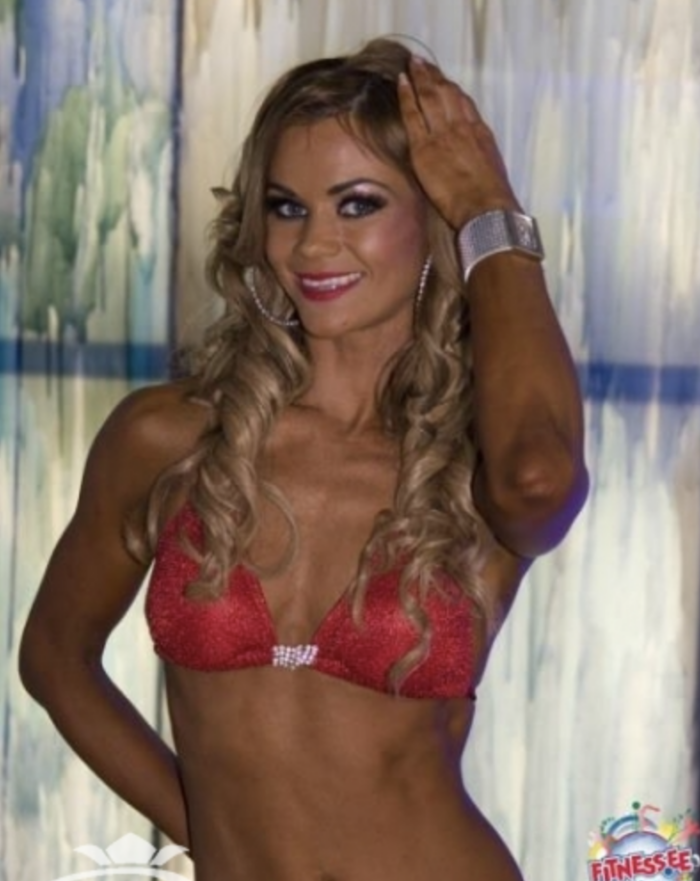
The three pillars of Egle’s life: training and muscles
In this story, the name Egle is synonymous with dance, training and well-defined muscles. For Egle Eller-Nabi (28), being active is an everyday way of life, not a short-term initiative. Her story shows how sport, family and femininity can coexist without one eclipsing another.
Why Egle’s story matters to fitness.ee readers
There is a playful Estonian saying that girls are made of sugar, flour and strawberry mousse, but Egle Eller-Nabi calls for a different recipe. Hers would include dance, time in the gym, a collection of dumbbells, a dash of spark and plenty of consistency. There is femininity, too, which she makes no attempt to hide behind her athletic physique.
Egle is a personal trainer and group fitness instructor at Sparta sports club. Sport is not a separate slot in her schedule: it runs through her work, leisure time and home life. She has made her mark at the Aerobics Queen competitions and, later, on the fitness model stage.
To be honest, the conversations in her home will sound familiar to anyone whose family takes training seriously. How did your workout feel today? What kind of workout did you do? What are you doing tomorrow? With professional wrestler Heiki Nabi as her husband, it is hardly surprising that talk often turns to muscles, recovery and physical condition.
Yet a strong body does not mean a harsh or angular presence. Egle has carefully styled hair, beautiful makeup, a smile and a soft look. Beneath her fitted clothes, though, the results of her work are visible: muscles that are feminine, precisely defined and under control.
Egle on muscles and femininity
It was this combination that impressed the fitness judges when Egle was crowned Fitness Model Estonia in December last year. Even more telling was the detail that raised eyebrows among her fellow competitors: the winner had given birth just half a year earlier.
Egle says getting back into shape was no miracle: she had stayed active throughout her pregnancy. She attended yoga and water aerobics classes and took long walks. She gained 10-12 kilos during pregnancy, but lost them quickly after giving birth.
Interestingly, her weight is not her main measure of progress. She has stepped on the scales at home only once. She does not know exactly how much she weighs now, and that does not bother her. The mirror tells her more than a single number.
“Whether I weigh one or two kilos more or less makes absolutely no difference,” is the simple point. In fitness competitions, what counts is the overall visual impression: proportions, muscle definition, posture and confidence on stage.
In the lead-up to a competition, the work becomes more precise. Her training load increases and her nutrition plan becomes more detailed to reduce body fat and bring out muscle definition. The training load is high for a couple of months before competitions, but Egle does not describe it as punishment. For her, it is part of the sport she loves.
She spent just three months preparing to compete for the Fitness Model Estonia title. There were doubts along the way. Caring for a child made it difficult to get to the gym and follow her nutrition plan as closely as intended. Sometimes she worked out at home with her child instead, or went to bodypump classes.
Looking back, what mattered was that she did not give up. Her win gave her the opportunity to compete in the Bikini Model category in spring and at Fitness Model World in Austria in September. That could open the door to further competitions.
How Egle balances training and rest
Egle’s choices today have their roots in the dance classes she took as a child. Dance is still part of her life. She describes it as a path that has always been there, one she has never grown tired of.
Still, loving training does not mean constantly pushing harder. After an intense period, such as the Fitness Model Estonia competition, she deliberately reduces her training load. Her body needs time to rest.
During this time, she recharges by running, because she still needs to keep moving. But for at least a month, she does no “proper” muscle training, meaning hard strength workouts. It is a simple but often forgotten principle: progress comes from recovery as well as effort.
Egle says she has never burned out, but she has seen recreational athletes push themselves into a rut by taking on too much training load. Ambitious goals can help by giving you direction. But if you push yourself too hard, mental stress can sap the very strength you set out to build.
Egle sometimes trains with Heiki Nabi, going for runs together, for example. They do not share a training plan, though. Both do aerobic and strength training, but Heiki’s workouts are longer and more intense. His goal is performance on the wrestling mat; Egle’s is a streamlined, feminine physique.
They tend not to overcoach each other. Instead, they talk things through, listen and offer support. In a sporting family, that can sometimes be just as important as the exercise plan itself.
Egle’s advice for a healthy lifestyle
Before having her child, Egle worked as a health promotion specialist with Tallinn City Government. She placed particular importance on working with kindergartens. The reason is simple: the activity and eating habits learned in childhood are often the ones that stick most firmly.
She also saw how a fun sports day could change someone’s mindset. Some people who had never worked out before were inspired by an exercise class and decided to give it a go. Sometimes, lasting change starts with a single positive experience.
Is it a battle against windmills? Egle doesn’t think so. The grim statistics on inactivity, lifestyle-related diseases and unhealthy habits troubled her, but she also saw the impact of small efforts. More people are getting active on recreational trails. At the same time, she saw where part of the problem begins in schools: pupils smoking around the corner outside, and many young people’s physical fitness leaving a lot to be desired.
When Egle returns to work in a year, she wants to continue promoting healthy choices. Her core message is straightforward: healthy eating and exercising for health are not difficult when they become a way of life.
Outside the competition season, staying in great shape doesn’t require much extra effort from her. “My lifestyle is what allows me to stay in good shape.”
Egle’s advice as a personal trainer
- People focus too much on the number on the scale. Looking at your body tells you more than your weight does. The amount of water in your body varies, and muscle weighs more than fat tissue. If training increases your appetite, that’s to be expected: your body is using more energy and asking for more, too.
- Don’t be afraid of strength training. Many women worry that muscle will make them look stocky. In fact, muscle building helps burn fat. Your body measurements may change at first, but over time your muscles become more defined and body fat decreases.
- Aim for five meals a day. Once your body gets used to this, bringing along a container of fruit or vegetables becomes routine. Healthy eating is like driving: once you’ve learned how, you no longer have to think about every movement.
- You need to train your whole body. Focusing only on your upper body or your abs is not a good plan. Neglecting your back, having weak legs or ignoring opposing muscle groups can lead to problems with posture, lower back trouble and injuries.
- No one is made to be overweight. If you’re happy with your body, that’s fine. If being overweight causes you stress and you want to change, you need to change your mindset, lifestyle and diet. It isn’t always easy, but healthy choices can become second nature over time.
FAQ
Does Egle consider the number on the scale important?
No. For her, her reflection in the mirror and her overall physique tell her more than the scale does. In fitness, proportions, muscle definition and overall appearance are what count.
Does strength training make women too big?
Regular strength training doesn’t accidentally turn anyone into a bodybuilder. Strength training helps shape your body, supports fat burning and improves your overall appearance.
Why does Egle emphasize rest?
Because a consistently high training load can lead to burnout. After the competition season, she cuts back on training and gives her body time to recover.
Author: Reeli Maasikamäe
Source:Turg.Fitness.ee
Come and train! ArtGym




