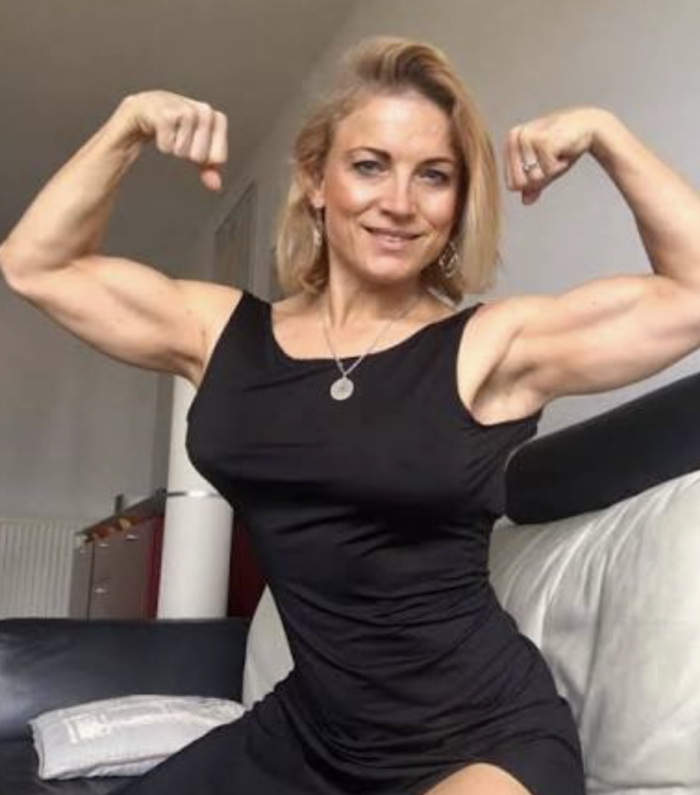
Gerbel Mikk: a chest workout for serious lifters
Gerbel Mikk trains chest so that every set has a purpose: a fixed weight, a fixed rep count and honest effort to the very end. This story takes us back to a workout at Arctic Sports Club in Tallinn, where powerlifting precision meets bodybuilding detail.


Why does Gerbel Mikk’s training resonate?
Meeting Gerbel started out simply. We had agreed in advance to do a chest workout. Since Gerbel is a doer in both the powerlifting and bodybuilding worlds, the choice was fairly logical: chest or legs. This time chest won out.
Honestly, there was a bit of fear in the mix, too. The bench press isn’t everyone’s strongest suit, and when you’re next to an athlete who thinks about sets, cycles and competition form with great precision, you can’t walk into a workout half-focused.
Still, not everything in the gym began under the barbell. Gerbel briefly considered whether or not to warm up on a cardio machine. Normally they do, but this time stationary calisthenics were enough. The muscles and joints warmed up, and only then did the workout really get going.
The heart of this story isn’t just a list of exercises. What’s interesting is how Gerbel thinks. They don’t train at random. The weights are written down, the reps are counted honestly to the end, and every exercise has to support a bigger goal.
Gerbel Mikk’s chest day: how the workout went
First up was the bench press on a flat bench. Gerbel was in week 4 of a 5-week mass-building cycle. This week they were supposed to be able to do 3 sets of 11 reps with a fixed, prescribed weight. That means choosing a borderline weight for 11 reps: one where you couldn’t squeeze out any more clean reps.
The end of the last set was hard for both of us. A few reps already needed a bit of outside help. That was exactly the point. The goal was to build maximal strength, not to do just a comfortable pump workout. By the end of the 5-week cycle, the same rep count should come with a heavier weight than at the start.
Technique-wise, Gerbel used the powerlifters’ version: a proper arch, heels on the floor and the whole body tight. Just as the competition rulebook requires. It isn’t a pretty pose for a photo, but a way to make the press stable and strong.
The second chest exercise was the incline dumbbell press. The system stayed the same: 3 sets and 11 reps. The tempo was moderate and the technique controlled. The exercise served two goals at once: strength and muscle growth.
And that was it for chest. The first reaction was surprise: that little? With a powerlifter, you’d expect an endless chest day and huge weights. The real picture was calmer. There was no bench shirt, no wraps, no excess theatrics. Everything went according to plan.
Next, the triceps and shoulders got their share of the training load. Dips came straight after chest. The arms were already tired, so 11 reps for 3 sets was no longer easy. In the end, a full 11 reps didn’t come out in every set, at least not for everyone.
For the shoulders, they did seated barbell overhead presses from the chest. Again 3 sets and 11 reps. The exercise was done on a regular bench, without back support. Gerbel’s explanation was simple: that way you have to keep your whole body tight, and the lower back gets work, too. Free weights clearly had the upper hand in their training.
After that we needed something weighing about 20 kg for upright rows. An empty press barbell went into use. Still 3 sets and about 11 reps. The idea was to take the maximum out of every set, not to stop simply because the number was reached.
The shoulders also got standing dumbbell lateral raises. Because the muscles were already tired, the weights stayed modest: 6-7 kg dumbbells. When training with Natalia Kiivikas, it had come up earlier that during raises the arms should be straight and the movement should go exactly out to the sides. Gerbel kept the arms slightly bent and a little forward. There was no single correct dogma here. What matters is that the shoulder does the work.
At the end, the triceps were finished off separately. Barbell French press 3×11, and then seated two-handed overhead extensions with 1 dumbbell, 3×11. Here, too, the back wasn’t supported against the bench. So what actually happens? Besides the triceps, the body has to hold itself up, and the lower back gets its share.
Training, competing and Gerbel’s background
Gerbel said that sport has been in their life the whole time. They ended up in a gym at 13 years old, in a basement gym in Pärnu called Tiiger. Alongside it came athletics, skiing, skating, cycling and self-defense.
After high school came the National Defense Academy in Tallinn and the Military School, where there was again plenty of sport. In 1997, after school, they went to serve in the Pärnu ÜJP, that is, the Pärnu Separate Infantry Battalion. There they met up with the Kimbers again, and the gym became a permanent part of life.
In between, Gerbel spent a couple of years in Latvia with the Baltic Battalion. As there was no gym there, the emphasis shifted to cardio: usually a 10km run around a lake 2-3 times a week. When Gerbel returned to Estonia in 2003, Tiiu Kimber suggested trying powerlifting. After doing squats, presses and deadlifts a couple of times, Gerbel was already competing in the Estonian Powerlifting Championships that March, finishing in 3rd place. That is where more purposeful training began.
The idea of bodybuilding came later. In the summer of 2005, Gerbel went to Bosnia on a 7-month mission and spent much of their free time in the gym. There Gerbel met an American partner who was also connected to the gym world and who supported Gerbel in training according to set programs.
In November 2006, Gerbel ended up at a bodybuilding competition, cheering on Katrin Kimber. That was when the feeling appeared that Gerbel wanted to try it too. The wish ripened until the summer of 2007. Only then did Gerbel tell Ain Kimber they wanted advice and a coach’s help.
Preparing for bodybuilding changed Gerbel’s nutrition too. In July, Gerbel and Ain put together a meal plan. At first the regimen was hard to get used to, especially on weekends. The summer brought a lot of cardio: roller skating and running in Pirita. After serving in the Baltic Battalion, i.e. in 2003, Gerbel was assigned to the Headquarters of the Defence Forces in Tallinn. From February 2006, Gerbel lived and trained in Tallinn, although occasionally still made it to the Kimber club in Pärnu.
On November 3, Gerbel competed in the bench press at the Estonian Championships in the -56 kg body weight class, with a best result of 72.5kg and second place. A week later, Gerbel became Estonian champion in women’s bodybuilding. It is a good example of how hard it can be to find a balance between two disciplines. Strength dropped toward the end of the diet, especially in the last few weeks, but matching the 72.5kg record while 4 kilos lighter was a very pleasant surprise.
Gerbel Mikk’s training program and principles
Gerbel’s usual gym rhythm was 3-4 strength training sessions and about 4-5 cardio sessions a week. During the 5-week mass-building phase there was less cardio: 2-3 times a week. A new program was due to start at the end of February, in which powerlifting elements, working up to a max and pyramids came back in more strongly.
Aerobic training was not just a pre-contest punishment. After a strength workout, Gerbel would usually run, use the elliptical trainer or walk for about 30-40 min, depending on how they felt. Sometimes there were also separate aerobic workouts and group classes such as BodyPump or BodyBalance, simply to break the routine.
Before a bodybuilding contest, aerobic volume increased a lot. Morning cardio sessions, runs and walks were added, 5-6 times a week. That sounds dry, but in practice it takes a great deal of discipline, especially when the strength training stays in as well.
The big change in nutrition was that Gerbel started eating at least 5-6 times a day. The staples were chicken, vegetables, whole grains, eggs, fruit, low-fat and fat-free products and nuts. Gerbel drank more water than ever before. The favorites remained meat, foods containing quark and the morning coffee. Staying away from sweets was hard.
Refeed days were handled in a very human way. Rye bread was one of the favorites, and it went down well when hunger struck. Gerbel did not keep specific refeed days, but 1-2 times a week there was a looser moment in the diet when pizza or quark cake could end up on the menu.
As supplements, Gerbel usually took omega-3 capsules and vitamins/minerals in the morning, and after training a shake with protein and carbohydrates. Before bodybuilding contests, BCAA and L-carnitine were added. Gerbel did not usually consume pre-workout or intra-workout drinks, just water.
Relaxation was just as practical: a day off, simply hanging around, reading about fitness and strength training, an interesting recipe or a walk in Kadriorg. Sometimes window shopping too. Before bed, a hot shower or bath and then a small glass of wine.
5-week mass cycle
Gerbel’s last 5 weeks were built on a 5-week mass cycle. The principle was simple: 3 days of training, namely pulls, presses and legs, followed by 2 days off. On the first three days, the weights were set at a level that allowed 8 repetitions for 3 sets. After that the rep count was increased. By week five it was supposed to be possible to do 12 repetitions, while the number of sets stayed at 3.
PULL WORKOUT (PULLS)
Bent-over barbell rows – Bent-over barbell (BB) row – lats, traps, rear delts, rhomboids
Bent-over dumbbell rows (one arm) – Single-arm dumbbell (DB) row – lats, traps, rear delts, rhomboids
Cable pulldowns to the chest (wide grip) – Front lat pulldown – lats, traps, rhomboids
Barbell curls – Standing EZ-bar curl – biceps
Seated dumbbell biceps curls – Seated alternating DB curl – biceps
Abs on a machine – Cable crunches – abs
PUSH WORKOUT (PRESSES)
Barbell bench press – Bench press – middle chest, front deltoid, triceps
Incline dumbbell press – Incline DB press – upper chest, front deltoid, triceps
Body weight lifts using the arms – Dips – lower chest, front deltoid, triceps
Seated barbell press from the chest – Seated BB overhead press – front and middle deltoids, triceps
Standing barbell upright rows to the chin – BB upright row – front and middle deltoids, triceps
Standing dumbbell lateral raises – DB lat raise – middle deltoids
Lying barbell French press – BB skullcruncher – triceps
Seated two-handed dumbbell extension behind the head – Seated overhead DB extension triceps
LEG WORKOUT (LEGS)
Squat – Squat – quads, glutes, hamstrings
Leg press – Leg press – quads, glutes, hamstrings
Machine leg extension – Leg extension – quads
Straight-leg deadlift – Stiff-leg deadlift – hamstrings, glutes
Machine leg curl – Lying leg curl – hamstrings
Seated calf raise – Seated calf raise – calves
Weights used in the serious lifters’ workout
PUSH WORKOUT No 6 kg x rep (set)
Bench press 60×11(3)
Incline DB press 18×11(3)
Dips 0x11(3)
Seated BB overhead press 25×11(3)
BB upright row 20×11(3)
DB lat raise 6×11(3)
BB skullcruncher 20×11(3)
Seated overhead DB extension 16×11(3)
PULL WORKOUT No 6 kg x rep (set)
Bent-over barbell (BB) row 45×11(3)
Single-arm dumbbell (DB) row 18×11(3)
Front lat pulldown 45×11(3)
Standing EZ-bar curl 15×11(3)
Seated alternating DB curl 9×11(3)
Cable crunches 75×11(4)
LEG WORKOUT No 6 kg x rep (set)
Squat 82.5×11(3)
Leg press 205×11(3)
Leg extension 30×11(3)
Stiff-leg deadlift 62.5×11(3)
Lying leg curl 30×11(3)
Seated calf raise 30×11(3)
Practical observations for trainees
The simple truth: Gerbel’s workout was not a long list of random exercises. The plan mattered most. If the plan calls for 3 sets of 11 reps, you pick the weight to fit that, not to feed your ego.
The second lesson is technique. On the bench press there was an arch, heels planted on the floor and the whole body tight. On the overhead press the back was not supported, because the aim was to load the whole body more. Even the finishing triceps extension had a reason behind it: the body had to do the work itself.
The third point is about competing. Powerlifting and bodybuilding can support each other, but they call for a different emphasis. At one point strength matters more, at another, physique. Gerbel said so too: for now, the intention is to continue in both sports for as long as staying competitive is possible.
FAQ
Did Gerbel Mikk train only chest on chest day?
No. Two main exercises were done for the chest, but the workout continued with triceps and shoulders. This fit the logic of a push day, where several muscle groups work together during pressing.
Why were 3 sets and 11 reps used?
This came from the logic of a 5-week mass-gaining cycle. At the start, the weights were set for 8 reps, and over the course of the cycle the rep count was increased until it reached 12 reps at the end.
Do bodybuilding and powerlifting go together?
They do, but it takes good timing. Gerbel’s example shows that powerlifting strength and bodybuilding condition can go hand in hand, but toward the end of a diet, strength will inevitably drop.
Author: Joker
Source: Turg.Fitness.ee
Come and train! ArtGym