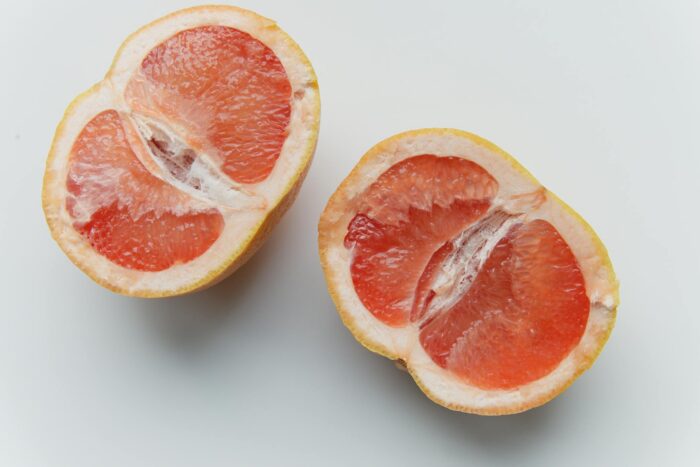
Grapefruit for weight loss: a food to eat alongside fat burning
Grapefruit is a simple food worth a look, especially if your goal is to reduce fat and bring out your abs. It isn’t a miracle fruit, but it can support your nutrition in a way that makes fat loss a little easier. What matters most is still the big picture: calorie intake, protein intake, activity and sleep.
Why does grapefruit come up when we talk about body weight?
The original observation was quite specific: stock up on grapefruit if you’re trying to bring out your abs. The idea wasn’t that one fruit burns fat for you. Rather, grapefruit may help you control your eating better, because it is low in energy but has plenty of flavor, tartness and dietary fiber.
One 12-week study found that people who consumed only half a grapefruit or 8 ounces of grapefruit juice 3x a day lost an average of four pounds of body weight without otherwise changing their diet. Some of the participants lost more than 10 pounds. This result shouldn’t be read as grapefruit replacing a well-thought-out menu. It does show, however, that small food choices can have a real effect.
So what actually happens? One possible reason is the effect on blood glucose and insulin levels. The study noticed that grapefruit juice may help keep these markers lower. When blood sugar doesn’t swing sharply up and down, many people find it easier to tame cravings and stick to their usual eating plan.
How might grapefruit work in the body?
Grapefruit contains pectin, a soluble dietary fiber. Pectin helps slow the absorption of carbohydrates, i.e. glucose, into the bloodstream. This in turn may help keep insulin levels steadier. A simple truth: the fewer sharp swings you get after eating, the easier it is to get through to the next meal normally.
Another possible effect mentioned in the original text relates to naringenin. Grapefruit contains naringenin, which is associated with fat metabolism and with how long the effects of caffeine last. If caffeine’s stimulating effect fades more slowly, your energy may last a little longer during a workout or an active day. That doesn’t mean you should always pair grapefruit with coffee. It’s more one possible mechanism than a firm promise.
Fullness matters too. The tart taste, juiciness and dietary fiber make grapefruit a good choice when you’d like something sweet but don’t want a big energy bomb. If in the evening you feel your hand drifting toward the cookie cupboard, half a grapefruit can be a fairly practical swap.
Grapefruit in your eating plan: what to do?
As a dose, the original text gave one grapefruit 2-3x a day. That provides about 130 mg of naringenin, with only 90 calories, more than 2 g of dietary fiber, half of which is pectin, 20 g of carbohydrates, 2 g of protein and 90 mg of vitamin C. These numbers give a good picture: grapefruit is more a light addition alongside meals than a standalone “diet weapon”.
In practice, grapefruit fits best with breakfast or a snack. For example, you can eat it with yogurt, cottage cheese or another protein-rich food. That way the meal isn’t just fruit; you also get protein, which helps maintain muscle mass. During fat loss this matters, because the goal isn’t simply to lower the number on the scale but to keep your shape and strength.
Because of its possible insulin-lowering effect, don’t eat grapefruit or drink the juice for at least 2 hours after training. After a workout, your body needs food that supports recovery by nourishing your muscles and refilling energy stores. If the workout was hard, put a proper meal first, not just a tart juice.
Grapefruit and caution with medications
To be upfront: grapefruit juice isn’t right for everyone. If you take medications such as antihistamines, antidepressants, cholesterol-lowering drugs or immunosuppressants, etc., consult your doctor before consuming grapefruit or grapefruit juice. Grapefruit may affect how the body processes certain medications.
This isn’t a place to experiment on your own. If the medication leaflet carries a grapefruit warning, take it seriously. If you’re not sure, ask your doctor or pharmacist. Fat loss isn’t worth the risk of a medication’s effect becoming too strong or too weak.
Practical tips for eating grapefruit
Choose a grapefruit that feels heavy in the hand for its size. That usually points to juiciness. The peel can be yellow, pinkish or redder, but color alone doesn’t tell the whole story. If the taste seems too bitter, try eating the flesh with milder foods rather than on an empty stomach.
With juice it’s easy to overdo it. A whole fruit gives you more chewing and dietary fiber, while juice goes down quickly. If you choose juice, keep the amount under control and go for a version with no added sugar. During fat loss, what counts in the end is your total daily energy intake, not just one food’s healthy reputation.
Grapefruit works best when it replaces something more calorie-dense. If you simply add it to your existing menu, the scale may not move. But if you swap a sugary drink or a big dessert for grapefruit, the effect makes much more sense.
FAQ
Does grapefruit burn fat on its own?
Not in the sense that you could eat anything and expect results. Grapefruit juice may help you better control cravings, blood sugar swings and the energy content of a meal.
Which is better: grapefruit or grapefruit juice?
A whole grapefruit is usually better, because you get more dietary fiber and fullness. Juice can fit, but it’s easier to drink too much of it.
When shouldn’t you eat grapefruit?
If you take medications, especially antihistamines, antidepressants, cholesterol-lowering drugs or immunosuppressants, etc., ask your doctor for advice first. Also avoid grapefruit for at least 2 hours after training if you want to better support recovery.
Author: joker
Source: WHO – healthy eating.
Come and train! ArtGym