
Gym for women: a complete beginner’s guide
A gym for women can feel intimidating the first time — big machines, unfamiliar surroundings, experienced lifters all around. In reality, there’s nothing to fear: strength training is one of the best things you can do for your body, and this guide will help you take your first steps with confidence.
Why is the gym such a good fit for women?
Strength training doesn’t just make you stronger — it improves your body composition, speeds up your metabolism and helps prevent a number of health problems. More muscle mass means you burn more calories even while sitting. Regular strength training also helps protect against osteoporosis (thinning of the bones), high cholesterol, high blood pressure and heart disease.
The simple truth: whether you’re a beginner or just want to switch sports, strength training is definitely for you.
Three types of weights you’ll meet in the gym
1. Machines
Machines are a beginner’s best friends. They guide you along a fixed movement path, which means fewer mistakes and a lower risk of injury. Each machine usually has instructions on it — always read them before you use it for the first time.
Adjust the machine to fit you: set the seat, arm supports and height according to your own height. Then remove all the weights and try the weight of the machine’s moving parts on its own — sometimes that’s already enough resistance. Note: 10 kg on one machine doesn’t necessarily mean the same as 10 kg on another. Always test it out, and keep a log where you write down the machines and weights.
2. Free weights
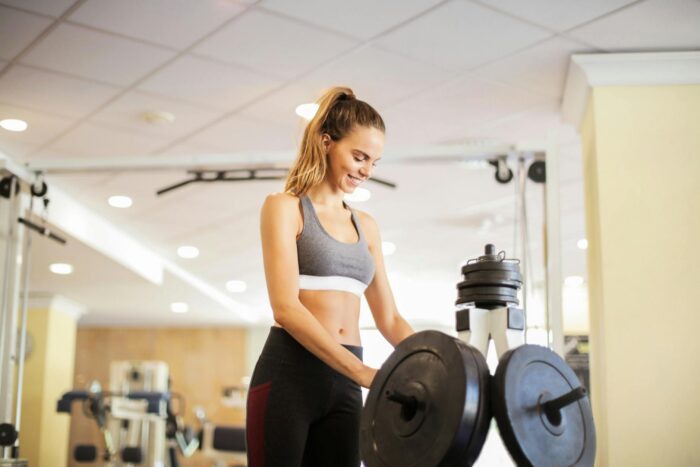
Dumbbells and barbells give your movement freedom — you control the range of motion, speed and balance. Dumbbells have their weight marked on the side and are usually arranged in order of size. As for barbells: a long Olympic barbell itself usually weighs 15–20 kg, while the shorter, zigzag-shaped EZ bar weighs 10–15 kg. To make it heavier, add plates, and always secure them at the ends of the barbell with a collar.
3. Cables
A cable machine looks like a big upside-down U: weight stacks on the sides, a metal crossbar at the top. Depending on the exercise, different handles are attached to the end of the cable — they simply clip on. Cables are a good choice once the machines feel familiar and you understand your body’s biomechanics. Watch how other lifters use them, and don’t be shy about asking a trainer.
Gym for women: how to build your first program?
Beginners should do a strength workout 2–3 times a week. Your exercise plan for the first month should stay stable — your body needs time to adapt before you start changing the program.
- Warm-up: always start with 10–15 minutes of light movement.
- Order: start with the big muscle groups (chest, back, legs), then move on to the smaller groups (biceps, triceps, calves).
- Weight: choose one that lets you do 12–15 repetitions with clean technique. If it becomes too light, increase the weight.
- Technique: always perform the movement fully and under control — rushing leads to injuries.
- Cool-down: always finish your workout with 10 minutes of stretching. This reduces muscle stiffness and improves flexibility.
The next day your muscles may feel stiff — that’s a normal sign of a good workout. Sharp pain, however, is a warning sign: in that case, consult a sports doctor. Many people stop going to the gym after a couple of months because they don’t see results — most often the reason is that they aren’t training to their potential. The program needs to change according to how your body adapts.
FAQ
Does strength training make a woman’s body look bulky?
No. Women have significantly less testosterone than men, so muscle mass grows slowly. The body tends to become more toned and firmer instead.
How often should I go to the gym?
2–3 times a week suits a beginner. That gives your muscles enough time to recover and grow.
When is it worth asking a trainer for help?
As soon as you’re unsure about a machine’s setup, your technique or which program to choose. It’s better to ask once too often than to get injured from a wrong movement.
Women, time to train! ArtGym
Author: M & F Hers, translated by Renita Hunt
Source: WHO – physical activity.




