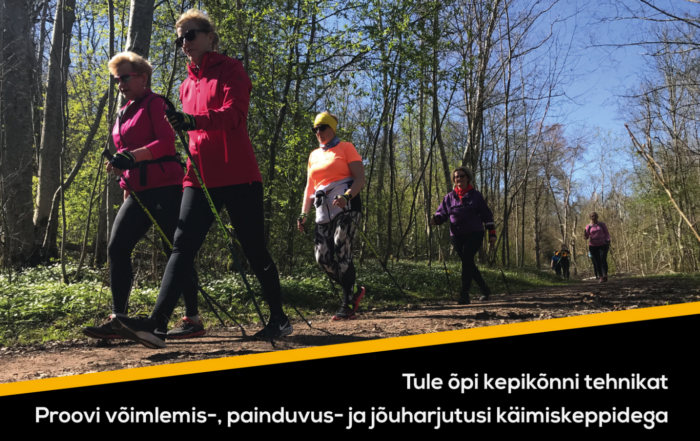
Nordic walking: a simple workout for every season
Nordic walking is one of those workouts you can start as soon as you dig a pair of comfortable shoes out of the closet. It doesn’t require a gym membership or any athletic background, but good technique turns it into a far more effective form of movement than an ordinary walk.
Why Nordic walking is so good for your body
People have been walking with poles long before health and fitness took on their modern form. Shepherds, hikers and mountain travelers used a stick for support, to keep a rhythm and to step more securely on slippery ground. Modern Nordic walking grew out of Finland and became widely known in the late 1990s.
The basic idea is simple: Nordic walking is ordinary walking with upper-body work added. When you use the poles correctly, the shoulder girdle, forearms, back and core muscles all join in. Your legs still do most of the work, but the rest of your body is no longer just along for the ride.
This is especially good news for people who sit a lot. The neck, shoulders and lower back tend to stiffen up from computer work. The rhythmic arm action in Nordic walking helps get the shoulder girdle moving and naturally makes your walking posture more upright. It’s not a miracle cure, but regular movement in fresh air sends your body a clear signal: time to get back to work.
In Estonia, Nordic walking has one more advantage: you can do it in almost any season. On a park path in spring, a seaside promenade in summer, a forest trail in autumn and a cleared walkway in winter. You do need to be careful in icy conditions, of course, but otherwise there’s no need to wait for perfect weather.
How to do Nordic walking correctly
Good Nordic walking doesn’t look like skiing on asphalt. The poles aren’t planted far out in front of your body. If a pole lands too far ahead, your shoulders tense up and your stride turns clumsy. The right feeling is more that your arm swings back from beside the hip and the pole helps push you through to the end of each step.
The pole tip is planted roughly in line with the heel or ball of the opposite foot. When your right foot steps forward, your left arm swings forward with its pole. The same happens on the other side. The rhythm is natural: right foot, left arm; left foot, right arm.
The wrist strap isn’t a decoration. It keeps the pole attached to your hand and lets you loosen your grip at the end of the push. That way you don’t have to squeeze the handle the whole time. Your shoulders stay more relaxed and your walking becomes smoother.
Start easy. There’s no need to chase a fast pace the first time. Try 15-20 minutes, find your rhythm and check whether your shoulders stay loose. If your breathing gets slightly faster but you can still talk, the training load is about right for most beginners.
Nordic walking gear: what to choose
Walking poles are shorter than ski poles. A pole that’s too long forces your shoulders up, while one that’s too short doesn’t give you a proper push. A practical check is simple: when you stand upright holding the pole, your elbow should be at roughly a right angle.
- For a walker who is 150 cm tall, a pole of about 110 cm often fits.
- For a walker who is 160 cm tall, a pole of about 115 cm often fits.
- For a walker who is 170 cm tall, a pole of about 120 cm often fits.
- For a walker who is 175 cm tall, a pole of about 125 cm often fits.
- For a walker who is 180 cm tall, a pole of about 130 cm often fits.
These are guidelines, not rules. Your height, arm length and walking style all affect how the poles feel. If you can, try poles before you buy. On hard surfaces such as asphalt, use rubber tips. On a forest trail or softer ground, a sharper tip may grip better.
If you have old ski poles at home, you can try out the principle with them, but they aren’t the best solution. They’re usually too long, and the snow basket gets in the way as you walk. For a lasting habit, it’s worth choosing real walking poles, because comfort decides whether the habit sticks.
Practical exercises before and after your walk
Poles also work well for warming up and stretching. Before your walk, do a couple of minutes of light movement: shoulder circles, torso rotations and easy steps in place. Afterwards, you can stretch the front and back thigh muscles, calves and chest. Hold each stretch calmly, without jerking.
If you want to add a slightly more vigorous element to your walk, take a short break and use the poles to support your balance. Light squats, lunges, lateral flexions and torso rotations all work well. Keep your movements controlled. Nordic walking doesn’t have to turn into strength training, but a little variety wakes your body up.
So what really matters? Consistency. Two or three easy walks a week give you more than one overly long, uncomfortable effort. If a walk ends with a good feeling, you’re more likely to go again next time.
To learn Nordic walking technique, see also: https://www.kepikond.ee/
FAQ: Nordic walking for beginners
Is Nordic walking suitable for a complete beginner?
Yes. Start with a short loop at an easy pace. If you haven’t been active for a long time or you have a health concern, ask your family doctor or physiotherapist for advice first.
Does Nordic walking do more for you than ordinary walking?
With the right technique, more muscles work than in ordinary walking. The training load can also be higher, although it often still feels comfortable and rhythmic.
How often should you do Nordic walking?
A good starting point is 2-3 times a week. What matters is that the walks fit into your daily schedule and your recovery stays normal.
Come and work out! ArtGym