
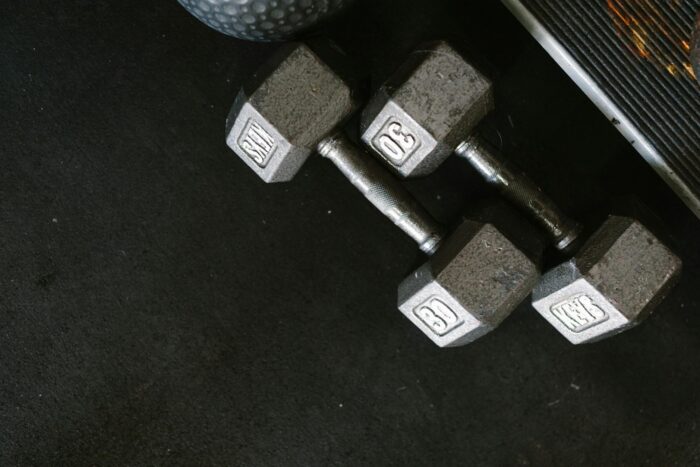
One exercise per muscle group in the gym
One exercise per muscle group sounds like a gym conversation that starts as a joke but actually gets you thinking. If you could pick only one movement for your legs, chest or back, your choice says a lot about what you value in training.
The same question once came up at the gym where I trained. The answer isn’t set in stone, but below is my pick: the exercises that give the most back when time, energy or equipment is limited.
Why does one exercise matter at all?
Most people do too much in the gym rather than too little. The training program has several machines, several angles, and in the end the main question gets lost: did the muscle get strong, controlled work or not?
The idea of a single exercise doesn’t mean you should only ever train this way. It’s a better test. When you pick one strong core movement for each muscle group, you see what the heart of your program is. Everything else is an extra.
A simple truth: a good exercise has to let you increase the weight, control your technique and really put the muscle to work. If you have those three things, you already have a solid foundation.
One exercise per muscle group
Legs: squat
For legs, I’d obviously choose the squat. The squat isn’t just a good leg exercise. It has been called the king of exercises for a reason: it works the thighs, glutes, core and even the upper back.
If you squat with solid technique and the weights gradually go up, it’s hard not to improve. The squat teaches your body to work as a whole, not as an isolated muscle.
Chest: dumbbell bench press
For the chest, I’d choose the dumbbell bench press. Dumbbells force the stabilizing muscles to work and often give a more natural movement path than a barbell. The weaker side also has to do its own work instead of coasting along on the stronger side.
Back: pull-ups
For the back, my pick is pull-ups. Cable pulldowns can be useful, but a pull-up makes your body work differently. A wide back doesn’t come from a machine alone. It comes from controlled repetitions where you pull yourself up, not the bar down.
Calves: standing calf raises
There aren’t endless options for calves. I’d choose standing calf raises. Do your repetitions calmly, don’t bounce and let the movement go all the way. Calves want honest work, not rushing.
Shoulders: seated barbell press
For shoulders, I’d choose the seated barbell press. When you’re seated, it’s harder to bring your legs in to help, especially when the set gets heavy. That keeps the focus more on the shoulders and forces you to hold your torso stable.
How do you choose the right exercise?
Biceps: incline dumbbell curl
For the biceps, I’d choose the dumbbell curl, seated on an incline bench. This gym exercise isolates the biceps well and reduces the chance of using body momentum. You can alternate repetitions, use drop sets or do a slow negative phase.
Triceps: dumbbell skull crusher
For the triceps, I’d choose the dumbbell skull crusher. Many people do it with a barbell, but dumbbells let each arm work separately. The range of motion is greater and the weaker side can’t hide so easily.
Traps: heavy shrugs
Heavy shrugs with a 1–2 second peak contraction suit the traps. If you want your traps to grow, you need to use weights you can still control. Simply flinging your shoulders up and down won’t give the same result.
Forearms: plate holds
For the forearms, I’d choose holding heavy barbell plates and carrying them pinched between your fingers. Yes, wrist flexions and extensions are the classic. But plate holds make your grip, fingers and forearms burn very directly.
Abs: hanging leg raises
For the abs, I’d choose hanging leg raises. You can do them slowly, faster, with added weight or with twists. The version done on a Roman chair suits those whose lower back can’t tolerate sit-ups or regular crunches.
One exercise doesn’t have to stay the only one
Honestly, nobody builds a good physique with just one exercise per muscle group. But this thought experiment helps make your program simpler. Once there’s a strong core movement in your training, the accessory exercises make more sense.
Choose exercises you can do pain-free, control with good technique, and get stronger at over time. If one of my picks doesn’t suit you, that’s not a problem. The principle stays the same: choose the movement that gives your body the most reliable work.
What would you choose? Would the squat still be your first pick for legs, or would you put the leg press first? For chest, would you go with dumbbells or a barbell? Debates like these are often more useful in the gym than yet another random list of exercises.
FAQ: one exercise and the training program
Is one exercise per muscle group enough?
At the beginning it can be, especially if a single gym exercise for a muscle is hard and your technique is good. In the longer term, it’s worth adding accessory exercises to load the muscle from different angles.
Should a beginner make the same choices?
A beginner can start from the same principles, but with an easier variation. If you can’t do a pull-up yet, a band pull-up or a controlled pulldown on the cable machine works well.
When should you swap an exercise?
Swap it when the exercise causes pain, progress has stalled for a long time, or your technique falls apart on every attempt. The change doesn’t have to be big. Sometimes dumbbells instead of a barbell, or a different bench angle, is enough.
Translated by: Janar Rückenberg
Source: Turg.Fitness.ee
Come and train! ArtGym




