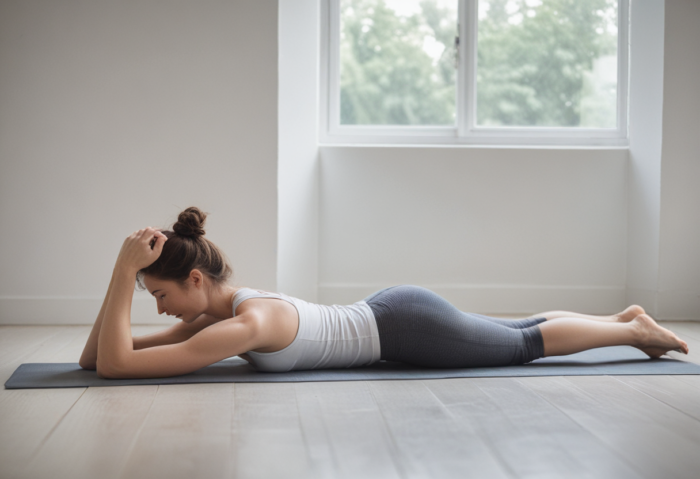
Muscle training and a relaxed back
Muscle training helps your back settle down when the load doesn’t fall on the lower back alone. To make that happen, your body uses fascia, which ties the glute, abdominal and back muscles into a single working system.
Why muscle training matters for your back
If your lower back stiffens up after a workout, the back itself isn’t necessarily to blame. Often it comes down to how your body distributes load. The glutes, abdominal muscles and latissimus dorsi don’t work as separate islands. They pull on and support the same midsection, through which force travels from the upper body to the legs and back again.
Professor M. de A. Campos described this through the thoracolumbar (lumbodorsal) fascia. In plainer language, it can be called the chest–lower back fascia. It is a strong membrane in the lower back, made up of three layers, that covers the muscles of the lower back. It sounds dry, but the point is practical: when the right muscles do their job, the lower back doesn’t have to carry the tension alone.
So what actually happens? During lower-body training, force is generated in the hips, glutes and legs. Your body has to direct that force somewhere. The lower layer of the fascia helps share the load between the back, the pelvis and the legs. This lets the lower back both relax and stabilize at the same time.
How muscle training supports the fascia
The image described in the original article showed the thoracolumbar fascia of the lower body and how the glutes, latissimus dorsi and abdominal muscles partly attach to the membrane. This explains why stretching the lower back alone may not get rid of the stiffness. If your glutes are weak or your abs don’t hold your torso steady, part of the work ends up where it shouldn’t.
A simple truth: your body loves teamwork. When a squat, lunge, hip thrust or core-stabilizing exercise is done with good technique, your body learns to share the load more evenly. The glutes provide strength, the abs hold the midsection, and the latissimus dorsi helps you control the upper body. The fascia acts like a strong connection point between them.
That doesn’t mean the answer to every lower back problem is heavy gym training. If the pain is sharp, radiates into your leg or interferes with everyday life, see a specialist. But for ordinary stiffness and a weak midsection, well-planned muscle training is often a much better idea than endless stretching for its own sake.
Start with the muscles that hold the pelvis
The glutes are especially important here. When the glutes don’t work, the lower back starts compensating for the movement. Hip thrusts, light deadlifts, step-ups and controlled lunges teach you to perform hip extension from where it should come from. Keep the tempo calm at first. Your back doesn’t need to show off strength, only hold position.
Don’t forget your abs
The abdominal muscles aren’t just about looks. One of their big jobs is keeping your torso still while your arms and legs move. Plank variations, the dead bug, the Pallof press and slow torso raises may seem modest, but they are exactly what teaches you to control tension in the midsection.
Practical ways to relax your back
Before a workout, it’s worth waking your body up rather than going straight under the bar. A few minutes of hip mobility, light activation for the glutes and a couple of controlled core exercises often make the whole session feel better. The goal isn’t to tire yourself out but to signal to your nervous system: now we work in sync.
- In squats and rows, keep your chest calm rather than overtense.
- Let your glutes do the work, especially in exercises that extend the hip.
- Choose a weight you can control from start to finish.
- If your lower back takes over the whole load, simplify the exercise.
- Add trunk stability to your training, not just ab burnout.
Honestly, this is where many people go too heavy too fast. Good technique isn’t about appearances. It’s how the load gets to the right place. If you feel a glute exercise only in your lower back, it’s worth relearning the movement.
A relaxed back doesn’t mean a passive back. Quite the opposite. Your back has to know how to tense at the right moment and give way at the right moment. The point of training is to teach your body that difference. As the muscles around the pelvis and torso get stronger, the lower back has less reason to go into protective tension.
Muscle training: FAQ
Do you have to train your back muscles to relax your lower back?
Not only those. The back muscles matter, but the glutes, abs and hip control are just as important. When they work together, the load is distributed better.
Does stretching help as much as strength training?
Stretching can bring temporary relief, but when the cause is weakness or poor load distribution, it doesn’t fix the root problem. Often you need strength and stability as well.
When should you see a doctor or physiotherapist about your lower back?
If the pain is severe, comes on suddenly, radiates into your leg or stops you from moving as usual, don’t wait it out. It makes sense to ask a specialist for help.
Professor Maurķcio de Arruda Campos
IFBB Education & Research Committee
Source:Turg.Fitness.ee
Come work out! ArtGym