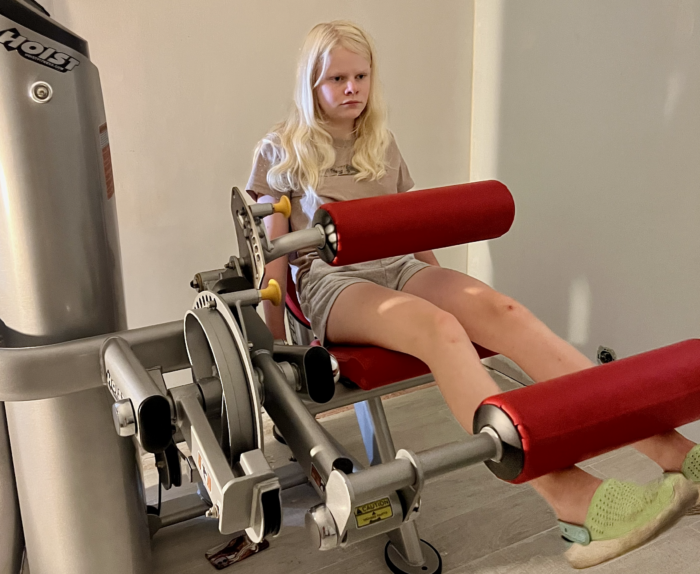
The old belief that youth strength training before puberty is pointless or even dangerous doesn’t hold up in light of the research. When technique is solid and the training load is sensible, regular exercise improves both strength and general movement skills. In this article, we look at what suits kids at which age, how to build progression stage by stage, and what deserves your attention.
Why youth strength training is no longer taboo
For a long time, it was thought that strength training offered no benefit before the age of 11–13 for girls and 13–15 for boys. The reason given was the low level of sex hormones, especially androgens, in the body. Modern studies tell a very different story.
A 14-week circuit training program, done three times a week, increased boys’ strength measures by an average of 25%. An interesting detail: the same program also improved aerobic capacity by 13–14%, so the combined benefit was tangible. In another trial, eight weeks of training with child-appropriate equipment (two times a week) produced measurable strength gains in both boys and girls. Flexibility didn’t suffer, because stretching was done before every workout.
The simple truth: when training is age-appropriate and supervised, fears of “stunted growth” or “becoming stiff” are left hanging in the air. The studies simply don’t show these things.
How youth strength training should progress, stage by stage
Practitioners are familiar with a four-stage approach in which each stage has its own role. There’s no point rushing through any of them — a foundation is built once and used for years.
Stage 1 — introduction (2–4 weeks)
A child’s first steps in strength training. Sessions take place 2–3 times a week and last 20–30 minutes. The goal isn’t heavy weights but the logic of movement: what a squat is, how to keep the back neutral, what a controlled movement means.
Stage 2 — consolidating technique (4–8 weeks)
Now the emphasis shifts to clean form and safe technique. The weight of the equipment is raised slightly, but you still make sure every exercise looks right. Before moving on to the next stage, the child should be able to perform the basic exercises with correct technique.
Stage 3 — systematic work (several months)
Up to 3 training sessions a week, with a rep count of 8–12 per set. This is the phase where real strength gains start to become visible. The program should vary — if you repeat the same pattern all the time, a child loses interest quickly.
Stage 4 — increasing volume (from about age 16)
Volume increases and intensity rises moderately. Maximal weights are not used before the age of 16 — this is a clear line worth respecting. Because androgen levels are still low, you won’t see the muscle mass growth typical of adults during puberty. And that’s completely okay. The goal right now isn’t bodybuilding but a base for later.
What parents and coaches should keep an eye on
A few principles that apply throughout the whole process:
- Technique before weight. The first skill a child learns is correct execution of the exercise, not a record weight.
- Strength training is a tool, not the goal. At this age, the main aim is to improve general motor ability — coordination, balance, body awareness.
- Injury risk is no higher than elsewhere. Properly supervised strength exercises are no more dangerous than football or gymnastics. The risk arises when someone lets a child “experiment” with the limits of their weights without supervision.
- Speak the child’s language. Explanations must be short and concrete. Demonstrating works better than a long lecture.
Training at home with resistance bands and your body weight is also a perfectly valid option — especially in the introduction phase, where the aim is to learn the movement patterns.
FAQ: youth strength training in brief
At what age can a child go to the gym?
The general recommendation is that from age 11–13 you can start with age-appropriate equipment: resistance bands, body weight exercises, a light bar. Maximal weights are recommended only from age 16.
Does strength training stunt growth?
It’s a common myth that the studies don’t support. The real problem can be the wrong exercises with weights that are too heavy and no supervision. Proper technique and a sensible training load are safe.
How many times a week should a teenager go to the gym?
At first, 2–3 times a week, with sessions of 20–30 minutes. At stage 3, you can work up to three more thorough workouts a week. Consistency matters more than frequency — two good workouts a week all year round give you more than six workouts in a month followed by a break.
Author: Marek Morozov transl. Flex
Come and work out! ArtGym