Calorie counting has been at the center of weight loss for years, but modern science suggests it may not be the most effective approach
Weight loss depends more on metabolism, hormones and lifestyle
Calorie counting has been at the center of weight loss for years. Modern science and practical experience, however, show ever more clearly that body weight is not driven by calories alone, but above all by hormonal balance – especially insulin.
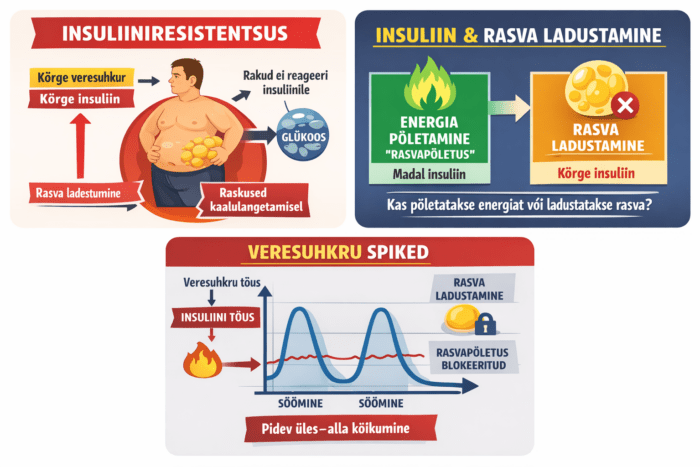
Insulin decides whether energy is burned or stored. When this hormone stays constantly high, fat burning is strongly suppressed – regardless of how many calories you eat.
Below we set out the 22 main reasons why simply counting calories doesn’t deliver lasting results.
🔍 Insulin – the key hormone in body weight regulation
Insulin is responsible for moving glucose from the blood into the cells. At the same time, it:
- promotes fat storage,
- slows fat burning,
- affects hunger and energy levels.
When insulin is chronically high, fat burning stays “locked.”
📌 22 reasons why counting calories alone doesn’t work
1. Insulin controls fat storage
It isn’t calories that decide first, but the hormonal environment.
2. High insulin locks up fat stores
The body can’t access fat when insulin is constantly high.
3. Sugar isn’t the only problem
What’s dangerous is persistently high blood sugar and insulin throughout the day.
4. Insulin resistance promotes weight gain
The body produces more and more insulin, but the cells no longer respond well.
5. Frequent eating keeps insulin elevated
Eating every 2–3 hours doesn’t let hormone levels drop.
6. Snacking slows fat burning
Every bite triggers a hormonal response.
7. Carbohydrates raise insulin the most
Especially processed and sugary carbohydrates.
8. Protein supports fullness
It raises insulin moderately and preserves muscle mass.
9. Healthy fats don’t cause big spikes
Fat on its own doesn’t raise insulin significantly.
10. Intermittent fasting lowers insulin
Breaks between meals help restore fat burning.
11. Fasting activates fat burning
When insulin is low, the body uses fat for energy.
12. Strength training improves insulin sensitivity
Muscles act like “glucose sponges.”
13. Muscles are the biggest glucose consumers
The more muscle you have, the better your metabolism.
14. Cardio alone isn’t enough
Without muscle mass, metabolism slows down.
15. Ultra-processed food damages metabolism
It encourages overeating and blood sugar swings.
16. Liquid calories are absorbed too quickly
Juices and smoothies don’t create a feeling of fullness.
17. Lack of sleep increases insulin resistance
Even a couple of bad nights affect your metabolism.
18. Stress raises cortisol and insulin
Chronic stress promotes fat storage.
19. Type 2 diabetes is linked to insulin
It is the result of long-term insulin resistance.
20. Obesity is often a hormonal problem
It isn’t just a matter of willpower.
21. Weight-loss medications don’t fix the root cause
They reduce appetite, but not always insulin resistance.
22. Controlling insulin makes fat burning easier
A balanced hormonal environment makes weight loss come naturally.
What should you take from this?
Successful, lasting weight loss isn’t built on a calorie deficit alone, but on:
- stable blood sugar,
- good food choices,
- adequate protein,
- strength training,
- sleep and stress management.
When insulin is under control, you don’t have to constantly restrict yourself or go hungry.
Practical tips
To support weight loss:
✔️ Eat 3 balanced meals a day
✔️ Cut back on snacking
✔️ Prioritize protein and vegetables
✔️ Do strength training regularly
✔️ Sleep 7–8 hours
✔️ Cut back on processed food
✔️ Move every day
Summary
Calories count – but they don’t come first.
If your hormonal balance is off, even the most precise calorie counting won’t help. Real change begins when you start managing your metabolism, not just the numbers.

Author: Heikki Mägi / Frillice.com
📚 Scientific references
- Mechanisms linking insulin and adipose tissue
Kahn and colleagues describe how insulin promotes fat storage in adipocytes by stimulating glucose uptake and lipogenesis and suppressing lipolysis. This is one of the core mechanisms by which insulin affects body weight on a regular basis. - Insulin resistance and obesity
Examines how excess weight and the accumulation of visceral fat are linked to the development of insulin resistance, and why this is an important risk factor for metabolic syndrome. - Adipose tissue function and insulin sensitivity
Researchers have shown that the reprogramming of adipocytes and inflammation in adipose tissue promote the development of insulin resistance and thereby affect energy levels and body weight. - Mechanisms of insulin resistance in overweight
The lipid overload and cellular metabolic stress that arise in obesity can disrupt insulin signaling and lead to hormonal imbalances. - Rolled-in review: Western diet and hyperinsulinaemia
The study points out that hyperinsulinemia — chronically elevated insulin levels — can increase lipogenesis and inhibit lipolysis, which contributes to a lasting increase in body weight. - The effect of weight loss on insulin sensitivity
Diet and training improve insulin sensitivity and reduce insulin resistance, alone or combined; this means metabolism becomes more efficient when hormone levels are under control.
What do these studies show overall?
✔️ Insulin is not simply the “carbohydrate hormone” — its role goes beyond transporting glucose and directly affects fat storage vs. burning.
✔️ Insulin resistance is linked to visceral fat and to metabolic risks — it is not merely a matter of weight loss.
✔️ Adipose tissue itself can steer metabolism genomically and hormonally, influencing whether energy is stored or used.
✔️ Lifestyle changes such as training and lowering body weight improve insulin sensitivity — which helps address the hormonal root cause, not just the calorie balance.
Come and work out! ArtGym