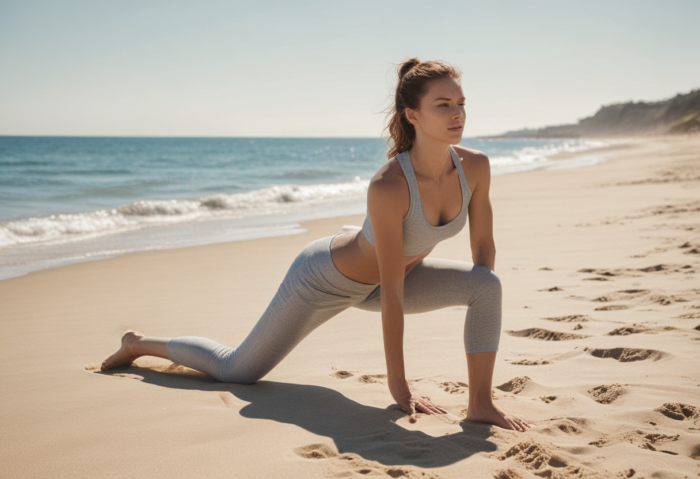
Beach season: get in shape for summer at a steady pace
Beach season arrives a little too fast every year. One moment your jacket is still within reach in the closet, the next you’re looking at new bikinis or swim trunks in the mirror and thinking: now would be a good time to feel lighter again. The good news is simple: you don’t have to work miracles in a couple of weeks, but you can start in a way that moves the result in the right direction.
Why beach season doesn’t call for panic
When summer approaches, many people get the same feeling: you want less fat fast, a flatter stomach and a better mood. That’s only human. But hating your body or starving yourself doesn’t help. Both ruin your mood and make training harder.
Fat loss is, in principle, simple arithmetic. Your body has to burn more energy than it gets from food. If you eat, say, 1800 calories a day, your daily expenditure has to be higher than 1800 calories for your weight to drop gradually. That doesn’t mean you should fear food all day. It means that portions, activity and training have to work together.
A simple truth: the better you can stick to the new rhythm, the better the result. The worst plan is to start too harshly, burn out quickly and give up before your body has even had a chance to respond.
Beach season and calorie burn: what to do?
Every active pursuit burns calories. Walking, cycling, strength training, taking the stairs and cleaning all count. Higher intensity burns more, but only if you can keep it up sensibly. If you overdo it, your next workouts simply don’t happen.
Don’t look only at how many calories your sports watch shows for one hour of training. Training also affects how your body recovers after the effort. Strength training is especially useful, because muscles need energy after work and help keep your body in shape even as your weight drops.
Lift weights to lose weight
One important idea from the old advice is worth keeping: aerobic training alone isn’t the only way. Weight training can have a big effect, especially when you work the large muscle groups. The original recommendation stressed that lifting weights can help you burn 20-30% more calories, and the effect can last up to two days after training.
In practice, this means full-body training. Do squats, deadlift variations, presses, rows and core exercises. Keep your technique clean. If your rest breaks are short, for example 25-30 sec, your heart rate rises and the workout becomes denser. But don’t let speed wreck your form.
A practical plan before summer
More experienced trainees can do strength training three times a week, leaving about 48h for recovery. That gives your body time to repair itself and to push hard again next time. Beginners can start with two times a week and move calmly to three once their body has adapted.
Don’t forget cardio. Faster walking, cycling or easy jogging helps raise your daily energy expenditure. For faster results, the original text suggested 2x a day of cardio at 70-80% of your actual capacity. That suits a short period better, and only if your sleep, eating and recovery are in order.
If your legs are tired on a strength training day, do lighter cardio. If there’s no strength training that day, you can choose a harder cardio option. For example, brisk walking on inclines or a workout where your upper body also gets some work. The original suggested picking up lighter dumbbells, but do that only if your shoulders and elbows feel good.
Beach season: what to watch so you don’t overdo it?
The first sign of overreaching is that training no longer gives you energy but takes it away. Your sleep gets worse, your appetite fluctuates and your mood drops. In that case the solution isn’t even more training. The solution is to reduce your training load a little.
High-intensity periods shouldn’t be stretched too long. The old warning was sensible: eight weeks at most. After that, take an easier week or change your goal. The body isn’t a machine that runs endlessly at the same pace.
With food, look at the simple things first. Is there protein at every meal? Are you getting enough vegetables? Do sweet drinks and snacks come from habit or from real hunger? The answers to these questions often help more than yet another complicated diet.
Honestly, preparing for beach season doesn’t have to be a punishment. The goal is to feel better in your own body. If your clothes fit more comfortably, it’s easier to breathe on the stairs and your reflection no longer stirs up resentment, you’re already on the right track.
FAQ
Is walking alone enough?
At first it can be completely enough, especially if you haven’t been very active so far. If your goal is a better physique, add strength training later, because muscle gives your body a stronger, more athletic look.
Do I have to work out every day?
No. For most people, a plan that balances strength training, cardio and rest days works better. Recovery is part of the result, not laziness.
When should I reduce my training load?
If your heart rate is higher than usual, your sleep is poor, your muscles ache constantly or your motivation suddenly vanishes, take a couple of lighter days. It’s better to pull back for a moment than to push yourself into overtraining.
Author: joker, M&F Hers
PS Come and work out! ArtGym