Pilates: who is this type of training for?
Pilates is a good fit if you want a stronger core, better posture and calmer, more controlled movement. It is not just stretching or just training your abdominal muscles, but a precise system in which the body relearns control and balance.
Why does Pilates deserve attention at all?
If you’ve ever felt, after a long workday, that your shoulders are up by your ears and your lower back is sending you signals, you’ll grasp the idea of Pilates quickly. Many people don’t need harder training at first. They need better body awareness.
Pilates exercises engage the deep muscles, especially in the middle of the torso. These are the muscles that help support the spine, stabilize the pelvis and give movements their stability. A simple truth: when the center is weak, other areas start to overwork.
This type of training also suits people who go to the gym, run or play tennis. A strong core helps you control your movements better. It is just as important for someone starting again after a longer break who doesn’t want to go too hard right away.
The original Pilates method, developed by Joseph Pilates, emphasizes precision, breathing, concentration and flowing movement. An exercise may look small, but the sensation in the body is often surprisingly strong.
How does Pilates work in the body?
Pilates isn’t about rushing. Every movement is done with control. You learn to notice whether you’re holding your breath, whether your lower back is sagging or whether your neck is doing the work of your abdominal muscles. These small details are what make the training meaningful.
A session can take place on a mat, with small props or on specialized Pilates machines. Mat work is a good start because it lets you grasp the principles. Machines add support and resistance, which in some cases makes the exercises even clearer.
So what actually happens? You aren’t simply doing repetitions. You’re learning how your body moves. Your hips, shoulders, back and abdomen start working together better. That is why Pilates is used by recreational exercisers and athletes alike.
In a good class you don’t have to compete with anyone. The instructor watches your technique and gives corrections. Sometimes one small cue, such as “drop your shoulder” or “breathe out for longer”, is enough to make an exercise feel completely different.
Start calmly and learn the basics
In your first classes, aim for understanding, not maximum effort. How should you breathe? How do you hold your pelvis? How do you do an exercise without straining your neck? A good Pilates session gives practical answers to these questions.
If you move on too quickly, you miss out on part of the benefit. Pilates is a precise discipline. That is exactly what makes it interesting.
Pilates for beginners: what to expect in your first class
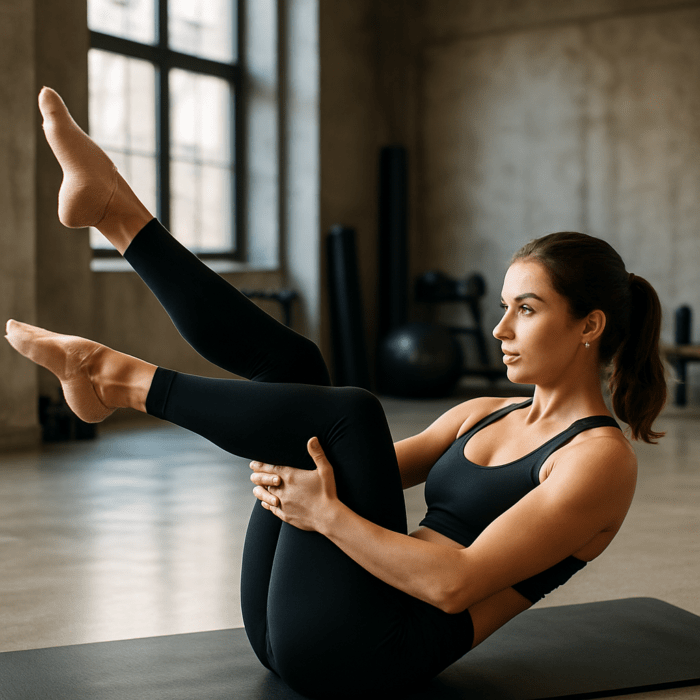
Go to your first class in comfortable sportswear. Socks are fine for your feet, since many exercises are done barefoot or in socks. Your clothing should let the instructor see how your back and pelvis move.
A class often starts with simpler movements. You may lie on the mat, learn how to breathe and do small, controlled exercises. Don’t let that fool you. When the technique is right, even a small movement can be very demanding.
If you have back pain, a knee problem or a recent injury, tell the instructor before the class begins. Pilates can be a very good way to strengthen your body, but the exercises need to be adapted when necessary.
When choosing a studio, look first at the instructor’s experience and attentiveness. A large group can have a great atmosphere, but a beginner gains a lot when the instructor can genuinely see what they are doing. This is especially important with machine Pilates.
Honestly, Pilates doesn’t have to be an “easy workout”. It can be calm and at the same time very precise and demanding. The difference is that the effort comes from control, not from flailing about.
Pilates and practical choices
If you want to try Pilates, start with a class where the pace is calm and the instructor explains a lot. There is a wide choice at fitness clubs in Estonia, but the studio and the instructor’s style can differ. Some places focus on mat exercises, some on machines, some on restorative movement.
A good sign is when the instructor asks about your experience, health and goals. An even better sign is when they correct your technique in a way you can understand, rather than just reading out exercises.
In spring and autumn, when many people start exercising regularly again, Pilates can be a sensible bridge back to a training rhythm. In winter it helps keep your body more mobile, especially when you sit a lot and spend less time moving outdoors.
If you already go to the gym, add Pilates once a week as a restorative, technique-improving session. If you’re starting from scratch, one to two classes a week are enough at first. What matters is consistency, not a heroic start.
The old invitation to a free trial class was tied to a specific time in January, and there’s no point repeating that date now. The idea itself is still a good one, though: try one class. Your body will tell you fairly quickly whether this way of moving suits you.
FAQ: Pilates and getting started
Is Pilates suitable for a complete beginner?
Yes, if the class is at a pace that suits beginners and the instructor explains the technique. You don’t have to be able to do everything the first few times. What matters is learning to sense your body and move with control.
Does Pilates help make your back stronger?
Pilates can help strengthen your core muscles and improve your posture. If you have severe pain or a diagnosed problem, talk to a doctor or physiotherapist first and let the instructor know about your situation.
Does Pilates replace strength training?
It depends on your goal. Pilates develops control, mobility and core strength. For building large muscle mass or maximal strength, however, strength training still has its own firm place.
Author: www.truepilates.ee
Come and train! ArtGym