Strength training anatomy: Craig Ramsay’s book
“Strength Training Anatomy” is a book Craig Ramsay wrote for people who want to truly understand what each exercise does to the muscle in the gym. If you’ve been lifting iron for a while but feel like all you’re doing is moving weight from one place to another — this book fills exactly that gap.
Why “Strength Training Anatomy” deserves a spot on your shelf
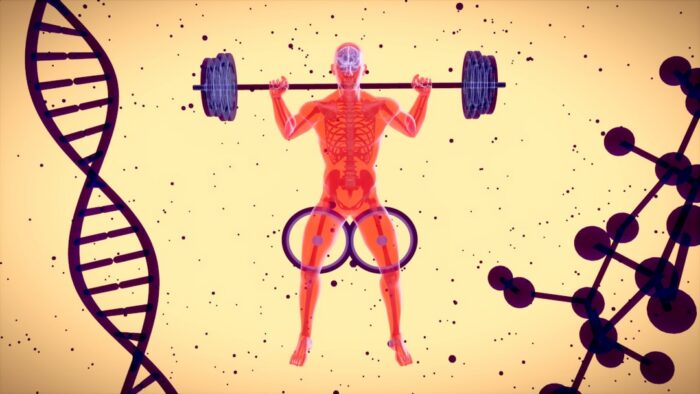
Most training books tell you what to do. This one shows you why. Each exercise comes with a color photo of correct form and, beside it, an anatomical drawing — the muscles doing the real work are marked in red, and those assisting from the side in a lighter shade.
This layout makes things click quickly. You don’t have to take a coach’s word that “the squat is a leg exercise” — you can see on the page which part of the quadriceps comes under tension and where the posterior chain’s role begins. Honestly, you’ll learn more from ten pages than from half a year of experience without such an explanation.
What’s inside the book
In this book, personal trainer Craig Ramsay lays out the best exercises for the major muscle groups. The content is organized by body region:
- Chest and shoulders
- Back
- Arms — the front and back of the upper arm
- Abs and core
- Legs and glutes
Each chapter opens with a short overview of the muscle anatomy — what sits where and what its main function is. Then come the exercises: with free weights, with machines and with body weight. Each exercise includes step-by-step instructions, breathing, common mistakes and coaching tips on what to pay attention to.
There’s also a glossary at the end of the book. If you’re not sure exactly what the difference is between the concentric and eccentric phases, or what “compound exercise” means, this is where you can get it properly sorted.
How “Strength Training Anatomy” helps in the gym
I use it in about two ways. First, I prepare for an exercise: before a new movement I read the page, look at the illustration and try the first set with an empty barbell. The difference is noticeable — you know what you should feel, and if you don’t feel it, your technique is probably off.
Second, the book helps you read a training plan. A different grip shifts the strength training load to different muscle groups, which is why the result is different.
Who “Strength Training Anatomy” is for
For a beginner it’s invaluable — you prevent half of the technique errors before they ever become ingrained. For an advanced lifter it’s a good checklist: do I really know what each exercise does, or am I acting out of habit? And if you’ve never set foot in a gym, the book may be the first thing to put in your bag — if only to have something to flip through in the middle of a workout.
FAQ
Is the book only for men?
No. Anatomy is the same for everyone, and so are the exercises. Craig Ramsay also has a separate “Strength Training Anatomy for Women”, but no gender is left out of the contents of this general book.
Is the book alone enough to get started?
For the first few weeks, yes. But if you plan to start working with heavier barbells — squats, deadlifts, overhead presses — it’s worth having an experienced eye look over your first few sessions. The book shows how it should look; a coach shows exactly where your mistake is.
Where can I buy the book?
The Estonian translation is available from Rahva Raamat: Strength Training Anatomy at Rahva Raamat.
Come and work out! ArtGym